The Federal Government has fully supported Nigeria’s emerging electric vehicle industry to drive local manufacturing, economic expansion, and create jobs.
According to a statement, Jumoke Oduwole, Minister of Industry, Trade and Investment, affirmed the government’s support during a visit to the Saglev Incorporated EV assembly plant in Lagos.
Oduwole said the President Bola Tinubu-led administration remained focused on fostering investment and industrial growth through policies that prioritise Nigerian businesses.
“The Nigeria-first policy of President Tinubu is committed to supporting investors exactly like the demographic we’re seeing here. From industrial policy to trade policy to investment policy, this administration is focused on Nigerian investors and putting them first so they can thrive,” she said.

The trade minister described Saglev’s plant as a symbol of sustainable innovation, noting that the vehicles assembled there could significantly enhance Nigeria’s transportation and logistics sectors.
Oduwole noted that the high-end electric vehicles use about 80 per cent less power, which she said could move Nigeria’s mobility sector to the next level.
Read also: How Nigeria’s first EV plant takes on the N1trn “Tokunbo” economy
Oduwole also dismissed the notion that Nigerians do not patronise locally made goods, stating that citizens are extremely patriotic and embrace Nigerian products.
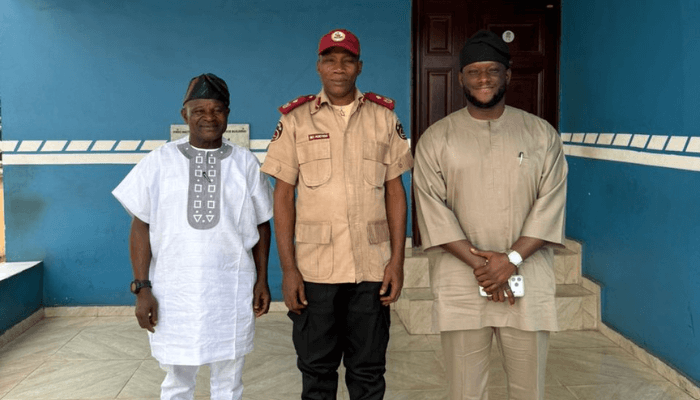
The Minister’s visit, alongside top federal and state officials, signals a renewed push by the government to bolster local production and position Nigeria as a key player in the global transition to electric mobility.

The visit also served to spotlight efforts to tackle persistent challenges facing local manufacturers in the EV sector, including policy bottlenecks and importation delays.
Joseph Osanipin, director general of the National Automotive Design and Development Council (NADDC), gave updates on the Federal Government’s EV policy progress, stating that the auto electrification framework was already in motion.
“For the auto policy, we have the policy already. But we are moving it from policy to legislation. We’ve done the first and second reviews and are now working with top legal practitioners on drafting. In the next few months, we’ll be ready,” Osanipin said.
He added that the NADDC had introduced the National Occupational Standard for EV servicing and maintenance, which would be adopted as a training curriculum in universities, polytechnics, and technical schools nationwide.
With rising demand for energy-efficient alternatives and the growing impact of climate change, stakeholders say Nigeria’s investment in local EV manufacturing could unlock jobs, cut fuel dependency, and foster sustainable transportation in the years ahead.
Folashade Ambrose-Medebem, Lagos State Commissioner for Commerce, Cooperative, Trade, and Investment, also pledged the state’s support for the project.
Medebem stated that Lagos remained committed to creating an enabling environment for investment through initiatives such as land access, market linkages, and infrastructure support via the Lekki Free Zone and Deep Sea Port.
Read also: Tinubu commissions locally made electric vehicles in Nasarawa
Despite the enthusiasm from government officials, Sam Faleye, managing director/chief executive officer of Saglev Inc., highlighted critical challenges facing the local EV assembly sector, especially with importation.
“We have about five containers of semi-knocked-down (SKD) kits stuck at the ports, just waiting, and customers have already paid deposits for those vehicles,” Faleye said.
He blamed the bottlenecks on issues with the Nigeria Customs Service’s electronic portal, including wrong HS codes and complicated import processes, calling for urgent reforms to streamline customs procedures for EV parts.
While acknowledging the rigorous licensing and inspection by the NADDC, which he described as helpful in ensuring quality control, the Saglev boss urged the government to go a step further by enforcing value addition in EV importation.
“If you’ll bring in electric vehicles, add value; don’t just import them fully built. There’s a huge difference in cost and maintenance compared to internal combustion engine vehicles, and we’re offering Nigerians a better option,” Faleye said.
He added that Saglev would remain focused on offering solutions despite the sector’s hurdles, saying, “We just choose not to focus on the challenge. We choose to focus on solutions.”