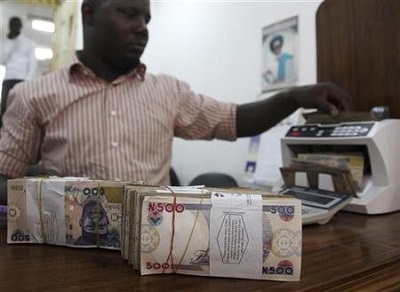
Money, as the universally acceptable medium of exchange, is also the measure of the value of all economic goods and services. The value of every country’s money or currency is therefore a reflection of the value and general health of its economy.
Presently Nigeria is witnessing rapid deterioration of its currency, the Naira, against global references such as the United States Dollar and British Pounds Sterling. While politicians and academic analyst are embroiled in the debate of how we got here and the possible ways out of the woods, it is also pertinent, as concerned citizens, to add to a positive discuss by attempting a clearer understanding of the impact of this Naira value loss on key economic components such as households, businesses and the government, for indeed, nothing should be feared if it can be understood.
The household which comprises of individual economic decision makers are without any question the largest component of the economic equation, determining by its actions a large proportion of the value of aggregate expenditure as well as income. Its ability to carry out this role is influenced by its earning power and the value of that earning in any given period in time. Households also play the pivotal economic role of consumer of business output, making payments in exchange for the output or goods and services. It also serves as sole supplier of labour for firms and government, earning income in the form of wages.
In the current situation where the purchasing power of the household is disrupted due to an erosion of its earning value, the rational decision will be to cut back present consumption and stay within the boundaries of necessities such as food and shelter while savings and purchases of other consumer goods and services such as education, electronics, bank credits, automobiles etc are postponed till there is an improvement in economic conditions. Businesses tend to suffer since there are few purchases for its outputs, no savings to be given it by banks for investment and government taxes from personal income tax also tend to dip in the short term, if drastic measures are not taken, gloom and recession may also set in in the medium to long-term.

Economic theory suggests that prices serve as signal to economic actors. The value of wages, which is the price of labour determines the sector which tends to attract it most. If labour perceives an unsustainable fall in the value of its earning, calls for wage increase and downing of tools or strike actions may become the order of the day, this may not be a palatable scenario for a Nigerian government already burdened with about 70% budgetary recurrent expenditure with dwindling income.
Going to businesses, we will focus on the financial sector since it stands as the channel for financial intermediation by funnelling funds from surplus economic units to deficit units. The financial system includes the banks, insurance companies, the stock market and a sundry others. Through the financial system, businesses from time to time meet their investment funding needs at prevailing interest rates which serves as income for the financial houses. Where funds are not available because of low savings, either due to low income or liquidity preference – the tendency to hold money as cash balances rather than in other forms such as savings – the financial intermediation role of banks may be hampered, thereby reducing the ability of businesses to sustain or even carry out new investments. The direct impact of this on businesses will be excess or unutilized capacities, firms may then react by reducing size of labour as a means to minimize losses. Reduced labour lead to unemployment, lowered household incomes, lesser demand for business output and the vicious cycle continues.
Another implication of a weakened financial system will be the inability of government to fully implement its monetary policies since the financial sector is the means of deployment. This may manifest in activities such as rationing of funds with those willing to pay the highest premium getting a larger piece. The emergence of a parallel, crude, and unregulated or black market will also result as it is presently.
The government is expected to play the all-encompassing role of providing the highest possible benefit to the highest possible number of persons. This it does by undertaking economic activities that the private sector considers unviable in its short-term profit seeking motive. Government provides hard infrastructure like road networks, ports, power plants etc, soft infrastructure like education, medical services, an efficient judicial system as well as internal and external security. However, since there is a consensus that government has no business doing business, it remains a cost centre. The Nigerian government’s ability to provide the aforementioned has largely depended on foreign exchange earnings from crude oil. However, the current global energy outlook which has seen oil prices at its lowest in over 20 years has exposed the currency to rapid depreciation resulting from insatiable dollar denominated imports without a corresponding inflow. The negative impact on government functions is multi-faceted. First, planned government revenue from personal and corporate taxes will be reduced if personal incomes and corporate profits cannot be predicted with certainty. Secondly, government will be exposed to higher debt burden for both local and foreign sourced loans. This will also reduce its credit worthiness or credit rating amongst reputable funding agencies. Also, ongoing capital developmental projects may be shelved to cater to more pressing recurrent needs like payment of workers’ salaries and food import.
Haven looked at the implications of a depreciated Naira, I think it pertinent to also proffer solutions that can soften the hardship the situation brings upon the generality of Nigerians. Firstly, the general consensus is that dependence on one source of income is bad, both for man and country; economic diversification therefore remains a front burner issue. Secondly, there should be immediate social safety measure implemented. Price of essential items such as food and fuel must not be allowed to go beyond the reach of the man on the street. Also, electric power supply should be raised from it epileptic level to a level where industries, small businesses and homes can rely on it while a sustainable alternative is evaluated. Finally, when the invisible hand of the market fails to ensure equality, the visible hand of the government must swing into action through measures as monetary and fiscal policies where businesses are supported with soft funding until the tides and gloom clears. The United States Government adopted this for a decade following the financial crisis, increasing interest rate from zero percent only for the first time this January 2016.

While there is no easy way out of the present situation, we can take it as an opportunity to correct decades of wrong economic policies even as we hope for a Nigeria with a brighter future for the present and coming generations.
NJOKU T. CHIDIEBERE