|
Getting your Trinity Audio player ready...
|
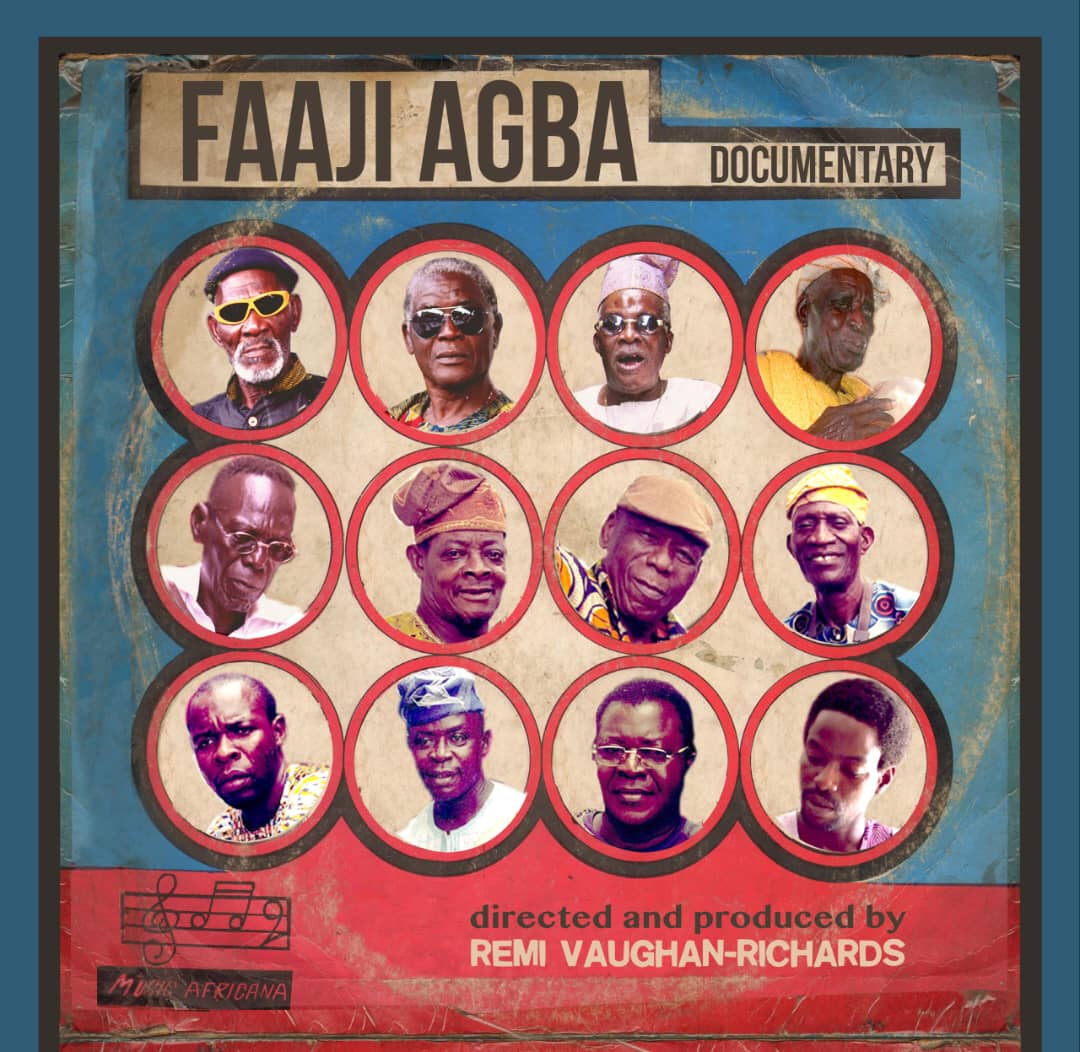
Music lovers and culture enthusiasts trooped out in their numbers to see the special 10th anniversary screening of the documentary, “Faaji Agba”, a landmark documentary by filmmaker Remi Vaughan-Richards, in Lagos, on October 1st, 2025, hosted by Lights, Camera, Africa! (LCA!) Film Festival, in collaboration with Mbari Kola.
The documentary entails a group of old but legendary musicians whose careers started in the 1950s and were largely forgotten until Kunle Tejuosho rediscovered them in the 1990s.
First premiered in Nigeria at the LCA! Film Festival in 2015, Faaji Agba records the revival of Lagos’ forgotten highlife greats, brought together by music historian Kunle Tejuoso.
The documentary has since endured as a cultural time capsule, reviving the voices of veteran musicians and reintroducing their timeless sound to new generations.

The Faaji Agba documentary, which has continued to shape the pulse of Lagos, featured legendary artistes such as Fatai Rolling Dollar, Sina Ayinde Bakare, Seni “Tejebaby” Tejuoso, Prince Eji Oseni, Alaba Pedro, S.F Olowookere, Yusuf Sakara, Julius Araba, Baba Kokoro (the music minstrel) and others
The documentary highlights the power of music to preserve memory and cultural legacy. It showcased Lafiaji in Lagos, one of the historical quarters of Lagos, where several musicians, including Victor Owaifo, the first Minister of Information in the First Republic, and Kola Balogun, lived. Fatai Rolling Dollar played on the main road of the street with J.O. Araba in 1958, with S.F. Olowokere performing on the street.
Speaking to newsmen, Kunle Tejuosho said he started with Fathai Rolling Dollar, and the success of it led to the gathering of others.
He described the coordination of the old men, despite being young in their midst, as “very easy” and “no big deal.”
He mentioned funding as one of the challenges he faced at that time, saying, “I was doing everything from the shop’s money, my stuff. I’d never had any funding.”

The music producer, however, expressed excitement that “what we started out like play become something of our for our heritage.”
LCA Founder, Ugoma Ebilah, described the film as a tower of documenting important stories.
“Other than that, it means to me a portrait of a very beautiful and intimate history of high life music, curatorial production, Lagos, Yoruba culture, the good old days,” she said.
What are the things, or what exactly is the thing that you can point out when it comes to music, comparing the olden days and the modern age?
She noted that “music of older times represents a moment where we were more curious, we’re more interested in learning, and reverend our elderly.”
Remi Vaughn-Richards said “the music, the people in it,” was what brought the idea of turning the whole concept into a documentary.
The director noted that there had been no money, with only one camera person at the time. However, Vaughan-Richards said that wasn’t a challenge for her, but it was joy.
“It was a challenge, but it was passion. It was a joy. It was a privilege. So I can’t say there’s a proper challenge,” she said.