|
Getting your Trinity Audio player ready...
|
Revenue shared among the three tiers of government rose in April for the first time this year to its highest yet after disbursements in the prior month fell below the estimated minimum threshold for the federal and state governments to meet their current obligations.
READ ALSO: Here’s why FAAC shared more money in April despite lower oil receipts
The Federation Account Allocation Committee (FAAC) shared N780bn in April, 34% higher than was disbursed in March, and the most in at least seven months.
A halt in the decline in FAAC brings relief to its 36 states and FCT which relies on revenue shared for around 80% of their monthly income on the average.

Under the FAAC arrangement, revenue generated from sales of crude oil, Value Added Tax (VAT), corporate tax, etc. are shared among all three tiers of government based on a formula. FG takes 52.68%, states share 26.72% and the local governments take 20.60%, with 13% derivation revenue for oil producing states.
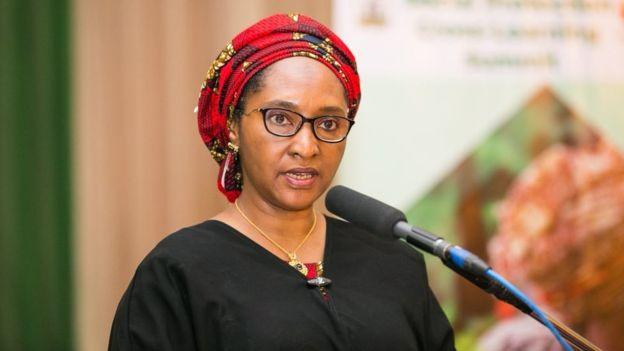
Dwindling oil price which affected oil revenue threatened FAAC. Finance Minister Zainab Ahmed in April said that monthly FAAC receipts must average at least N650 billion for the federal and state governments to meet their current obligations.
The amount disbursed in April but generated in March comprised of N478.18bn from the Statutory Account, N119.50bn from Excess Oil Revenue, N120.27bn from Valued Added Tax (VAT) and N62.98bn from Exchange Gain Differences.
Federal Government received a total of N264.33bn from the N780.93bn. States received a total of N181.49bn and Local Governments received N135.95bn. The sum of N54.29bn was shared among the oil producing states as 13% derivation fund.
Revenue generating agencies such as Nigeria Customs Service (NCS), Federal Inland Revenue Service (FIRS) and Department of Petroleum Resources (DPR) received N6.09bn, N10.20bn and N5.74bn respectively as cost of revenue collections.

Further breakdown of revenue allocation distribution to the Federal Government of Nigeria (FGN) revealed that the sum of N202.94bn was disbursed to the FGN consolidated revenue account; N4.70bn shared as share of derivation and ecology; N2.35bn as stabilization fund; N7.89bn for the development of natural resources; and N5.78bn to the Federal Capital Territory (FCT) Abuja, the NBS said.
Despite the improvements in monthly disbursement, concerns about the fiscal health of states remain on the front burner since Nigeria’s revenue from oil sales is expected to fall 80% to N1.1trn in 2020.
Financial Derivatives Company (FDC) in its monthly bulletin noted that FAAC for the month of May fell 22.37% to N606.2bnon sharp declines in oil revenues, petroleum profit tax, import and export duties, corporate income tax and VAT.
June FAAC was projected to drop to N500bn, a further decline below the minimum disbursement for states and FG to support their monthly expenditures.
Already several states in the country including the FG have cut their 2020 budgets in the light of new realities caused partly by COVID-19 lockdowns across the world and an oil price war between March and April.
The decision of OPEC+ to cut oil production by around a tenth of global supply has supported oil prices. Brent is currently trading more than $10 above Nigeria’s new budget benchmark of $30 per barrel.