|
Getting your Trinity Audio player ready...
|
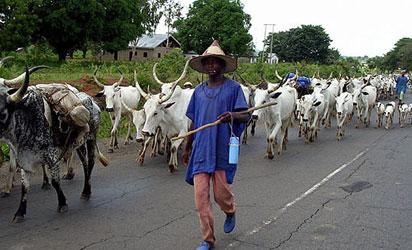
Leaders in Nigeria’s south-east say the resolution of the perennial conflict between herdsmen and farmers will boost agriculture and in turn provide a fillip for the country’s diversification agenda.
According to them, state governments in the zone must stand up in resolving the conflict in order to make agriculture and industrial growth pillars of its growth.
These resolutions were made at the development policy forum organised by African Heritage Institution in Enugu.
Addressing the participants at the forum, Ufo Okeke-Uzodike, a professor and executive director of African Heritage Institution, said it was clear that the country was divided by politics and governance issues, geography and region of origin, ethnicity, religion and social class, which had impeded the development of the country.
Okeke-Uzodike noted that there was a need to address the pastoralist question and intergroup relations in the country.
Speaking on the theme, ‘Everywhere as grazing land: The pastoralist question and intergroup relations in Nigeria’, Azeez Olaniyan, lecturer of political science at Ekiti State University Ado-Ekiti, said grazing must be restricted and the idea of making everywhere grazing area would not be sustained.
According to Olaniyan, though the Ekiti State Model was a good example, there was still a need to adopt the 2014 Confab on pastoralism as a working document which recommended establishment of ranches equipped with modern technology such as fodder development, abattoirs, creating businesses around the livestock chain and establishment of grazing reserves.
He added that it was necessary to change the narrative of the pastoralists from being a regional, ethnic or religious problem, saying that it was a national security issue requiring concerted efforts.
He further said that cattle must be reared in designated grazing zones and herders should be encouraged to purchase land.
In his contributions, Nduka Eya, secretary-general of Ohaneze Ndigbo, noted that there was a need to bring back history into the curriculum of schools as this would help in showing young people a direction. Eya stressed the need for equity, justice and fairness in the governing process, saying it would checkmate conflicts in the country.
Hassan H. Karma, assistant inspector-general in charge of Zone 9, stated that the conflict between herders and farmers had been happening around the country for a long time, recommending collaboration between the police, the government and communities to ensure peace between herders, farmers and other members of the community. Karma added that in Anambra State, Governor Obiano used this collaborative strategy and it worked, warning that arming vigilantes would not solve the problem but rather escalate it and create dangerous downstream problems.
ODINAKA ANUDU