|
Getting your Trinity Audio player ready...
|
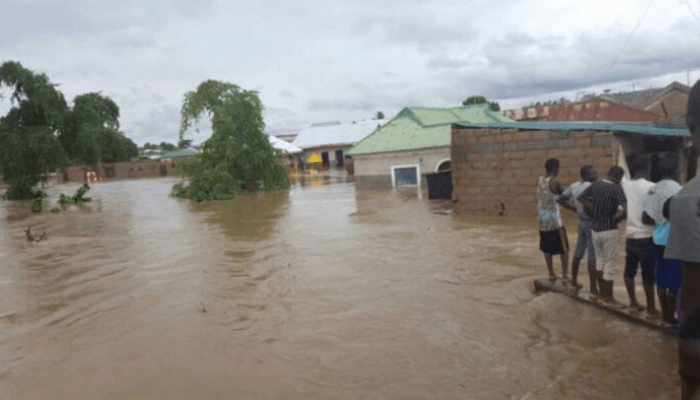
Environmental experts and other stakeholders in the northwest have called for the enforcement of laws on the preservation of the environment to check the recurrence of flooding and other environmental disasters.
In their responses to a survey conducted by NAN, the stakeholders decried the daily habits of people not being ‘environment-friendly’, thus providing a conducive atmosphere for flooding and other related disasters.
They also faulted some personnel of environmental law enforcement agencies for not only failing in their responsibilities but also aiding and abetting practices inimical to the environment.
They warned that unless those in the habit of erecting structures on waterways, disposing garbage in drains, or violating town master plan provisions, flood disasters will continue to occur, with all its distasteful consequences.

The stakeholders also stressed the vital role that could be played by town planners, but lamented that most times, directives on doing the needful were hardly respected by individuals, and sometimes even the authorities.
Nurudeen Abdullahi, territorial coordinator, National Emergency Management Agency (NEMA), Kano, said most environmental disasters could be attributed to the unwholesome conduct of the people.
“The federal and state governments are doing their best but there is a need for enforcement as early warning prediction alone, is not enough.
“There is high resistance to warning predictions and we have people who always insist on doing things their own ways, no matter the danger; someone will say this is where my forefathers lived and where I was born, and will therefore not leave the area”, he observed.
Read also: NDLEA arrests wanted kingpins over illicit drugs

He stated that the role of town planners in redressing the issue, could not be overemphasised as they were the ones who set the rules on building and allocation of land.
He noted that most town planning agencies limited their activities to satisfy the needs of authorities, no matter how detrimental, instead of insisting on doing the needful.
“Many farms have been washed away, houses destroyed, and communities submerged; when you are not secured on food, a community or country is at risk”, he stressed.
Also, the executive secretary of the State Emergency Management Agency (SEMA) in Kano, Saleh Jili, explained that the state government had organised a workshop for stakeholders such as traditional rulers, and faith-based and voluntary organisations, on ways of curtailing disasters.
Kabiru Getso, Kano State commissioner for the environment also blamed the occurrence of most disaster incidents on recalcitrant residents, who hardly heed warnings on environmental hazards.
“The state government, through various environmental agencies, conducted a lot of activities since the warning was given by the Nigerian Metrological Agency (NiMet), yet people considered it a joke.
“Government embarked on a series of enlightenment to educate people on their expectations before, during, and after the rainy season, but most residents never took the issue with utmost seriousness.
“Therefore, there is a need to ensure the enforcement of laws bordering on the management of the environment for people to be doing the needful”, he said.
About 23 people reportedly lost their lives, and 20,399 houses destroyed by flood and windstorms in 25 local government areas of the state, from April 2022 to date.