



Gas supply shortages affecting power supply in many parts of the country have reinforced the need for the government to speed up efforts at diversifying the nation’s power generation mix, which is currently largely dependent on gas, analysts have said.
Nigeria’s electricity generation has continued to fluctuate between 2,500 megawatts (MW) and 4,600 MW in recent years, with the failure of the federal government to achieve its planned 10,000 MW by December 2013.
Meanwhile, the country, with a population of about 170 million people, is estimated to need about 40,000 MW of electricity over the next decade, but current generation capacity falls far short of the almost 13,000 MW required to meet current peak demand.
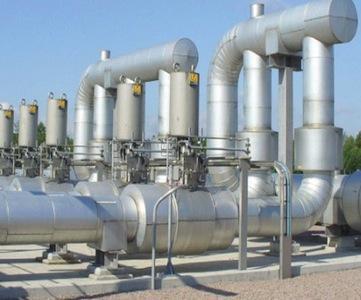 Experts say diversification of the generation mix would help to lift power supply in the nation.

They add that to minimise the current supply challenges being faced with gas supply, other fuel sources such as solar, coal and hydro-power should be fully explored in order to ensure diversified electricity sources that will promote electricity availability and reliability.
The need for more incentives to boost the commercialisation of renewable energy technology in the country as alternative source of electricity supply was identified as critical to facilitating further investments.
“There is no doubt Nigeria needs to diversify its energy resource inputs for power. Gas is better as a peak demand source. Coal serves well as a base-load source. I am an advocate of energy resource mix in the power sector. The use of oil to power generators is ludicrous and a waste of a scarce resource.
“ Nigeria must wake up to that. But if we have to rely on gas as a transition fuel, we must explore more aggressively, but we are not. Neither are we doing much for coal as we should,” said Wumi Iledare, president of the International Association for Energy Economics and director, Emerald Energy Institute, University of Port Harcourt.
Atedo Peterside, chairman of the Technical Committee, National Council on Privatisation, speaking at a conference weeks back, had said that while gas supply constraints arising from capacity shortfalls/lags could be foreseen, the impact of pipeline vandalisation was not so predictable and could induce damaging shocks to the health of the entire electricity value chain.

“It has become increasingly likely that renewable energies will provide more of the world’s electricity than gas-fired power plants by 2016, as its declining cost profile positions it to compete more vigorously with fossil fuels”, says a new report by Ecobank Oil, Gas and Energy Research headed by Rolake Akinkugbe.
According to the report titled ‘Fully charged: Key dynamics in Middle Africa’s Power Sector in 2014’, Ghana is leading the rest of West Africa in driving the renewable energy agenda with its 2011 Renewable Energy Act. The country plans to invest at least $1 billion in renewable energy projects in next 7 years to 2020.
“Costs tend to be high for renewable energy projects in Africa due to equipment imports, higher internal transport costs, import levies. Developing local manufacturing capabilities and increasing the share of local content for renewable power generation projects can help reduce costs, which are predicted to decline over time,” the report said.
Adeola Adenikinju, president of Nigerian Association for Energy Economics and director, Centre for Petroleum, Energy Economics and Law, University of Ibadan, said in the short term, the focus would remain on gas due to a number of economic factors and the relatively shorter term of completing a gas-fired thermal plant.
“However, in the medium term and to avoid or minimise the current challenges we are facing with gas supply, we must be thinking of dual-fuel plants, and other fuel sources both renewable and non-renewable, in order to ensure energy security, a diversified electricity source that will promote electricity availability, reliability and enhance electricity access,” he said.
Adenikinju added that there are currently very limited incentives to boost commercialisation of renewable energy technology as alternative source to electricity supply, citing Germany and China as examples worth studying for Nigeria.
The Ecobank report released on January 30, 2014 stated that the full penetration of renewable energy into the African market would largely hinge on investment security underpinned by regulation.
“Many countries in sub-Saharan Africa have renewable potential that is many times their current demand for electricity, but most private sector executives view national targets and Feed-in-Tariffs as the most powerful incentive mechanisms required to accelerate renewable energy development in the region,” the report said.
Oladiran Ajayi, energy expert and a senior associate with Templars law firm, said considering the relative costs of alternative sources of energy, the nation should pursue them, but not at the expense of gas development.
Last year in August, the federal government signed a $3.7bn memorandum of understanding with a Nigerian-Chinese consortium, HTG-Pacific Energy, for the development of a 1000- to 1200-MW coal-fired power plant in Enugu state. The plant is expected to be operational in the next four years.
Also, in late January the government said it was building over 200 new dams in order to achieve its target of 10,000MW of electricity at the end of this year, according to Vice President Namadi Sambo.
Nigeria, with a population of about 170 million people, is estimated to need about 40,000 MW of electricity over the next decade, but current generation capacity falls far short of the almost 13,000 MW required to meet peak demand.
By: FEMI ASU




