|
Getting your Trinity Audio player ready...
|
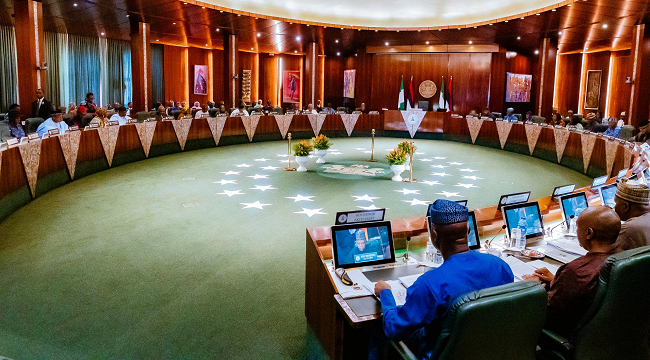
At the end of the last National Economic Council (NEC) meeting on 25 May, one of the decisions reached by the governors was to audit the excess crude account, because they claimed to have detected some discrepancies in the balance in the account as presented by the Accountant General of the Federation (AGF), Ahmed Idris.
The AGF had put the balance in the excess crude account at US$2.3 billion at the end of April as against the US$2.4 billion as at the end of March. This means that the account had gone down by US$100 million. But the governors dispute the balance in the account because they have not received any disbursements from the account since their last meeting.
The excess crude account, which was set up in 2004 by former Minister of Finance, Okonjo Iweala, in her first stint as finance minister under President Olusegun Obasanjo, has always been controversial despite the noble intentions for which it was set up. The idea behind the excess crude account is for the government to save excess crude earnings above the set budget benchmark.
The excess amount saved is intended to shield the country against fluctuations in crude oil prices which is a regular phenomenon in the international markets. So if well implemented, the excess crude account will help the country save during periods of high crude oil price, an amount that could be drawn down to spend during periods of low crude oil price, like the country is currently experiencing.

Sadly, the governors, no matter their party, have never really liked the idea of the excess crude account, which they feel takes away money duly meant for them to spend. The governors have thus been always against the excess crude account. But President Obasanjo, during his reign, ignored the governors and saved anyway and succeeded in building the excess crude account to a high of about US$20 billion as at 2007.
That proved to be a wise decision as crude oil prices crashed in 2007 and 2008 during the global financial crisis. But it also provided an opportunity for the governors to say it is time to share the money in the excess crude account since crude oil prices had crashed.
It was also a period of a new government under the leadership of Late President Umaru Musa Yar Adua who was a stickler for the rule of law and since the excess crude account was not backed by any law, he was unwilling to insist that the savings be maintained as the governors went as far as suing the federal government on the excess crude account.
Succumbing to pressure from the governors, a good chunk of the money in the excess crude account was shared between 2007 and 2011, which the governors gladly used to support their bloated state bureaucracy and expensive governance structure.
Ngozi Okonjo Iweala, in her second stint under the Goodluck Jonathan administration tried to resolve the challenge and fears of the governors about the excess crude account by setting up the Nigerian Sovereign Investment Authority (NSIA), which was supposed to institutionalise the excess crude account as an investment vehicle for present and future generation of Nigerians.

Like the excess crude account, the governors did not show much love for the NSIA either and also challenged it in court after the FG unilaterally removed US$1 billion from the excess crude account to give to the NSIA as take-off grant. The challenge from the governors meant that the NSIA did not get much more funds from the excess crude account. Yet, even with the take-off grant received by the NSIA, it has shown it could be a money spinner while also acting as catalyst for investment in critical infrastructure across the country. The NSIA is involved in the second Niger Bridge, Real Estate projects, and is on the driving seat on Nigeria’s fertilizer initiative; a clear indication that the NSIA is the best option to manage funds in the excess crude account.
But it is interesting that the excess crude account, which now has a low of US$2.3 billion, is still a controversial subject for the governors, years after it has been set up. Despite sharing billions from the excess crude account over the years, many states are still facing unsustainable debt levels and without support from the federal government, would be filing for bankruptcy.
The difficulties governors are facing currently should teach them that this is the time to wisely use the resources available to them and that the savings in the excess crude account could be better utilised. There is practically no justification for US$2.3 billion to be sitting in the excess crude account yielding zero returns when that money could easily be given to the NSIA to invest on behalf of the governors and the federal government.
With so many emerging market countries raising Eurobonds at rate ranging from six percent to eight percent, this money could be earning some good returns even if given to the NSIA to invest in emerging market sovereign issues. The returns could augment their budgets every year, while the principal remains in savings for future generations.
The NSIA could even use the funds to catalyse investments in local infrastructure as it is already doing with the second Niger Bridge. Nigeria is borrowing heavily from China to invest in railways. If the NSIA is given the US$2.3 billion in the excess crude account, it could leverage the money to attract private capital to invest in Nigeria’s railway infrastructure. This could also apply across other critical infrastructure needed by the country.
It would really be sad if the governors put pressure on Acting President Yemi Osinbajo, who is chairman of the NEC to share the balance in the excess crude account. The governors should be wiser by now that the billions of dollars shared in the past has not delivered the much needed development in their states and neither would any further sharing help their cause.
After all, so far, the governors have received bail-outs in excess of N1.7 trillion (US$5.5 billion) in two years but that has not stopped 23 states from still owing salaries. This is the time for the governors to start thinking outside the box of the sharing mentality. It is time to create and be creative.
There must be a shift in thinking from the perception that the excess crude account is a pot of money that must be shared to a thinking that sees the excess crude account as a “savings and investment” pot. The current financial difficulties faced by many states should make our governors and the government wiser. There should not be “sharing as usual.”
Anthony Osae-Brown