Since the controversial commissioning of the Onne section of the equally controversial N726bn East West Road to mark President Bola Ahmed Tinubu’s second year in office on May 29, 2025, tongues have not rested.
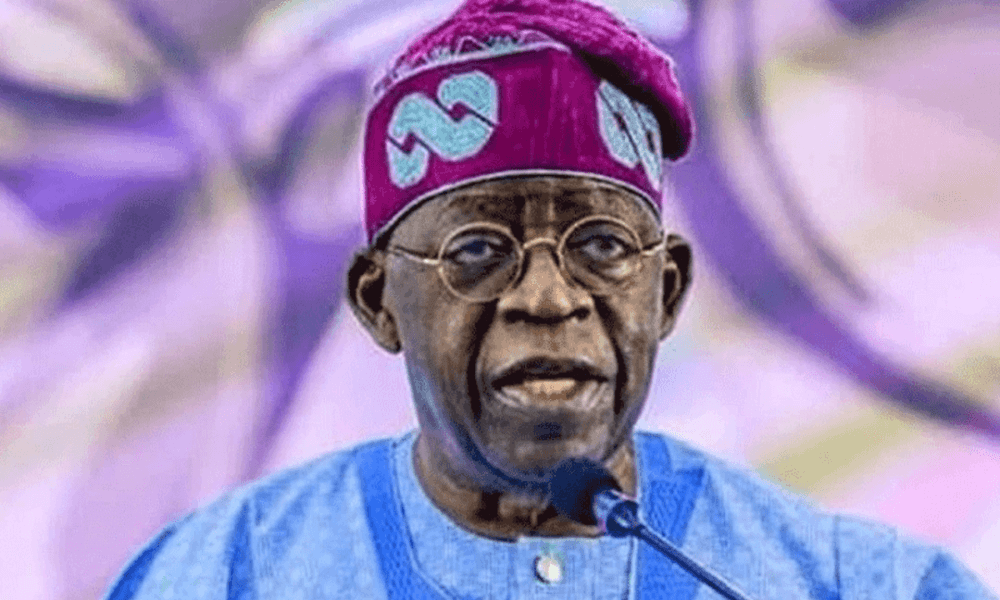
On 29th May, 2023, President Bola Ahmed Tinubu was inaugurated as president of the Federal Republic of Nigeria. As he mounted the saddle, he launched the “Renewed Hope” agenda as his administration’s mantra aimed at changing the development narrative of the country.
Socio-economic and infrastructural projects were mapped out for execution within his first four years in office. Two years down in office, some road projects were commissioned by Dave Umahi, and engineer and Minister of Works.
Among the projects is the East-West Road (EWR), particularly the stretch from Trailer Park Junction in Eleme Local Government Area to the Eleme Junction Interchange in Obio/Akpor, (all in Rivers State) which as at the time of the commissioning was still under construction.

About early June 2025, Nigerians witnessed media hype on President Tinubu’s commissioning of Lagos-Calabar coastal highway and that of the perennial reconstruction of East-West Road project.
The Minister of Works (David Umahi) was reported to have secured the approval of president Tinubu to perform the commissioning ceremony of completed part of phase 1, section 1 (30km of 750km, Lagos –Calabar Coastal Highway) scheduled to take place at KM-8 of the project from Jakande Estate Area in Lagos State on Saturday May 31.
Ugly background:
The 675km East West Road (EWR) from Calabar to Lagos seems stewed in endless controversy. Its conception is said to be under duress when then President, Olusegun Obasanjo, sought to appease a rebellious Niger Delta youth populace who wanted resource control or nothing.
The 675km dual-carriageway was meant to open up the entire Niger Delta states, linking them one to another as well as with the industrialized South-West region of Nigeria. The road stretches from Calabar in Cross River State to Warri in Delta State, with an additional 23.9km included by former President Goodluck Jonathan to link Calabar with the oceanic town of Oron in Akwa Ibom State.

The road was conceived to link all major oil towns, beginning from Oron in Uyo to Calabar across Cross River and the Atlantic Ocean, up to Itu and Eket (Akwa Ibom), Port Harcourt and Ahoada (Rivers), Kaiama (Bayelsa), and Warri (Delta), up to Benin.
From there, a traveller to Lagos would link up Okada Town (Edo), straight down to Ore, Sagamu, and then Lagos.
It was going to be a great relief to Niger Deltans because before the road was conceived, a traveller from the eastern wing of the Niger Delta would have to go through Aba (Abia State), Owerri (Imo State), Onitsha (Anambara State) and Asaba (Delta State) before linking up to Benin in Edo State and from there to Lagos or any other part of the South-West.
Some 19 years after, however, controversies still trail the project despite huge sums so far sunk into it. The project is far from completed even as road users lament the bad state of several sections of the road. Instead, politics which gave birth to the EWR seems to have continued to define it.
The project was awarded at N200bn by Obasanjo under a kind of pressure from the Niger Delta militants. By 2009, it was revealed that the same Obasanjo paid out only N1.2Bn, an indication that the project was mere wish-thinking and political window-dressing.
Goodluck Jonathan who took over the presidency re-awarded it at N726bn with some additions. By the time he left office after six years, the completion status of the road was under more controversy. It was thus so that the Onne section of the road became a huge crisis point to this day principally due to the presence of over 200 companies at the Oil and Gas Free Zone Authority in Eleme/Onne axis. The road became very sensitive because it is the carriageway to both the Lighter and Ocean Territories in Onne where billions of naira are returned every year from Customs Service. It is also the eastern export gateway to the Nigerian economy, serving both the south-south and North in export.
Read also: Nigeria’s bad roads are taking a toll on our economy
The recent re-commissioning:
The Special Assistant on Media to the minister, Uchenna Orji, in a statement on Friday in that week stated that the president who he said is also the initiator and actualiser of the historic project was expected to virtually commission other completed Renewed Hope signature projects within Southern Nigeria.
Among the projects identified for commissioning also included Ahmadu Bello to Eleko Village Area in Lekki Peninsular, the dualisation of East-West Road Section 11 (subsection 1), Eleme Junction in Port Harcourt to Ahoada in Rivers State.
And upgrading of the 15km section of the East-West Road from Port Harcourt (Eleme junction – Onne Port Harcourt, all in Rivers State, among others penciled down for commissioning.
The minister of works did carry out the assignment given to him to stand in for Mr. President to be on ground to commission the various projects, but he (Umahi) earned a basket-full of controversies trailing the commissioning that of East-West Road project said to be still far from completion.
Some members of the public who ply that route especially from the Port Harcourt City to the industrial town of Eleme to the Onne Oil and Gas Free Zone, and people coming into Port Harcourt from Abia, Bayelsa and Delta States, have off-loaded anger and criticisms on President Tinubu-led administration for promoting what they see as daylight falsehood before the public.
Some who spoke to this medium retorted, “How can President Tinubu merit this commendation over the ongoing project that has not reached 50% from Eleme Junction to Onne?”
They argued that major work remained to be carried out on the flyover at Onne Junction, the reconstruction of the Aleto-Akpajo Bridge, dualization of the main road, and other places undergoing rehabilitation which may not be completed before the end of 2025, yet the president is believed to be made to celebrate the commissioning as a success story of his two years in office.
Some notable Eleme chiefs and community leaders including some stakeholders of the Port Harcourt Refining Company, Indorama –Eleme Petrochemical and Onne Ports Free Zone, noted that the said commissioning was the first of its kind being performed by a sitting president who is yet to accomplish or complete his initiated developmental projects.
Some oil and gas and maritime stakeholders who also expressed their opinion on the quality of ongoing work opined that considering the high volume of trucks conveying oil and gas and containerized cargoes from over 200 multinational companies through the East-West Road, quality delivery of the project should be paramount to the contractors and the Tinubu administration.
According to them, the East-West Road serving the Eleme –Onne industrial zone has never lasted for two solid years without failing and passing as death trap to the users and their goods on transit to other parts of the country.
“The Eleme-Onne Port Junction is associated with poor and dilapidated condition due to poor quality work on it. So, President Tinubu and his administration must leave a lasting legacy giving their best to Nigerians rather than poor job done within two years in office”.
This medium has it from a dependable source that some opinion leaders from Eleme have forwarded their position letter to the presidency over the hyped road project commissioning as it bordered on the East-West route critical to vast majority of Nigerians.
Other stakeholders also appealed to the presidency and the senate to ensure that they appoint professional monitoring groups or committees that are assigned to government projects undergoing execution instead of leaving them in the hands of arm chair ministers or cronies of Mr. president to win favour in the course of their allegedly compromised delivery.
Conclusion:
Several agencies of the FG have been handed the sensitive road at one time or the other, including the Federal Ministry of Works, the Ministry of Niger Delta, the Niger Delta Development Commission, etc. Now, it is back to the Ministry of Works. Even the Rivers State government once intervened in the road by raising N3bn from federal organisations and companies operating in the area to save the road. Each stage seemed to end in controversy.