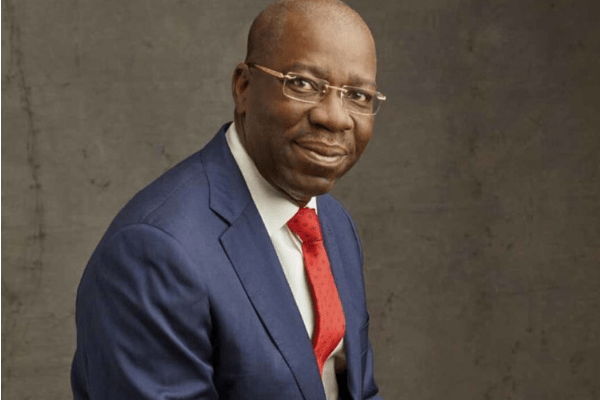
Edo State governor, Godwin Obaseki, on Wednesday presented the 2020 budget estimates of N177.6 billion to the Edo State House of Assembly for consideration and approval.
The 2020 budget estimates of N177.6 billion as against the 2019 budget estimates of N175.7 billion originally presented to the House by the governor and later increased to N183.74 billion.
Obaseki said the 2020 budget was reduced by 3.34 percent compared with the 2019 budget estimates. The budget is made up of N85.5 billion for recurrent expenditure and N92 billion for capital expenditure.
The governor noted that the 2020 fiscal year budget was based on $60 per barrel of crude oil benchmark and an average daily production of 2.3 million barrel per day as well as increase in internally generated revenue as a result of reforms in the state’s revenue collections.

According to Obaseki, the total projected revenue for the fiscal year is N145 billion, out of which N68 billion from Statutory allocation, N14.5 billion from Value Added Tax (VAT), N40.3 billion from internally generated revenue and N18.6 billion from grants and other sources, while the balance of N32.6 billion will be sourced from development financing.
He also said the government expected 10 percent increase in the Federal Government allocation revenue to the state, which include statutory allocation and VAT.
He further stated that with the review of VAT rate by the Federal Government from 5 percent to 25 percent, the Federal Government expect 50 percent increase in VAT receipts while the state VAT receipt was projected at 10 percent.
He explained that the main objectives of the budget were to deepen the state government resolved to deepen socio-economic development and consolidate on the march towards a productive and progressive state.
The governor said one of the key priorities of the budget’s capital expenditure was to strengthen the capacity of the state to meet all its obligations by allocating resources to projects that would impact on the greatest numbers of Edo people.

He also listed the priorities areas to include security, expected to be re-launched in 2020, and gave the sectoral breakdown of the budget to include, security N2 billion, pensions and gratuities N1 billion.
He said 21 percent increase was proposed to personnel cost due to government commitment to the implementation of the new minimum wage.
Allocation to pensions and gratuities are increased to 60 percent to enable the regular monthly payment of pension, government monthly remittance to the pension fund administrators to the newly employees under the contributory pension scheme, he said.
He said the sum of N1 billion was proposed to primary healthcare reforms, N3 billion for the hosting of the 2020 National Sports Festival and Under 20 Women World Cup competition.
He also added that N6 billion was proposed for EdoBest, N8 billion for the Abudu, Igueben and Afuze colleges of education, N3 billion as the state equity contribution for Benin Industrial Park.
He however thanked the leadership of the state House of Assembly for its unwavering resolve to support the government in the implementation of its laudable policies and programmes.
In his remarks, the speaker of the House, Frank Okiye, assured that the budget would be thoroughly scrutinised before approval and passage for the benefit of the people of the state.