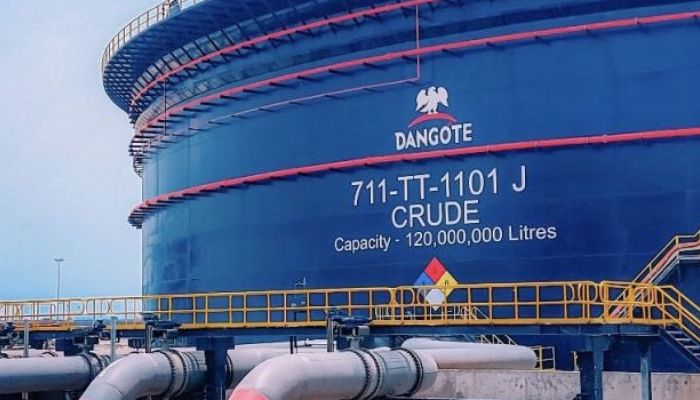
The Economic Community of West African States (ECOWAS) has issued a resounding call for an end to petrol imports within the region, positioning Nigeria’s sprawling Dangote Petroleum Refinery as a critical “beacon of hope” for Africa’s industrial future.
During a high-level visit to the 650,000 barrels-per-day facility, ECOWAS Commission President, H.E. Dr. Omar Alieu Touray, lauded the refinery as a testament to the private sector’s transformative power and a blueprint for regional self-reliance.
Touray, accompanied by a delegation including Sediko Douka, ECOWAS commissioner for infrastructure, energy and digitalisation, expressed profound optimism at the sheer scale and sophistication of the refinery.
“What I have seen today gives me a lot of hope, and everybody who doesn’t believe in Africa should come here,” he remarked, visibly impressed. “This is exactly what our continent should focus on. We congratulate Alhaji Dangote for this trust in Africa, because I think you do this only when you have the trust, and he has a vision for Africa, and this is what we should all work to encourage.”

The ECOWAS President highlighted the refinery’s crucial role in helping the region meet its stringent 50ppm sulphur limit for petroleum products, a standard many imported fuels consistently fail to meet, posing significant health and environmental hazards across member states.
Read also: Nigeria records significant drop in petrol imports – NMDPRA
“We are still importing products below our standard when a regional company such as Dangote can meet and exceed these requirements,” Touray stated, emphasising that “the private sector must take the lead in ECOWAS industrialisation.”
The visit underscored the ECOWAS Commission’s renewed commitment to fostering stronger collaboration between governments and the private sector, particularly as the community celebrates its 50th anniversary.
Touray stressed the importance of policy decisions reflecting the practical realities and opportunities faced by African industrialists.

“We cannot continue to make decisions on behalf of the private sector from a distance. Visits like this provide us with first-hand experience and direct insight into the challenges they face—challenges that authorities and government officials must work to address,” he asserted.
He articulated the urgent need for a robust industrial strategy to tackle deep-rooted challenges such as youth unemployment, poverty, and insecurity. “Only the private sector can deliver the scale of impact required,” Touray noted, pledging the Commission’s full support in facilitating access to wider ECOWAS markets for regional giants like the Dangote Group.
He further urged other African nations to emulate Nigeria’s example in developing infrastructure that serves the continent’s collective interests.
Leading the ECOWAS delegation on a comprehensive tour of the facility, Aliko Dangote, president of Dangote Group, reiterated his long-held belief that Africa’s continued reliance on imported goods stifles economic sovereignty.
“As long as we continue importing what we can produce, we will remain underdeveloped,” Dangote declared, showcasing the refinery as irrefutable proof of Africa’s capacity to build world-class infrastructure.
Read also: Nigeria cuts petrol imports as local production rises
Addressing previous scepticism regarding the refinery’s capacity, Dangote affirmed that the facility is fully equipped to meet the petroleum needs of both Nigeria and the entire West African region.
He highlighted the tangible benefits already being reaped, citing a significant reduction in diesel prices from N1,700 to N1,100, and now even lower, since the refinery commenced production.
“This reduction has made a significant impact across various sectors,” he noted, emphasising the positive ripple effects on industries, mining, and agriculture.
Dangote further pointed out the substantial savings enjoyed by Nigerian consumers, with petrol prices at the refinery ranging between N815 and N820 per litre, significantly lower than the average of $1 per litre (N1,600) in neighbouring countries. “Many Nigerians don’t realise that they are currently paying just 55% of what others in the region are paying for petrol,” he revealed, hinting at further benefits for Nigerians as the refinery continues to enhance energy security and reduce import dependence.