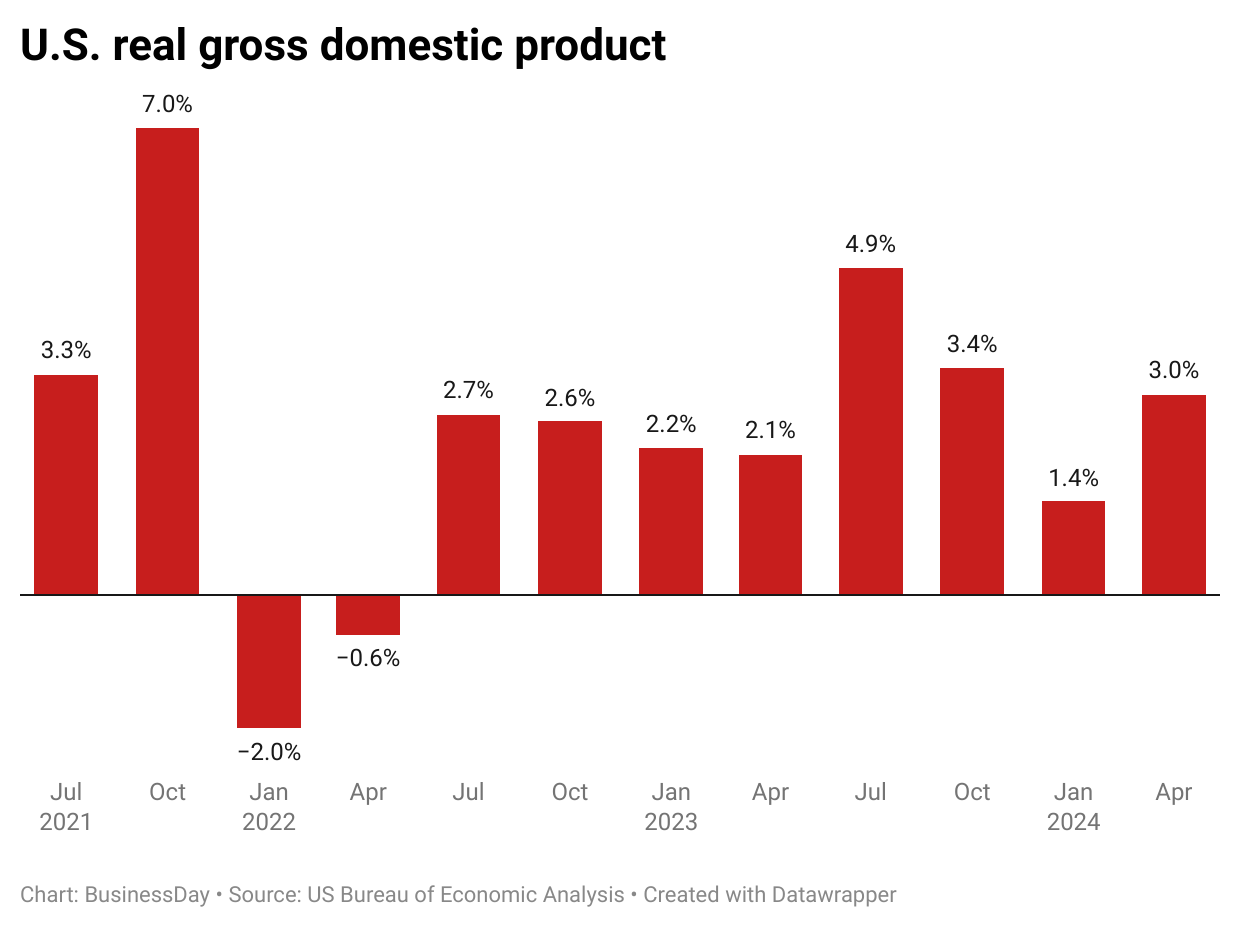
The United States’ third quarter GDP report is the biggest economic data release scheduled for this week with Stanbic IBTC’s Nigeria’s Purchasing Managers Index (PMI) for Nigeria rounding off the eventful week.
Tuesday, October 29
Japan is set to release its September unemployment rate, following a drop to 2.5% in August from 2.7% in July. Japan’s job market recovery continues, with the labour force participation rate rising to 63.6% year-on-year. The IMF has also recently forecast that Japan’s nominal GDP will be overtaken by India’s in 2025, sliding Japan from the fourth-largest economy to fifth.
Wednesday, October 30
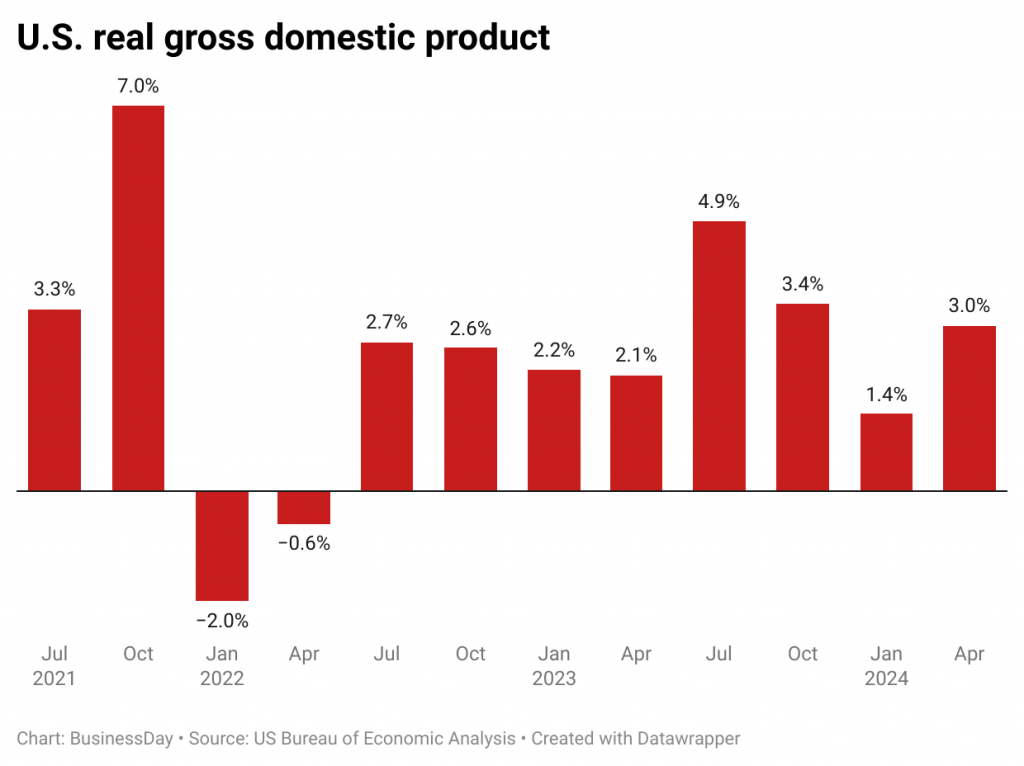
The United States is poised to release its third-quarter GDP report, with the IMF’s latest World Economic Outlook projecting stronger-than-expected growth for 2024 and 2025—the only advanced economy to have its growth forecasts revised upward for both years.
This upward revision reflects the resilience of U.S. consumer spending and an easing of inflationary pressures, suggesting the Federal Reserve’s balance between growth and inflation may be largely achieved.

Wednesday, October 30
The Swedish Statistics Agency will unveil its third-quarter GDP data following a slight contraction of 0.3% in the second quarter. Household real disposable income saw a modest 2.0% uptick, although consumption fell slightly, mainly due to reduced spending on essentials such as food and non-alcoholic beverages.
Thursday, October 31
Japan’s central bank is set to announce its interest rate decision. The IMF has projected the Bank of Japan’s rate, currently at 0.25%, will reach 1.5% by 2027. While the Bank has already adjusted rates upwards to 0.25%, experts suggest further hikes may be delayed until next year.
Friday, November 1
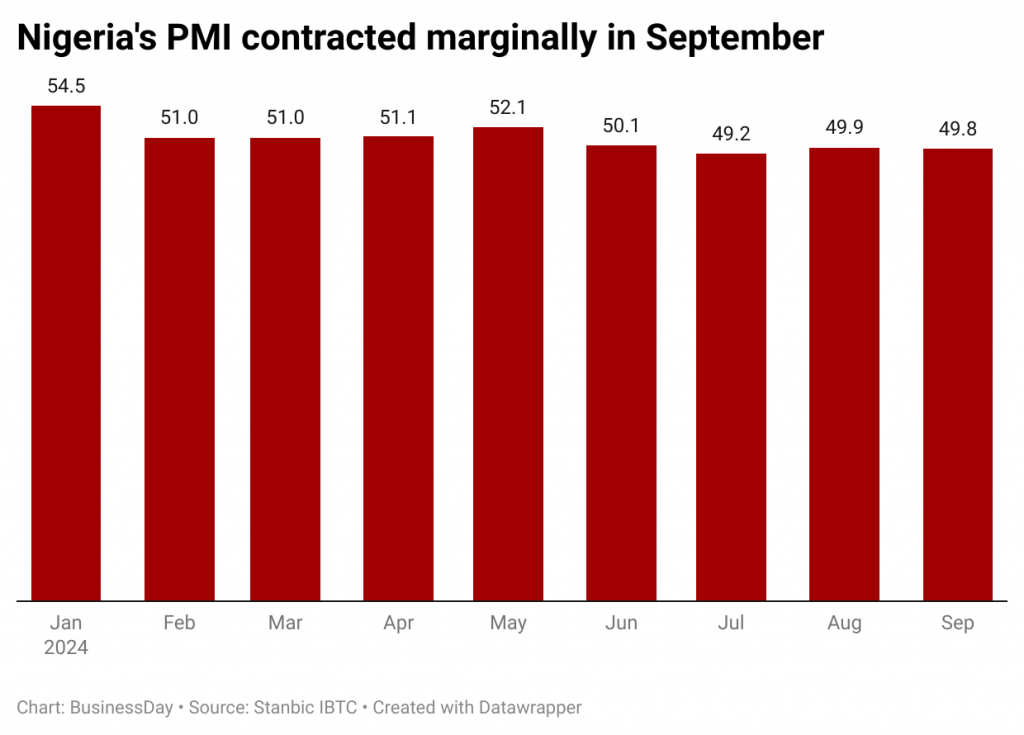

Stanbic IBTC is set to release Nigeria’s Purchasing Managers’ Index (PMI) for October. September’s PMI dropped to 49.8 from 49.9 in August, indicating a slight contraction in Nigerian business activity, amid heightened inflationary pressures and low business confidence. Rising inflation, recorded at 32.7% in October, continues to add strain as Nigerian companies close out the third quarter.