|
Getting your Trinity Audio player ready...
|
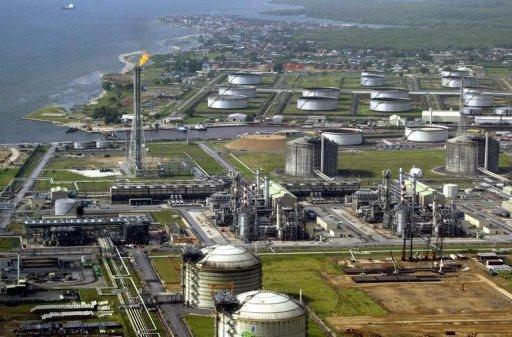
Nigeria’s economic downturn may soon turn the corner as efforts to ramp up crude oil output yields results with expected loading of .Forcadoes crude grades after the spectre of force majeure is lifted.
Last week, media reports stated that Forcados crude stream is set to resume at the end of September since restrictions were placed in February following a declaration of force majeure by SPDC. A loading programme issued for October includes orders for the cargo for the grade according to trade sources Reuters asked.
October exports are expected to be around 230,000 barrels per day according to a preliminary loading list.
.According to NNPC monthly financial operations report released last week, crude oil production in Nigeria rose to 1.77mbopd due to completion of repairs coupled with no new major attacks since mid-June, 2016. But this however was still 10.72% lower than June, 2015 production (the second lowest in over two decades).

The NNPC reported that crude volumes from Production Sharing Contracts (PSC), mainly deep-water assets, remained steady compared to Joint Venture (JV) & Independents producing predominately from Onshore and Shallow water locations impacted by security breaches and militant activities.
“Onshore and shallow water assets were severely damaged by militant activities. Hence, securing Onshore & Shallow water locations which are the predominant terrain for JV production is of Priority & Critical to production restoration,” the report said.
The relative lull in militant activities is helping to shore up crude oil production which to rose 1.77million barrels per day in July. NNPC reported about 311 vandalised points on oil and gas infrastructure in Nigeria in the month of July.
There are also bright prospects for gas. Out of the 205.90 BCF of gas produced in July 2016, a total of 114.86 BCF of gas was commercialized comprising of 20.30 BCF and 94.56 BCF for the domestic and export market respectively. This translates to an average daily supply of 654.78 mmscfd of gas to the domestic market and 3,050.40 mmscfd of gas supplied to the export market.
This implies that 55.78% of the total gas produced was commercialized while the balance of 44.22% was either re-injected, used as upstream fuel gas or flared. Gas flare rate was 10.58% for the month of July 2016 i.e. 702.83 mmscfd compared with average Gas flare rate of 8.87% i.e. 668.91 mmscfd for the period August 2015 to July 2016.

This 12th publication of NNPC Monthly Financial and Operations Report however indicated a trading deficit of ₦24.18Billion in July 2016 as against ₦26.51Billion deficit reported in June, 2016, the net cash flow improved by 8.77% or ₦2.32billion in July 2016.
“This improvement was largely due to increase in revenue stream from NPDC and PPMC, despite the upsurge in upstream and downstream vandalized points. NPDC, substantial portion of crude oil sales for the month estimated to be in excess of N27Billion could not be realized due to Force Majeure declared by SPDC as a result of vandalized 48-inch Forcados export line,” the report said.
ISAAC ANYAOGU