The Nigerian power sector experienced a significant financial surge in 2025, as Electricity Distribution Companies (DisCos) reported a 29 percent increase in annual revenue, which stood at N2.32 trillion at the end of the year, from N1.8 trillion recorded in 2024.
BusinessDay’s analysis of the monthly DisCos revenue performance factsheet for 2025 showed that the Discos made a total collection of N553.63 billion in the first quarter, this increased to N564.71 billion in the second quarter. The revenue collected by the DisCos continued on the high side to N570.25 billion and N627.92 billion in the third and fourth quarters of the year.
Electricity sector analysts who spoke to BusinessDay has attributed this increase in revenue to improved meter installation across the country as well as the implementation of DisCos remittal obligation.
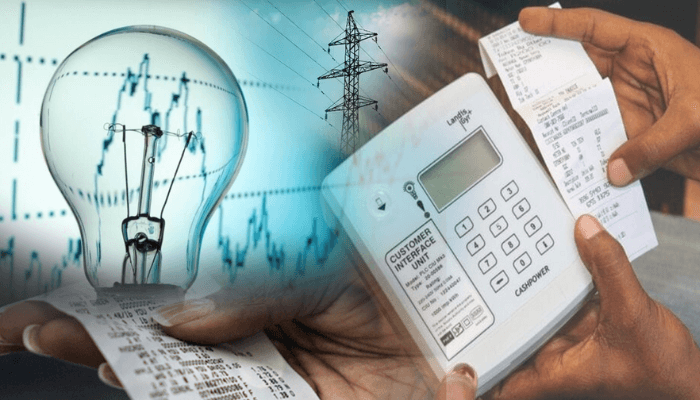
Speaking with BusinessDay, Adetayo Adegbemle, power sector analyst and executive director of PowerUp Nigeria, said that the increase in revenue is the impact of increased meter installation in the system.

According to Adegbemle, the installation of meters has enabled the DisCos to collect more revenues from consumers. “I strongly believe that we are seeing the impact of more metering, which is allowing them to collect more. Which, if they listen to us, they will do everything possible to close off the metering gap then, they will see more collection coming in.
“We have had more meters of recent, we have the meter asset fund that NERC initiated. That is the latest and the newest implementation of more metering.
“And I am sure because since January, February, a lot of the DisCos have implemented it. So, I want to believe that this is the impact that we are seeing. And I also expect with the arrival of the DISREP Meters, and its installations, we will see more impact,” he said.
Read also: DisCos revenue dropped to N207.49bn in December 2025
NERC in 2024 approved the Meter Acquisition Fund (MAF) scheme to primarily to address the challenge of DisCo creditworthiness inhibiting the deployment of end-use meter by creating a credible revenue stream from the market funds on the back of which long term financing may be secured by the utilities.

The commission noted that the inability of distribution companies to raise financing in the form of debt or additional equity was identified as the major constraint in the acquisition and deployment of end-use meters and other capital investments.
“The deployment of funds under the MAF scheme shall accelerate the deployment of meters and a closure of the current metering gap thereby reducing commercial & collection losses to DisCos, enhancing quality of service and improvement of customer satisfaction,” it stated in the order.
To further close the metering gap, the Federal Government has intensified the Distribution Sector Recovery Programme (DISREP), under which the government aims to install 3.2 million smart meters nationwide over four years.
Ayodeji Gbeleyi, Director General of the Bureau of Public Enterprises (BPE), recently confirmed that DISREP is backed by a $500 million World Bank facility. “Close to 700,000 meters have already been delivered, with about 200,000 installed across various DisCos,” Gbeleyi stated adding that the concessional nature of the funding, which comes at single-digit interest rates, makes it more sustainable than commercial borrowing and supports long-term stability in the power sector.
Also speaking with BusinessDay, Yakubu Usman, power sector analyst said that with MAP program, more customers were being metered, thereby leading to increased revenue collection by DisCos.
Read also: DisCos ordered to repay customers N20bn in illegal metering fee clampdown
He also attributed the revenue growth to DisCos remittal obligations (DRO) which mandates the DisCos to pay a fixed percentage of their collected revenue to market participants, primarily the Nigerian bulk electricity trading Plc and market operators, to ensure financial stability in the power sector.
” There is a minimum obligation called DRO that they have to meet, so it is compulsory for them to meet it. So, that may have also informed their better performance this year.
“And I think, lately, with the meter initiative that is going on, a lot more customers are getting metered. As many customers are getting metered from that, they are able to track all the leakages and all the loopholes. So, I think these are the possible causes. So, they need to meet their DRO, otherwise they will not earn the revenue that they’re supposed to earn,” he said.
Metering progress
BusinessDay’s check on Nigeria’s metering rate showed that Nigeria’s drive toward a fully metered electricity market is gaining fresh momentum as the national metering rate climbed to 57.27 percent at the end of December 2025.
According to the Nigerian Electricity Regulatory Commission (NERC) report, the total number of metered customers rose to 6,966,584, out of 12,163,412 active electricity customers in the period.
The report also indicated that of the total customers metered, Ikeja DisCo recorded the highest metering rate at 86.40 percent, with 1,130,213 customers metered out of its 1,308,042 active customers.
Eko DisCo also recorded a high metering rate at 85.87 percent, with 550,764 customers metered out of its 641,411 active customers. The report also showed that Abuja DisCo recorded 77.81 percent metering rate with 1,044,014 metered customers out of 1,341,807 active customers.