Power distribution companies (DisCos) in Nigeria can save about N18.3bn ($60m/$1=N306) annually allowing mini-grid operators share distribution assets to provide power for rural customers who cost them a lot to serve and generate lower returns, a new report has said.
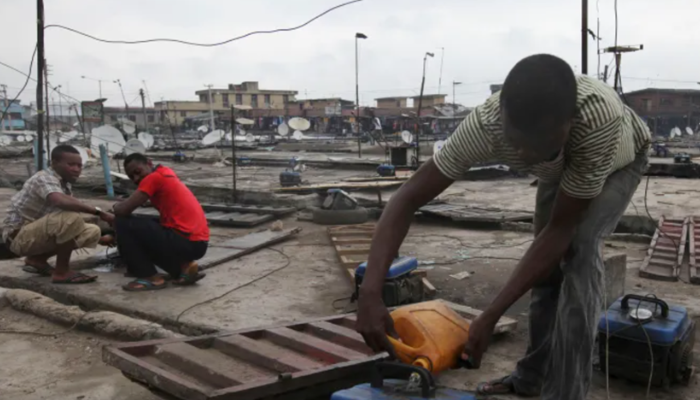
Rural communities without adequate power rely on expensive diesel or petrol generators. Some investors have seen a business opportunity serving these communities by building minigrid plants where up to 1MW of power is generated in areas DisCos have no distribution assets.
However, DisCos will save cost serving communities where they have distribution assets but inadequate supply by allowing private operators build minigrid plants in those areas and connect consumers using their distribution assets said the report funded by All On and produced by Rocky Mountain Institute (RMI), Clean Tech Hub and Energy Market and Rates Consultants (EMRC), titled: Electrifying the Un11derserved: Collaborative Business Models for Developing Minigrids Under the Grid,
It said DisCos can reduce financial losses to serve rural customers by 60 percent – 100 percent from the current average of about ₦7,000 ($19) per connection per year. A single DisCo transitioning 400 undergrid communities to minigrid service could reduce annual financial losses by ₦1–2 billion ($3–6 million); this equates to nearly ₦10–20 billion across all DisCos and 4,000 communities across Nigeria.

Read also: NERC threatens to revoke licences of Ikeja, Abuja, six other DisCos for poor remittance
The report said that implementing 4,000 undergrid minigrid projects has the potential to save Nigerian distribution companies $30–$60 million annually while offering minigrid owners $1 billion in annual revenue and saving communities $170 million in yearly energy expenditures.
Ifeoma Malo, CEO of Clean Technology Hub who contributed to the report, said the growth of the energy access sector in Nigeria is evident in the growing interest of distribution companies in increasingly exploring ways to grow their market base and meet underserved needs.
The four business models that can be implemented under today’s social, political, and economic environment include a minigrid operator-led approach, in which a private minigrid operator leads development in consultation across the distribution company and community; a special purpose vehicle (SPV)-led model, wherein the SPV may include distribution company investors; a cooperative-led approach formed by the community to lead minigrid development; and a collaborative SPV-led model wherein ownership and operation are shared among stakeholders.
“The business models outlined in this report can kickstart the undergrid minigrid industry in Nigeria by providing guidance on how to start projects, which will provide a precedent for private sector, community and utility collaboration that is applicable across many other countries in sub-Saharan Africa and around the world,” said James Sherwood, principal at RMI and co-author of the study.

According to Wiebe Boer, the CEO of All On, an off-grid energy investment company backed by Shell that funded the research, “the underground minigrid business models introduced through this research provide a framework for minigrid developers, distribution companies and communities to collaborate to provide reliable, affordable and sustainable power at scale to millions of underserved, low-income households and SME customers across Nigeria. We need collaborative approaches like these to address Nigeria’s energy access gap and improve livelihoods nationwide.”
The report authors said these business models were developed with extensive stakeholder consultation and consideration of commercial dynamics and regulatory frameworks in the Nigerian Electricity Supply Industry to ensure successful project implementation that meets the needs of all actors.
“The four business models discussed in this report explore the possibility of developing an undergrid minigrid in Nigeria which presents an opportunity for improved energy access to unserved and underserved communities, developers to make returns on their investment and existing electricity distribution companies to reduce losses, “said Oladiran Adesua, senior consultant at EMRC.
Communities living under the grid (undergrid) who are held back by poor power delivery, minigrids offer transformational access to reliable electricity that can enable local development by adding distributed energy resources at the community level. The report calls on DisCos to share distribution facilities already in place to smoothen the process.