…As experts warn that Nigeria risks economic decline if digital overhaul fails to come quickly
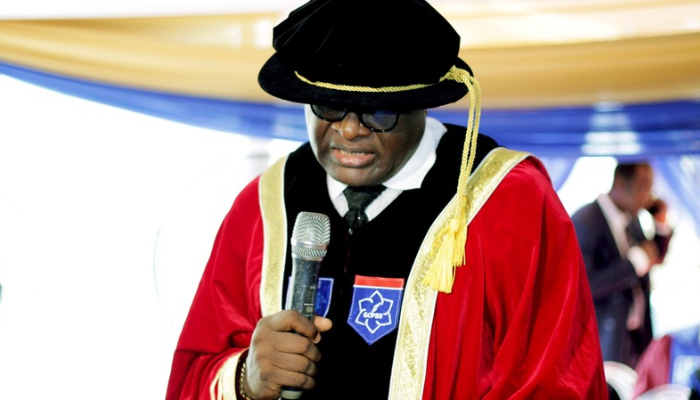
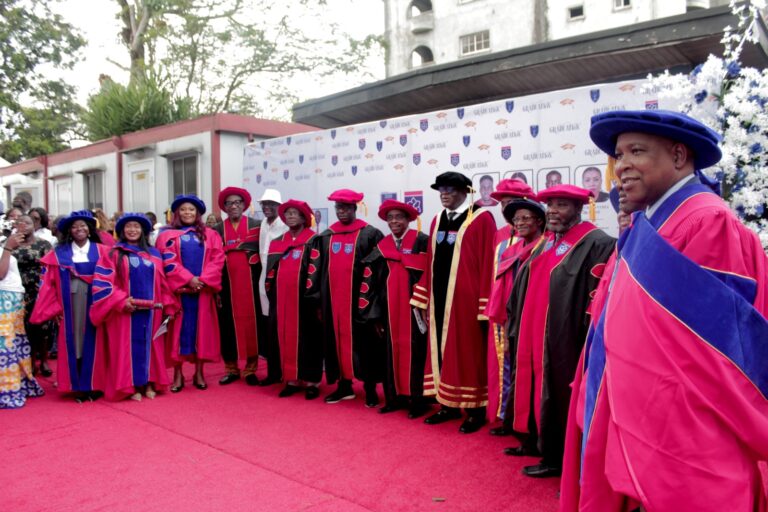
A new economic sector bigger than oil is coming, so said an economist at the graduation ceremony of the Garden City Premier Business School in Port Harcourt.
Projections indicate that the digital economy’s contribution to GDP could rise from 19% in 2025 to 21% by 2027, driven by fintech, e-commerce, digital services, ICT infrastructure, and a rising tech-savvy youth population.
On this score, Nigeria’s digital economy is said to be on track to surpass traditional sectors and become the country’s strongest engine of growth, according to Nosike Agokei, Managing Director of Agokei & Co and former President of the Institute of Chartered Secretaries and Administrators of Nigeria (ICSAN).

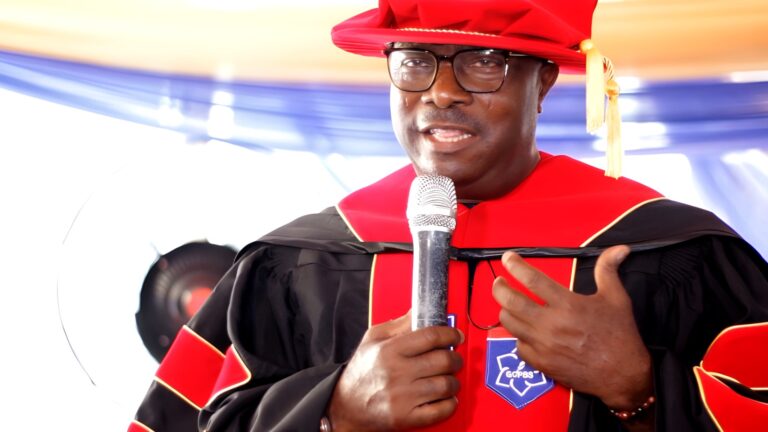
Agokei, who spoke at the 2025 graduation ceremony, declared that digital transformation, instead of oil, is now the panacea for Nigeria’s long-term economic stability and competitiveness.
He warned that nations that fail to embrace digital technologies will fall behind in global productivity and investment flows, stressing that Nigeria must accelerate digital adoption across government and business.
He spoke same day that marine engineers and naval architects in Nigeria gathered in Port Harcourt to say Nigeria must fasttrack digitization of the maritime sector to compete globally and move its blue economy forward.
Read also: Digital economy bill will unlock Nigeria’s $1 trillion growth potential — Tijani
At the graduation ceremony, also, the expert said: “Digitization transforms an economy by boosting productivity, cutting costs, and expanding market reach through automation and digital platforms.”

“This is no longer optional. It is the bridge that can connect Nigeria’s potential to prosperity.”
According to Agokei, digital activities have already become central to Nigeria’s gross domestic product (GDP) performance—surpassing oil and gas in recent years.
“Nigeria’s digital economy is expanding rapidly. It has become a critical contributor to GDP, surpassing the oil and gas sector in 2023,” he noted.
Agokei argued that the country’s demographic advantage (over 150 million mobile internet users and Africa’s largest smartphone market) provides a fertile base for digital innovation, job creation, and investment.
In his lecture titled Digital Transformation as the Panacea for Nigeria’s Economic Development, Agokei outlined how digitalisation accelerates business growth.
“Automated production lines and smart services reduce waste and costs while improving efficiency,” he said.
“Digital frameworks like cloud computing eliminate the need for heavy physical infrastructure.”
He added that global success stories such as Uber and Airbnb demonstrate how technology can disrupt traditional models and create new revenue streams for Nigerian enterprises.
Agokei warned that while technology drives economic expansion, Nigeria must prepare for associated risks. He urged policymakers to prioritise digital education, invest in ICT infrastructure, and strengthen cybersecurity systems.
“Automation can displace workers in routine jobs. Digitization also widens skill gaps and raises concerns around cybersecurity and data protection,” he said.
He warned that Nigeria must quicken its digital transformation pace if it hopes to remain competitive in a global economy increasingly powered by artificial intelligence, data analytics, and digital services. “The growth is real. The question is whether it’s fast enough,” he cautioned.
Also speaking at the event, Mina Tele Ikuru, Chairman of the GCPBS Alumni, said the graduating class must champion Nigeria’s digital shift. She described digital transformation as a national survival strategy.
“Digital transformation is not merely an option, it is a national imperative,” Ikuru declared.
“From fintech to e-commerce, from digital health to AI-driven agriculture, technology is rewriting the rules of engagement.”
Ikuru said graduates of the business school are positioned to play pivotal roles in shaping Nigeria’s technological future.
“You are the generation that will help Nigeria compete globally,” she told the students. You are called to lead with courage, create solutions where others see problems, and produce high-impact results.”
Ikuru also praised the institution’s founder, Silva Opuala-Charles, professor of economics, for building what she called a “transformational” learning ecosystem that equips business leaders for the digital economy.
“Through his strategic foresight, he has built a learning ecosystem grounded in excellence, discipline and innovation,” she said.
Opuala-Charles wants philosphers to ponder over reward for evil instead of brains
Silva Opuala-Charles, President of the Garden City Premier Business School, in his exhortation, called on thinkers and philosophers to ponder over the paradoxes in Nigeria system, worst of all being the tendency to reward streetwise people (evil) over training and brains.
He said the business school is unarguably the foremost private sector-led business school in the Niger Delta with new narratives and a defining center for innovation Excellence.
Early this year, he stated, the school embarked on a novel initiative in convening the quarterly CEOs breakfast meeting to converge the collaboration between the town and gown analogy to deepen business excellence. “Today, we are in the third and final session for 2025 aligning with our annual graduation event to usher in our graduating students to join the CEO club.
“The session today promises to be an inspiring blend of learning, leadership coaching and networking to engage with top executives, gain new insights and enhance their leadership capacity as they take new lead in their leadership journey.”
The onetime commissioner for finance in Bayelsa State said the lecture theme: ‘21st Century Leadership for High Impact Results’ by Linus Okorie, a profound Guest Speaker, and Africa’s renowned leadership coach, who he said is doing quite a lot across the country.
“He will be supported in this roundtable by other top executives and professionals with Olusegun Sogbesan, Professor and DG of the Onitsha Business School, as the moderator. Iniruo Wills of Ntephe, Smith and Wills Law Firm; Mercy Abu of IHP Consulting and Michael Nwala, Professor of English in the University of Port Harcourt.
“This dialogue is expected to deliver the following benefits: Real-world leadership strategies for today’s business climate; Tools for innovation, decision making and career growth; Successful principles used by top performing leaders; and Transformational behaviors that could unlock high impact results.”
Furthermore, he went on, “I will like to shake the table by looking at leadership challenges we face in our country and continent today.
First of all, our people seem to like autocrats in leadership. When you are gentle and considerate, there is tendency to undermine such individuals; the case in point being Goodluck Jonathan, former President, who was called several unprintable names for his democratic and less autocratic tendencies. So, those who are leading successfully today are those who are violent, virulent and employ gun diplomacy rightly or wrongly.
“Secondly, those who are compensated are those who are streetwise and not those who are well trained, equipped, and bred to rule.
“Thirdly, professors have been accused of rigging elections for much less lettered politicians, and only to be denied their salaries/entitlements by the same people they rigged into office. How do we deal with these seemingly worrisome paradoxes?
“How do we relate this to the Contingency theory of Leadership by Friedler which organizes this idea into the full-blown theory that no one leadership style is universally effective. He studied leaders’ personalities and characteristics and came to the conclusion that leadership is most effective when a leader’s style is matched to the situation, a key tenet of this theory. Invariably, his views points to the need for flexibility and dynamism in leadership development.
“Please, let’s puzzle on the issues raised as we go into the nitty gritty of the discussions on this dialogue.”