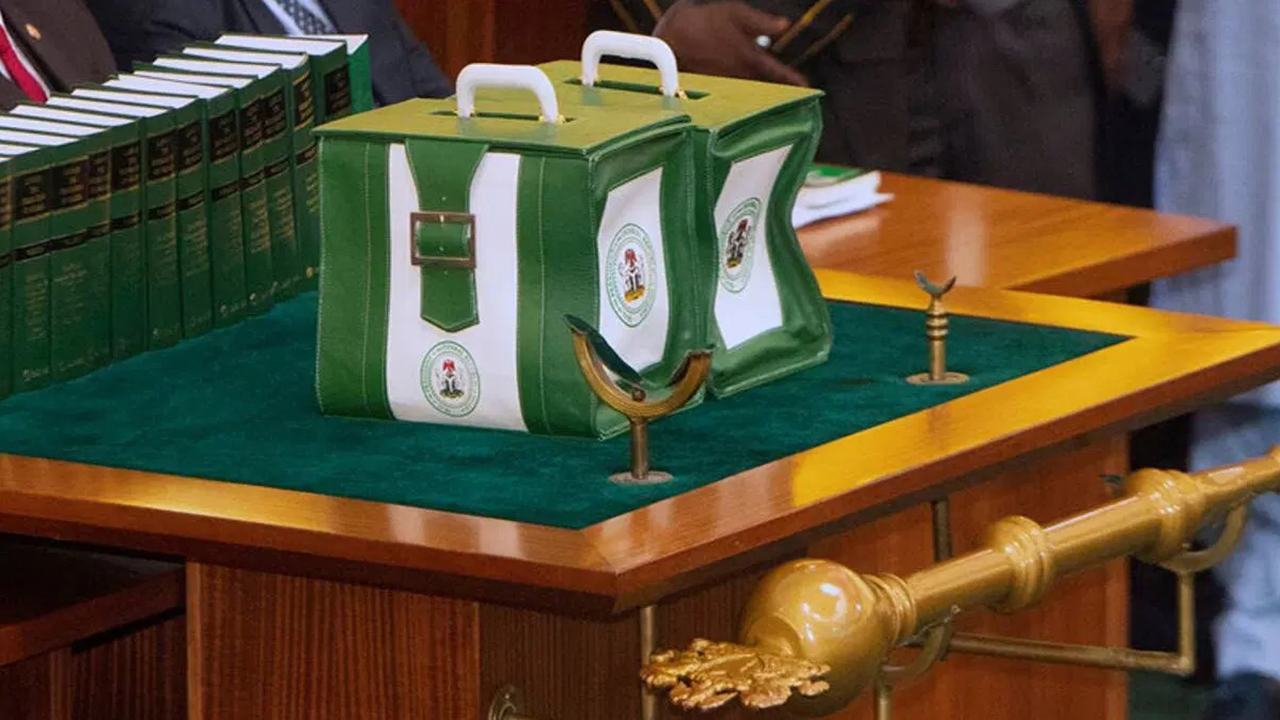
Economists have raised concerns over the federal government’s delay in implementing the 2025 national budget, warning that the prolonged inaction is deepening uncertainty across the economy and undermining investor confidence.
As of November 2025 – the eleventh month of the fiscal year – the federal government had yet to commence execution of its N54.99 trillion ‘Budget of Transformation,’ which President Bola Ahmed Tinubu signed into law in February after its passage by both chambers of the National Assembly.
Analysts say the delay is distorting fiscal planning, stalling capital project delivery, and eroding credibility in the country’s public finance management.
Muda Yusuf, chief executive officer of the Centre for the Promotion of Private Enterprise (CPPE), described the situation as ‘an aberration,’ warning that the persistent delays have weakened the integrity of Nigeria’s budgeting process.

“What has happened now is that the whole thing has been mixed up and there’s a whole lot of uncertainty around the budget,” Yusuf told BusinessDay. “Even the whole principle of budgeting is losing its essence. Because if you have a project in the budget and you don’t even have confidence that it would be implemented, then what is the essence of having the budget?”
Read also: Why Nigeria’s budget keeps missing its targets
He cautioned that the continuous rollover of unimplemented budgets could lead to ‘erosion of confidence’ in fiscal governance, particularly with respect to capital projects that depend on timely funding.
According to him, the failure to align projected revenues with spending commitments has made budget planning unrealistic and ineffective.
“There’s a huge gap between what is appropriated in the budget and what we have the capacity to fund in terms of actual revenue,” he said. “There’s no point budgeting for huge things and at the end of the day you are not able to implement half of it. It creates a whole lot of problems for the system and a whole problem of uncertainty.”

Yusuf called for a deliberate return to the January–December budget cycle and for assumptions underpinning the budget to be ‘realistic and credible.’ He warned that if the government continues to implement the 2024 budget this late in the year, it will inevitably push the 2025 spending plan into 2026, further weakening the system. “We keep rolling over these budgets, which is not tidy,” he said, urging reforms to “recalibrate and reform the whole budget process.”
Wale Edun, finance minister and coordinating minister of the economy, had earlier assured that the government was working with the National Assembly to restore the January–December cycle. He explained that the current situation, in which multiple budgets are being implemented simultaneously, has become untenable. Edun assured that “there will be no more extension of the budget into the next year.”
However, the government is yet to begin preparations for the 2026 budget, as the Medium-Term Expenditure Framework and Fiscal Strategy Paper (MTEF/FSP) – which should ordinarily precede and guide the formulation of next year’s spending plan -has not been presented to the Federal Executive Council (FCE) or transmitted to the National Assembly.
Analysts view this as a worrisome development, noting that the simultaneous implementation of three fiscal cycles has already created serious fiscal strain and bottlenecks in government disbursements.
Read also: Budget ministry takes leap into digital age with Policy Vault deal
Abdul Ibrahim, an Abuja-based economic analyst, said the continued extension of the capital component of the 2024 budget has complicated project financing and procurement processes.
“This overlap has effectively forced the government to manage two appropriation cycles simultaneously, leading to bottlenecks in disbursement and procurement that impede both the finalisation of old projects and the commencement of new ones,” he said.
He warned that the inconsistencies in budget timelines are undermining fiscal credibility and worsening inflation. “The gap between budget planning and execution leads to inevitable price variation. The economic rates used at the time of budget submission are not the same when funds are finally released months later,” Ibrahim explained.
He added that such delays heighten policy uncertainty, discouraging both local and foreign investors who rely on predictable government spending and clear fiscal direction. “Capital markets depend on predictable government spending and policy direction,” he said. “Budget implementation delays erode the confidence required to commit long-term capital to the Nigerian economy.”
According to Ibrahim, the consequences are already visible in stalled projects, cost escalations, and growing frustration among contractors. “Infrastructure spending creates jobs and stimulates local economies. When this spending is halted, the potential for employment generation and poverty reduction is lost,” he said.
The frustration has also spilled into open protest, as members of the All Indigenous Contractors Association of Nigeria (AICAN), last week, blocked the main entrance to the National Assembly in Abuja, demanding payment for projects executed since 2024.
The contractors accused the government of neglecting local firms while prioritising payments to foreign contractors.
Chijioke Ekechukwu, chief executive officer of Dignity Finance & Investment Limited, told BusinessDay that the delayed implementation of the 2025 budget and the slow release of funds to ministries, departments, and agencies have severe implications for contractors and the wider economy.
Read also: Policy continuity or fiscal loophole? Evaluating Nigeria’s 2024 budget rollover
He said with just weeks left in the year, the federal government faces a crucial test of fiscal discipline.
“Delay in commencement of 2025 budget implementation is fiscal indiscipline,” Ekechukwu said. “Developed countries will shut down if funds are not released for execution of the budget.”
He noted that many contractors who borrowed from banks to execute government projects are now struggling with debt repayment, leading to rising non-performing loans in the financial system.
Ekechukwu also warned that the late release of funds encourages corruption and wasteful spending. “When these payments are made towards the end of the year, they will encourage corruption as all ministries and agencies will do everything to exhaust their funds and budgets,” he said.