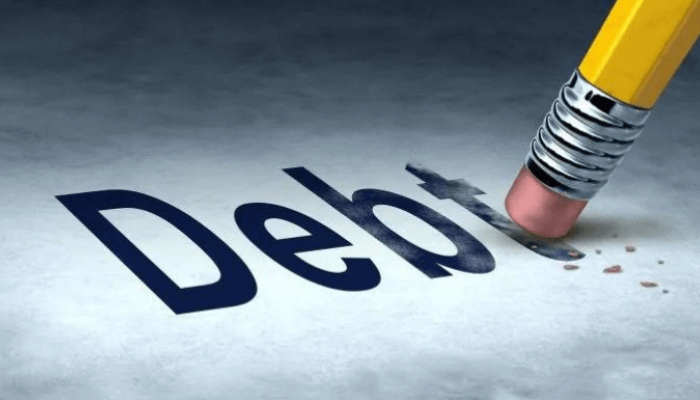
Before now, stories abound of several Nigerians who became wealthy through loans they took and did not repay. What they needed to do was to connive with the bank management by sharing it, and the loan is written off as bad debt, according to the stories. While some others took loans with the wrong collateral, with the intent of not paying back. With this, the Nigerian economy suffered, and the banking system bled unduly from bad debts. And through these years, unpaid loans became one of the quiet but destructive weaknesses of Nigeria’s financial system. From consumer credit to intervention funds and business loans, defaults have often been treated as a manageable inconvenience rather than a systemic threat. That complacency was forcefully challenged recently when Nigeria’s banking system, acting under a Central Bank directive in November last year, began recovering billions of naira from borrowers who had taken loans and grants but refused to repay them.
Although the episode was not formally publicised as a policy success, its implications are profound. It raises uncomfortable questions about financial ethics, economic sustainability and personal responsibility, while also pointing to what a more disciplined credit culture could mean for Nigeria’s future.
The recoveries were triggered by a circular issued by the Central Bank of Nigeria, activating the Global Standing Instruction (GSI). The directive empowers banks to recover overdue loans from any account linked to a debtor’s Bank Verification Number (BVN), regardless of where the loan was originally taken. For many borrowers, especially those who believed they had cleverly disappeared after collecting funds, the debits came as a shock. Accounts they assumed were safe in other banks were suddenly debited to offset long-standing obligations.
The outrage (reaction) at an individual level was predictable. Some affected customers complained that deductions should not have come from their other accounts. But this objection exposes a deeper problem, a mindset that treats borrowing as an entitlement rather than an obligation (my share of the national cake), forgetting that credit is built on trust. When borrowers deliberately default, they not only harm banks; they undermine the entire system that makes affordable lending possible.

The economic implications of widespread loan default are severe. Nigeria already struggles with a shallow credit market. According to recent industry data, private sector credit as a percentage of GDP remains far below peer economies, limiting business expansion, job creation and consumer spending. When loans go unpaid, banks respond rationally, as they tighten lending standards, raise interest rates and reduce exposure to riskier segments such as small businesses and households. The result is a credit squeeze that punishes even responsible borrowers.
This is why the GSI recoveries matter. By demonstrating that default has consequences, the policy strengthens credit discipline across the system. A senior banking official described the recoveries as substantial within just days, noting that many debtors had funds warehoused in other accounts in anticipation of festive spending. Once confidence in enforcement improves, banks can price risk more accurately and extend credit more boldly, knowing that the system supports recovery.
Looking at the significance of timing, during the COVID-19 pandemic, Nigeria rolled out several financial interventions to cushion households and small businesses. These included the Targeted Credit Facility (TCF) and other programmes disbursed through partner banks, including Sterling Bank, under specific schemes. At the sovereign level, Nigeria also accessed emergency financing, including a $3.4 billion facility from the International Monetary Fund, which was fully repaid ahead of schedule in 2025, a point highlighted by President Bola Tinubu late last year.
The moral contrast here is that while the country met its international obligations, many individuals and businesses treated domestic intervention loans as grants by another name, my share of the national cake.
This is an attitude that does lasting damage. When recovery rates are low, future intervention funds shrink or come with tougher terms. Sadly, it is the ordinary Nigerians (workers, entrepreneurs and consumers) who pay the price through reduced access to funds.
For the individual debtor, the implications are also severe. Beyond the immediate financial shock, defaults damage credit history, limit future borrowing and erode trust with financial institutions. In an economy where formal credit is increasingly essential for growth (whether for housing, education or business), a reputation for non-payment is a self-inflicted handicap. The GSI framework makes it clear that disappearing is no longer an option in a BVN-linked banking system.

Although this is not about punishment for its own sake, a healthy credit culture requires both compassion and accountability. The ideal case is one where loans are transparently structured, borrowers are properly assessed, and repayment terms reflect economic realities. Banks must also play their part by improving risk management, borrower education and post-disbursement monitoring. Intervention loans, especially, should come with clearer communication that they are obligations, not gifts.
At the policy level, sustained enforcement must be matched with fairness. Borrowers facing genuine hardship should have access to restructuring and mediation, rather than being pushed into financial ruin. The goal should be compliance, not disorder.
What the recent recoveries have shown is that Nigeria has the tools to enforce discipline when it chooses to. Linking BVN, strengthening data systems and backing banks with clear regulatory authority changes behaviour. Over time, this can lower default rates, reduce borrowing costs and expand credit to productive sectors.
In the end, debt is not the enemy, but indiscipline is. A system where loans are repaid supports growth, stability and opportunity. One where the default is normalised breeds scarcity and mistrust. Nigeria’s recent loan recoveries, though controversial, offer a glimpse of what a more responsible financial culture could look like, and sustaining it is in the interest of both the economy and the individual.