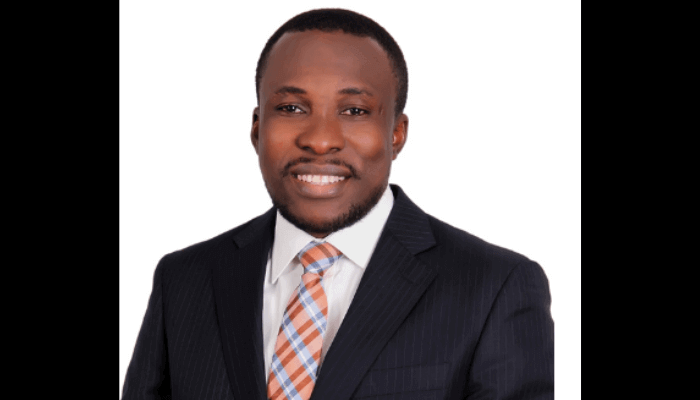
When David Idris speaks about artificial intelligence, it’s not with the starry-eyed fascination of a tech enthusiast but with the conviction of someone who sees Africa’s future hanging in the balance. As the founder and chief executive of Glemad, David Idris is behind Dara AI 1.3, a homegrown model he describes as “proof that world-class AI can emerge from Africa.”
For Idris, the motivation was clear: Africa cannot afford to be just a consumer of foreign-built AI systems. “These models often don’t fully understand our languages, our business realities, or our data sovereignty needs,” he told BusinessDay. “We launched Dara 1.3 now because AI is becoming foundational to economies, and if Africa doesn’t build its own systems, we risk being locked out of the future.”
Unlike global competitors such as ChatGPT or Google’s Gemini, Dara is engineered with sovereignty in mind. It runs on Glemad’s private cloud infrastructure, allowing businesses, governments, and startups to safeguard sensitive data while deploying AI tailored to their needs. Crucially, it is multilingual. Already supporting more than 150 languages, ranging from Yoruba and Swahili to Amharic and Zulu, Dara is trained to understand proverbs, cultural nuance, and context, making interactions feel more authentic.
The immediate benefits for businesses, Idris says, are accessibility and cost savings. “Startups can automate customer service, financial operations, and marketing in multiple languages at a fraction of the cost,” he explained. “Large enterprises can use Dara for compliance, analytics, and decision support. Businesses no longer need Silicon Valley budgets to access cutting-edge AI.”

The vision stretches beyond boardrooms. Dara is being positioned as an educational companion across Africa. Idris envisions a classroom where the AI tutor helps students learn coding or science in both English and their mother tongues, while teachers get curriculum-aligned AI assistants to reduce workload. “Our long-term goal is to democratize knowledge for every classroom,” he said.
Cybersecurity is another frontier Dara is tackling. Integrated into Glemad Edge, the company’s cloud and on-premises security infrastructure, Dara can detect anomalies and flag suspicious activity, helping institutions in finance, healthcare, and government defend themselves against cyber threats. “Cybersecurity is no longer optional,” Idris stressed.
Building Dara, however, wasn’t without challenges. Training large-scale AI models requires enormous computing power and resources. “Funding and infrastructure were the biggest hurdles,” Idris admitted. “We overcame this by being resourceful, leveraging partnerships, and focusing on efficiency over brute force.”
Still, Idris believes Dara 1.3 is more than a technological achievement; rather, it is a statement of intent. “By having a homegrown model, Africa no longer sits only as a consumer but becomes a producer and innovator in AI,” he said. “That changes the narrative from dependency to sovereignty.”
Looking ahead, Idris wants African governments to play a bigger role in shaping this future. “They can invest in research, infrastructure, and AI education, and create policies that support responsible innovation. If governments back indigenous AI, we’ll accelerate economic growth and digital independence,” he urged.

His ambition is nothing short of global recognition. “In five years, Dara will be Africa’s most trusted AI platform, powering schools, hospitals, banks, and governments,” Idris predicted. “But beyond Africa, we want Dara to stand globally as a leader in sovereign, ethical, multilingual AI. My vision is for Dara to be mentioned alongside the likes of OpenAI and Google, not as a follower, but as a peer.”
To young Africans looking to take part in the AI revolution, he has a rallying call: “The future is wide open, and Africa has every right to claim its share. Don’t wait for permission from the world. Be bold, be curious, and know that the AI revolution needs your voice.”