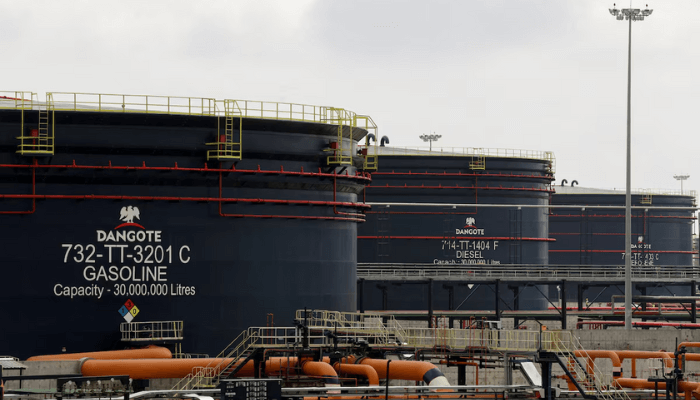
The Dangote refinery says it has identified individuals behind claims that it imports petrol into Nigeria, describing the narrative as misleading and deliberately propagated.
In a statement issued on Monday, the refinery said it would disclose the identities and motives of those responsible “at the appropriate time,” adding that they would face legal action.
“This propaganda is being promoted by unpatriotic and unscrupulous individuals who cannot afford to see Nigeria stop imports,” the statement said, accusing them of benefiting from past “fraudulent financing transactions” linked to repairs of state-owned refineries.
On February 4, David Bird, chief executive officer of the refinery, clarified that the facility does not import petroleum products but only intermediate feedstocks used in refining.

The refinery said recent reports — attributed to an international intelligence firm and amplified through newspaper advertisements — falsely suggested that it imports finished Premium Motor Spirit (PMS).
Read Also: N2.72bn capital vote insufficient for trade, investment push — Minister
It said the issue was addressed at an S&P Global forum in the United Kingdom, where participants acknowledged the refinery’s role in reshaping Nigeria’s refining capacity.
According to the company, Dangote refinery imports only intermediate streams and blending components, such as high-sulphur reformates and low-RON condensates, which require further processing before meeting market specifications.
“These materials are not petrol and cannot be sold as such without additional refining,” the statement said, adding that the practice is standard among large refineries in Europe and Asia.

The refinery said the only petrol it supplies to the Nigerian market is Euro 5–compliant PMS, which undergoes quality testing before distribution.
It added that since commencing operations, it has improved fuel quality in Nigeria and reduced reliance on high-sulphur petrol imports.
Dangote refinery urged industry stakeholders to ensure technical accuracy and responsibility in public reporting on refining operations.