Our desire to own something we can see, touch, and feel is primordial. e-Cash is not something that would naturally appeal to us. We probably do not have similar sentiments with e-money because we can readily ask for it in physical form if and when we choose to.
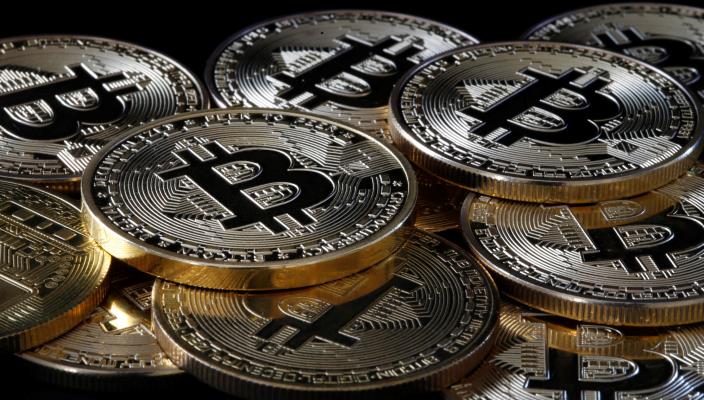
e-Cash like bitcoin is designed to not have a physical alternative. It is wholly digital. Yes, we can convert it to fiat currencies. But you could not hold bitcoin in your hand like you would an American dollar, British pound or South African rand. Thus, some of the resistance to cryptocurrency perhaps relates to this intangibility.
How would something that you can send around like email be of any value? This is a question almost every person who happens on the concept of cryptocurrency wonders about at the outset. Little wonder, money has proved resistant to technological innovation.
Some of the same archaic banking process and systems of lore remain. It still takes at least two days to send money abroad. And if the direction of the transaction is towards home in an African country, you were still not sure the intended recipient would be able to get full value. You could not also be sure the recipient would actually be able to withdraw the funds on time. Hard currency shortages are a perennial problem in many African countries. e-Cash changes all that.

Individuals, firms, and countries that are likely to ride to success on the ongoing crypto boom would likely be those with similar objective intellectual curiosity
But why did it take so long to create a fully digital currency? Author Matthew Leising provides some background in his 2020 book “Out of the Ether: The amazing story of ethereum and the $55 million heist that almost destroyed it all”. Leising (2020) wondered how despite the internet’s significant reach, value creation that can be sent as easily as an email remained elusive hitherto.
But it was not because the creators of the internet did not think the task worthy. In fact, “in the 1997 Internet Official Protocol Standards, which specifies various aspects of the html protocol that makes the Internet possible, you can find ‘entry 402’, designated as ‘payment required’ (Leising, 2020).”
In other words, electronic cash was part of the original design of the internet. For some reason, the digital payments feature did not see the light of day. It would be foolhardy to speculate as to why. But not until Nakamoto’s (2008) paper on bitcoin did a viable e-cash model emerge.
Bear in mind, what Nakamoto did was to synthesize existing know-how to create new insight. The proof-of-work, peer-to-peer (P2P) and cryptography concepts that underpin cryptocurrency were already well-known. But until Nakamoto’s (2008) paper, no one seemed to have been able to bring it all together hitherto.
Leising (2020) put it rather well: “It was not for lack of effort that digital payments hadn’t come along until 2009, though – there were many projects over the years that came close.”

“What the mysterious Satoshi Nakamoto did was bring together a set of existing technological pieces into one design that finally solved the puzzle (Leising, 2020).”
Despite this feat, a lot of people still find it hard to accept cryptocurrency as no more than a fad. There have been a few famous exceptions. In his 2019 book, “Bitcoin Billionaires: A true story of genius, betrayal and redemption”, author Ben Mezrich describes in excellent detail how famous twins Tyler and Cameron Winklevoss happened on bitcoin in the most serendipitous manner.
Even as they were well aware of the bad reputation of bitcoin as a favourite store of value and medium of exchange for criminals looking to hide their identities, the Winklevoss twins approached the subject with healthy intellectual curiosity. Their objectivity paid off. Once they understood bitcoin well enough, they bet a great deal of their wealth on the cryptocurrency. Today, they are rightly called “bitcoin billionaires.”
The Winklevoss journey to crypto fame and glory was not a smooth or easy one.Still, their story is instructive. Individuals, firms, and countries that are likely to ride to success on the ongoing crypto boom would likely be those with similar objective intellectual curiosity.
According to Mezrich (2019), when the Winklevoss twins happened on bitcoin in 2012, there were no books on the subject. And even when they inquired about cryptocurrency from supposedly domain experts in academia, they got the typical refrain about bitcoin being about crime, ponzi schemes and so on.
In the popular perception then and even now, crypto transactions are supposedly anonymous, hence perhaps the misunderstanding. In fact, this is partly true. Crypto transactions are pseudonymous. Cryptocurrency exchanges can trace transactions and the identities of counterparties if they need to.
Thus, the current concerns around cryptocurrencies by African securities & exchange regulators, central bankers, security agencies and fiscal authorities are nothing new. The currently bumpy transition towards likely eventualcrypto acceptance on the continent has been almost the same everywhere else.
That said, the criminal image problem of bitcoin and other cryptocurrencies remains. But were these crimes impossible with fiat currencies hitherto? Certainly not.