Cropit Nigeria Limited ( Cropit) in partnership with the International Institute of Tropical Agriculture (IITA) have concluded plans to launch a robust digital platform that will impact more than 5,000,000 farmers and over 100,000 Agricultural extension officers.
The initiative, which is grounded in the agricultural firm’s innovation partnership approach, will support the expansion of high-impact, digitally-enabled services to farmers and extension officers across Nigeria over the next three years.
Cropit is an agriculture specialist company and a developer that provides financing, management, advisory and services to producers, farmers and investors in the agricultural sector, within Nigeria and overseas. Its mission is to employ technical know-how to increase smallholder income and productivity by 50 percent reaching at least 40 percent women across Nigeria. It was created with the vision to transform Africa’s agriculture by deploying a comprehensive and innovative approach and solutions with strong international backing.
Read also: CBN, governors in crucial meeting to boost agriculture sector

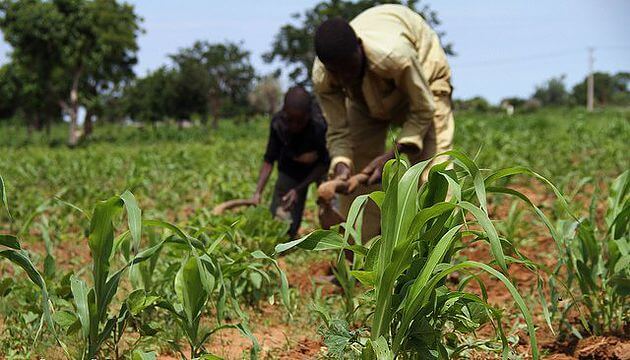
The digital platform, which has leading organizations including MTN and 9mobile as strategic partners, will create a knowledge based farmer society and a well-structured extension officers network. For the farmer, the platform will offer access to reliable and affordable agricultural information, certification of extension officers, development of agriculture protocols, e-advisory, and transactional services across major value chains including rice, cassava, soybeans, cowpea, maize, sorghum, cashew, livestock and fish through their mobile phones.
These services are to be delivered through onsite extension workers and mobile devices using toll free calls and messages as well as physical and digital call centers as service medium to provide wide coverage over the dispersed farming settlements with limited rural infrastructure.
According to Chairman, Cropit, Alhaji Nasir Ado Bayero, “Nigerian agriculture has potential, but no one can eat potential. We must articulate a clear vision to make Nigeria an agriculturally industrialized economy, to create wealth, jobs and markets for farmers, ensure food security and revive the rural extension system to reduce losses. Agriculture and our small farmers in particular, must become the engine for growth. Africa and Nigeria in particular can feed the world. To do so we must make a fundamental paradigm shift: Agriculture should be seen as a business and not a development program. It must be structured, developed and financed as a business for us to fully unlock its potential. Gains will not come easy, but as we do the right things we will succeed.”
The digital era offers many new innovations and breakthrough opportunities! This innovative effort will enable the African continent to get ahead of the curve, and more efficiently and sustainably unlock the full potential of its smallholder farmers and agribusiness sector.
Going forward, the benefits of agricultural digitalization will require governments to do more to encourage more private sector investment across the value chain in areas as diverse as production, postharvest handling, processing, access to information, market, finance and effective supply chain because countries that have adopted such strategies are already reaping the benefits. Nigeria is just starting.

Countries like Rwanda whose government since 2000, has embraced an ambitious digital agenda to achieve a full digital economy by 2020, agricultural digitalization promises to bring nothing short of a total economic transformation to the country, even as Agriculture accounts for around four fifth of Rwanda’s employment and a third of its GDP.
Nigeria is the largest country in Africa, and until recently has an annual food import bill in the region of about $20 billion, yet more than 80 percent of farmers who are the main producers of over 90 percent of domestic output are smallholder farmers.
Sadly, these farmers are poor due to a myriad of problems including and not limited to; low use of mechanization, poor agricultural extension systems and delivery, lack of good agriculture practice, inadequate market information, lack of access to credit and quality inputs such as fertilizer and seed.