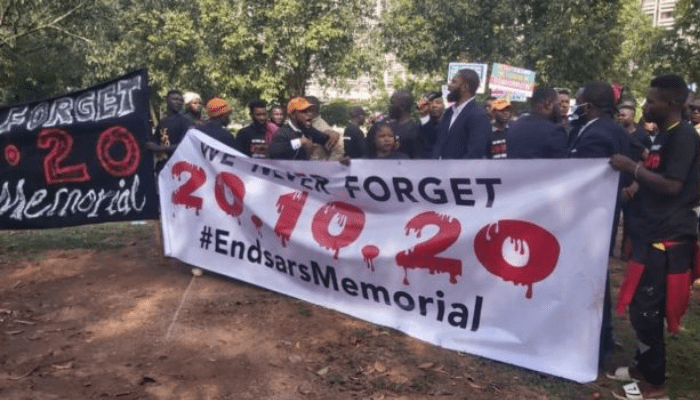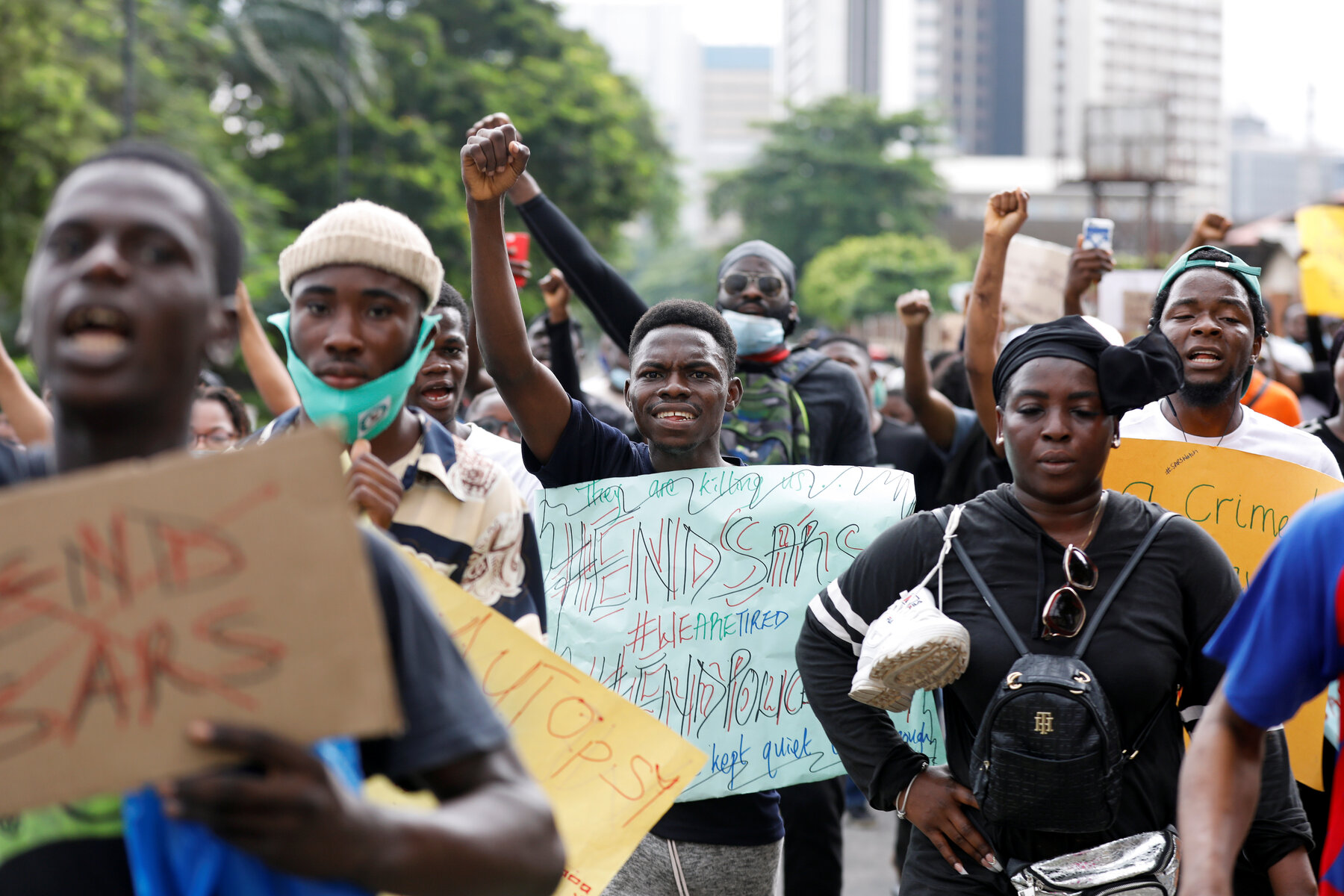
A group of prominent Nigerians including Bishop Matthew Kukah, Olisa Agbokoba, Attahiru Jegga, Pat Utomi, Femi Falana, Auwalu Yadudu, Koyin Ajayi, and Aminu Salisu, has lambasted the government’s handling of the protests by Nigerian youths and called on President Muhammadu Buhari to take immediate steps to address the widening trust deficit between him and the government on the one hand and the Nigerian people on the other.
In a seven-page statement issued Thursday, the group said the government must immediately identify and arrest those who gave instructions for soldiers to shoot protesting youths at the Lekki tollgate on October 20.
They asked that an urgent and independent inquiry be set up to investigate events at the tollgate leading to the use of live bullets as well as to prosecute those responsible for the apparent use of sponsored thugs or hoodlums by security operatives to infiltrate and break the ranks of the peaceful protesters.
In addition, the group says government must take immediate steps to remediate the bloody assault on the youths as spelt out in the youth charter of demands, including the immediate release of all arrested protesters, compensation for families of victims and the institution of an independent body to oversee the prosecution of guilty officers.

Other demands include that the president should respond to the consensus of opinion that the service chiefs have failed, that the president should announce steps to address perennial insecurity and killings in the north-east and north-west and finally for the government to develop a clear workplan for the implementation of governance reform programmes for which well-meaning Nigerians have been demanding.
They also condemned the wanton destruction of properties, killings and maiming of innocent citizens and the ethnicization by rioters and hoodlums by trying to ignite religious or ethnic conflict.
Others who signed the statement include Funke Adekoya, Jubrin Ibrahim, Joy Ezeilo, Chris Kwaja, George Ehusani, Mohammed Tabiu, Salisu Mohammed, Ngozi Iwere, Dayo Layide, Hamza Ibrahim, Peter Ozo-Eson, Yusuf Ali, Chino Obiagwu, John Odah, Kabiru Yusuf, Ledum Mitee, Ene Obi, Hakeem Baba Ahmed, Danlami Nmodu, Ukachukwu and Dapo Fashina
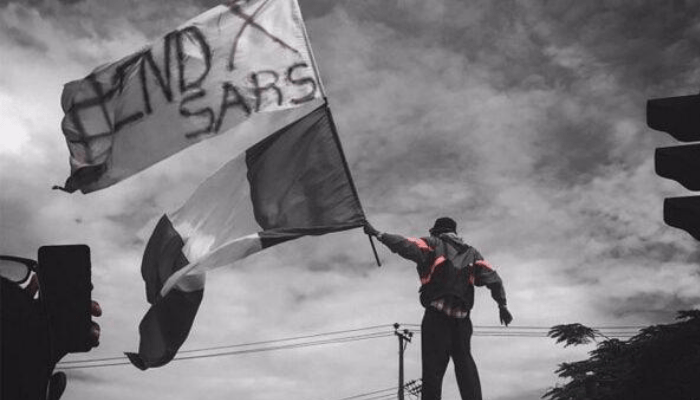
The largely peaceful demonstrations persisted even after Buhari promised to disband a police unit at the center of the brutality allegations.
The situation in Lagos deteriorated from Sunday as criminal elements took advantage of directives given to the police not to use force, said Sanwo-Olu, who imposed the curfew after police stations were burned down and financial institutions were looted.

The violence has drawn international condemnation, with United Nations Secretary-General Antonio Guterres among those who’ve called on the authorities to exercise restraint. U.S. Secretary of State Michael Pompeo issued a statement condemning “the use of excessive force by military forces who fired on unarmed demonstrators in Lagos, causing death and injury.”
Bloomberg reports that the unrest and the authorities’ increasingly heavy-handed response has begun to unnerve financial markets, with the naira dropping as much as 1.2% against the dollar on Thursday, the most of any African currency.
The risk premium that investors demand to hold Nigeria’s dollar debt rather than U.S. Treasuries has widened 20 basis points this week, while the average for African nations narrowed two basis points, according to JPMorgan Chase & Co. indexes.
Most of the demonstrators are young adults, who don’t appear to have a clearly defined leadership structure and communicate using social media — which the government says has frustrated efforts to negotiate with them.