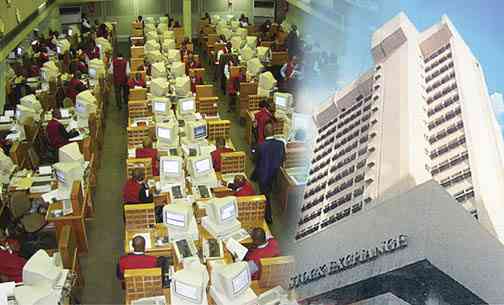
Nigerian companies are re-routing to the debt capital market after jettisoning the idea of share sales as equity pricing remains a key issue at various board meetings for capital raising.
Most companies became skeptic about the success of new share sales at Customs Street, after Nigeria’s currency restrictions policy kept big buyers at bay.
“Currency distortions are creating a big challenge for foreign investors in Africa, most obviously in Nigeria. Equity investors have been seeking alternative markets such as Egypt – the second largest economy in Africa, after Nigeria”, said Charlie Robertson, chief economist at Moscow-based Renaissance Capital.
While the Nigerian Stock Exchange (NSE) could not attract any new share sales or public offering in four months to April 2016, companies looked to the Over-The-Counter (OTC) debt market in search of pervading liquidity for their expansion drives.

Board members are successfully getting approvals for their additional capital raising agenda, but the preference for debt instruments remain sacrosanct, a source close to the dealmaker said at the weekend.
Forte Oil plc has got approval of its shareholders to raise additional capital up to the sum of N100billion by way of a public offering, rights issue or any other method they deem fit, through additional equity and/or debt capital.
Some other companies that disclosed their capital raising plans this year include: Lafarge Africa plc, one of the leading Sub-Saharan Africa building solutions companies and member of the LafargeHolcim Group, which plans to issue up to N60billion bond through a book building process.
The transaction is a 2 tier bond with 2/3 year and 5 year tenors and the proceeds will be used to refinance the third party debts of its subsidiary company, UniCem.
The Bond issue is awaiting approval by the Securities & Exchange Commission and it is expected that book building will commence in May 2016.

Wema Bank plc plans to hold a shareholder meeting this week and will seek shareholder approval to issue bonds or preference shares this year and aims to raise N20 billion in the first tranche of a N50 billion bond programme.
Sell-offs recorded Year-to-Date (YtD) in the stock market impacted negatively on fund-raising activities as issuers prefer to pitch institutional investors in debt market rather than issuing new shares.
Though the equities market gained 0.9percent in the trading week to April 29, 2016, the YtD returns is still negative at -12.5percent, signposting that investors are still in the high risk zone.
“The trading pattern has been cagey at best as investors remained mostly cautious, even as first-quarter (Q1) 2016 earnings released have been mostly mixed”, said research analysts at Lagos-based United Capital plc.
The March 2016 figures on domestic and foreign portfolio participation in Nigeria’s equity trading show that total transactions at the nation’s bourse decreased by 17.87perecnt from N117.27 billion recorded in February 2016 to N96.31billion in March 2016.
In comparison to the same period in 2015, total transactions decreased by 47.66percent from the N184.02 recorded in March 2015. Domestic investors outperformed foreign investors by 28.48percent, as total foreign portfolio investment (FPI) transactions decreased from 36.48percent to 35.76percent over the same period.
Monthly foreign outflows outpaced inflows which were consistent with the same period in 2015. Foreign outflows decreased by 40.20perecnt from N31.84 billion in February 2016 to N19.04 billion while foreign inflows increased by 40.77percent from N10.94 billion in February 2016 to N15.40 billion in March 2016.
Iheanyi Nwachukwu