|
Getting your Trinity Audio player ready...
|
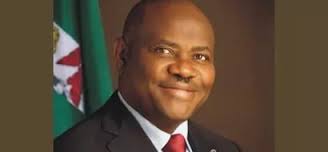
Governor Nyesom Wike of Rivers State has declared himself the Chief Revenue Officer (CRO) of his state, saying he has since taken charge of revenue drive. The government has not, however, amended the revenue law that made the board autonomous and free from government direct interference. The governor, however, may want to move the IGR of the state from N10billion per month in 2016 to N15billion per month as indicated in the 2017 budget.
The governor said that his decision to personally drive revenue generation was borne out of the fact that his administration was determined to sustain the mass execution of projects across the state. He spoke in the week during a meeting with hotel owners in the state at the Government House, Port Harcourt.
His words: “I am now fully in charge of revenue drive in the state. The aim is to make the environment conducive for businesses to thrive “The governor explained that under the current economic climate, the state government cannot continue to rely on the Federation Account, hence the need to enhance revenue generation.
The governor seems uncomfortable with revenue machinery in the state, alleging compromise between companies and revenue officials, even after he had swept away those appointed by the former administration and installing his own men. He pointed out that some hotel owners also connived with some agents of the State Government to commit revenue fraud.
Governor Wike said local council area in the state can only collect tenement rate. He said that other levies would be harmonised and paid to the state government in a single account. “There will be no duplicity of levies. We cannot collect levies and the local government areas also collect the same levies,” the governor said.
As if to move swiftly in his new role as CRO of the state, Wike summoned all bank managers in Rivers State where he read the riot act, warning he would revoke their certificates of occupancy if they dared his administration, just as he threatened to shut down 16 topmost schools in the state whose owners failed to turn up for a meeting with him.
The governor got reports that the banks were not cooperating in revenue collection and promptly directed them to work with state government officials to reconcile all Rivers State Government bank accounts ostensibly to stopping all revenue leakages.
Governor Wike also announced that the Rivers State Government would introduce a new tax policy to ensure the improvement of the state’s revenue base.
Speaking while meeting with bank executives operating in Rivers State at the Government House, Port Harcourt last week, the governor further directed the banks to close all dormant accounts of the state government and deposit the funds in approved functional accounts. “We will close accounts that are not necessary. We will only operate accounts that are necessary for the development of the state.”
He warned that banks found to be frustrating the state government’s efforts to generate revenue would be duly sanctioned, noting that each Ministry can only operate one account, while the other functional accounts should be closed.
The governor added that no government agency should open an account without the authorisation of the State Accountant General. Explaining the need for a new tax policy in the state, Governor Wike noted that it was in line with the fact that the country is operating a federal system of government.
He enjoined the banks to stop paying other charges, until after the harmonization of taxes. He, however, said they should still pay the pay as you earn (PAYE).
In his remarks, Acting Chairman of the Rivers State Internal Revenue Service, Alawari Ndu, regretted that most banks in the state have made revenue generation quite challenging. Most of the banks at the meeting assured Governor Wike that they will cooperate with the Rivers State Government to improve its revenue generation capacity.
The Rivers State Board of Internal Revenue Service was made autonomous in 2012 to pursue revenue administration with professional structure. It was allowed by law to earn five percent of revenue it generated after annual audit.
The law envisaged that the Board would hire and fire and procure tools and equipment as it deemed fit but would only get five percent of its grossing per year without any further government funding. Its chairman was to serve for four-years but could be re-appointed.
Wike removed the chairman and appointed a permanent secretary to oversee the RIRS, but has, at last, said he has taken charge.