When I read the story, ‘The warnings before the storm’, in the New York Times on Wednesday, October 29, 2025, I had a serious brainwave. Why? Because the story drew vivid pictures of what was happening from one country to the other in the Caribbean. As I tried imagining things, I could see a nightmare unfolding in the Caribbean, which was not just a meteorological tragedy but a moral one. Hurricane Melissa, one of the most powerful storms ever recorded in the Atlantic, tore through Jamaica that Tuesday, leaving a trail of destruction that could take years to rebuild. With winds peaking at nearly 298 kilometres per hour, it flattened homes, uprooted infrastructure, and plunged three-quarters of the island into darkness. By the time it reached Cuba and Haiti, more lives were lost, livelihoods destroyed, and entire communities displaced.
“The cruel irony is that developing nations are often forced to borrow more after disasters to rebuild what climate change destroyed. That deepens their debt, weakens their economies, and limits their ability to invest in preventive measures. It is a cycle of vulnerability, a treadmill of tragedy.”
This is not merely a natural disaster. It is a man-made crisis, long predicted, long ignored. The science is clear: warmer oceans, a direct consequence of greenhouse gas emissions, are turbocharging tropical storms. The Caribbean, like much of the developing world, has been sounding the alarm for years. But the richer nations, most responsible for the carbon in the atmosphere, have chosen deafness over duty.
The world’s poorest nations are living out the warnings before the storm, warnings that went unheeded in air-conditioned conference halls and diplomatic roundtables. And now, the storm has arrived.
Climate change is global, but its consequences are cruelly unequal. Small island nations and developing economies contribute less than 5 per cent of global emissions, yet they bear the brunt of its fallout. From the Caribbean to Africa to the Pacific, storms, floods, droughts, and heatwaves are pushing entire societies to the brink.

In the Caribbean alone, hurricanes over the past decade have caused hundreds of billions of dollars in damage. Reconstruction after each disaster has piled unsustainable debt on already fragile economies. According to the International Monetary Fund (IMF), Caribbean nations need to invest at least $100 billion in climate resilience to survive the coming decades, money they simply do not have.
“Imagine facing the choice between buying food for your family or installing hurricane shutters,” said Michai Robertson, a senior adviser to the Alliance of Small Island States (AOSIS) and a native of Antigua and Barbuda, which was devastated by Hurricane Irma in 2017. “It’s a human decision, but a cruel one – because no matter what you choose, the next storm can wipe it all away.”
That moral and economic dilemma captures the injustice at the heart of the climate crisis.
At the United Nations Climate Summit, which started last week in Brazil, world leaders will once again talk about ‘climate justice, ‘adaptation finance’, and ‘shared responsibility’. But these phrases have become as hollow as the shells of homes flattened by Hurricane Melissa.
In 2009, wealthy nations pledged to mobilise $100 billion yearly by 2020 to help developing nations transition to cleaner energy and adapt to climate impacts. That target was never met. Instead, what we have seen is a steady erosion of commitment.

In 2021, developed nations promised to double their adaptation aid to $40 billion yearly by 2025, yet a UN report released last week shows that adaptation finance has actually declined by 15 per cent in the past year.
As the world’s richest economies quibble over budget lines, island nations are sinking, literally.
The cruel irony is that developing nations are often forced to borrow more after disasters to rebuild what climate change destroyed. That deepens their debt, weakens their economies, and limits their ability to invest in preventive measures. It is a cycle of vulnerability, a treadmill of tragedy.
In Jamaica, Barbados, and the Bahamas, public debt levels hover near or above 90 percent of GDP, driven largely by repeated climate shocks. Each hurricane, flood, or drought pushes them further from resilience and closer to insolvency.
Read also: Report identifies how three visionaries leverage project management to fight climate change
Global lenders have proposed ‘climate-resilient debt clauses’, mechanisms that would allow nations to suspend repayments after disasters, but implementation has been slow and sporadic. Meanwhile, private creditors and international institutions continue to demand repayment, even when entire economies are underwater. This is not aid; it is abandonment.
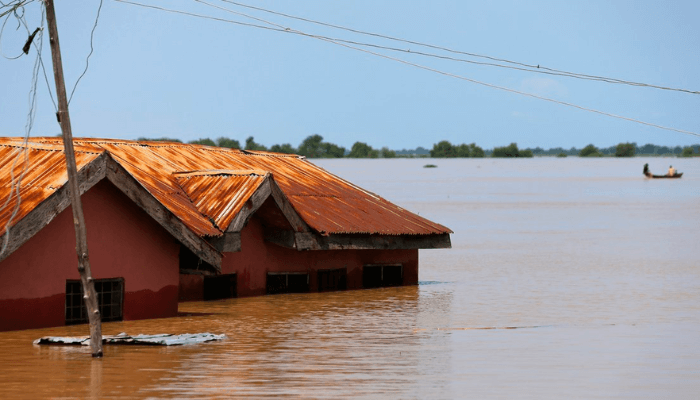
Africa is not spared. From Nigeria’s 2022 floods, which displaced over 1.4 million people, to Kenya’s prolonged droughts, climate change is becoming a multiplier of insecurity, poverty, and migration. Yet Africa contributes barely 3 per cent of global carbon emissions.
At COP27 in Egypt, developing nations pushed successfully for a ‘Loss and Damage Fund’, a mechanism to compensate vulnerable nations for irreversible climate losses. But as of late 2024, the fund remains largely empty, with less than $700 million pledged, a drop in the ocean compared to the $1 trillion needed yearly to adapt and transition sustainably.
The message from the Global South is simple: the time for symbolic solidarity is over. What is needed is money, technology, and accountability.
When Hurricane Melissa struck, Robertson’s family in Jamaica huddled around their phones, tracking the storm’s path and praying for survival. Their fear is now shared by millions across the tropics who know they could be next.
But make no mistake, this is not just a Caribbean tragedy. It is a preview of what awaits the rest of the world if inaction continues. From record heatwaves in Europe to wildfires in Canada and droughts in California, the ‘safe’ nations are learning that climate change does not recognise borders or GDP.
The warnings before the storm are all around us: melting glaciers, rising seas, vanishing farmlands, and displaced people. Each headline is another plea for justice (not charity) from those who did the least to cause the crisis.
The coming climate summit in Brazil offers one last chance to shift from promises to performance. It is time for developed nations to meet their financing obligations, restructure climate debt, and treat adaptation as a global imperative, not a favour.
History will not judge nations by the speeches they gave but by the lives they saved. Hurricane Melissa should be more than another headline; it should be the breaking point that forces the world to act.
Because when the next storm comes, and it will, the question will no longer be, Who is to blame? But who is left?