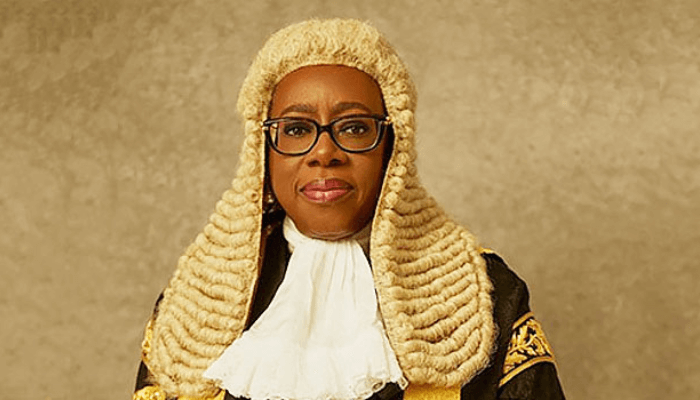
Kudirat Kekere-Ekun, the Chief Justice of Nigeria (CJN), has called on judicial officers to play a proactive role in supporting ongoing reforms in Nigeria’s power sector, stressing that judicial interpretations and oversight are critical to ensuring regulatory consistency, investor confidence, and consumer protection.
Speaking at the opening ceremony of the 2025 National Seminar on Regulations in the Electricity Power Sector for Judicial Officers, held in Abuja, Kekere-Ekun stressed that the Judiciary must rise to meet the sector’s evolving legal and regulatory challenges, particularly as Nigeria transitions to a dual electricity market framework.
“The Nigerian electricity sector stands at a crucial inflection point,” the CJN said. “Decentralized renewable energy innovations, off-grid solutions, and constitutional reforms are reshaping how power is generated and distributed. Against this background, the judiciary must be prepared to interpret legislation, enforce statutory mandates, and ensure justice is administered equitably”, she said.
Read also: Liquidity crisis in power sector worsens as Geregu, Transcorp gas debt hits N216bn

Kekere-Ekun warned that judicial vigilance was needed to oversee the regulatory activities of the Nigerian Electricity Regulatory Commission (NERC), ensuring that its subsidiary legislations and rate-setting activities remain fair, transparent, and within the law. He also expressed deep concern over rising safety incidents in the sector, noting that 112 deaths and 95 injuries were recorded in 2024 alone, and urged the courts to take an active stance in enforcing safety regulations.
“I urge Your Lordships to engage rigorously with the sessions, share your judicial experiences, and help shape jurisprudence and policy direction for a better electricity sector,” the CJN said.
Similarly, Lateef Fagbemi (SAN), the Attorney General of the Federation and Minister of Justice, stressed on the critical role of the Judiciary in interpreting the recently enacted Electricity Act 2023, which he described as a transformative milestone for the sector.
He said the Act introduced a dual regulatory system empowering States to generate, transmit, and distribute electricity within their territories, a significant shift from the previous centralized model.
“Swift and informed determination of electricity-related cases is vital to maintaining investor confidence and uninterrupted service delivery,” Fagbemi said, stressing that judicial engagement is key to ensuring fairness, protecting consumers, and promoting market development.

In a goodwill message, Musiliu Oseni, Vice Chairman of NERC, addressing participants on behalf of the Commission’s Chairman, noted that judicial pronouncements had historically shaped the growth or stunted progress of the power sector.
Read also: Navigating Nigeria’s power sector liquidity crisis beyond the missed PCAF deadline
He said, “the judiciary can make or mar the electricity sector,” he said. Our aim is not to influence judicial decisions but to ensure that there is adequate understanding of the technical nature of the sector, so that judicial decisions strengthen investor confidence and contribute to Nigeria’s socio-economic development.”