Citi sees Africa benefiting from this “new world.”
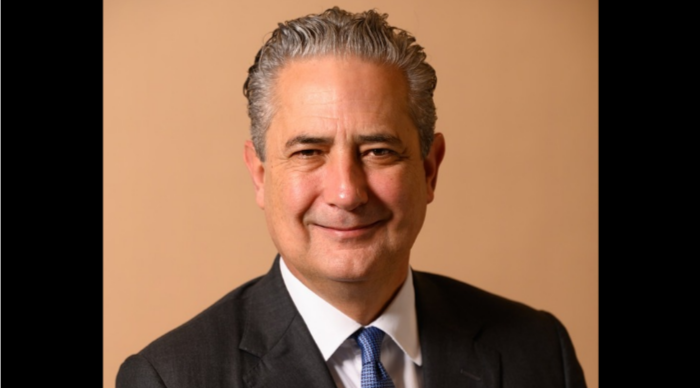
Ernesto Torres Cantu, head of International at Citi, a global bank with a physical presence in more than 90 markets, serves clients operating in nearly 180 markets.
Cantu’s appointment as head of International in September 2023 was part of changes to the US bank’s organisational structure in line with a transformation that has involved, among other things, the exit of its retail business in several countries outside of the United States.
During his visit last week to Nigeria, ERNESTO TORRES CANTU, in this exclusive interview with TAYO FAGBULE, editor, and ENIOLA OLATUNJI, finance reporter, speaks on how Nigeria and the rest of Africa can take advantage of the new world (caused by tariff wars) that puts Africa in a very competitive position vis-à-vis other parts of the world.

“We see incredible opportunity in Africa and Nigeria and remain committed to enabling the growth of our clients and progress in these markets.”
Given the current climate of global trade uncertainty, what specific challenges and opportunities do you see arising for Citi’s clients operating in Nigeria and across the African continent? How is Citi helping them navigate this volatility?
Trade corridors across the world are changing in a very significant way. I think that’s going to evolve even more with tariffs and shifting timelines. It makes it very complicated for companies to plan movements in their supply chains. For clients in Nigeria and across the African continent, there are opportunities with the growing momentum around regional trade and digital transformation that will boost operational efficiency. These shifts are creating pathways for growth, especially for businesses that can adapt quickly and invest in building more resilient value chains.
While several of our clients are adopting a measured approach, there are a number who continue to pursue strategic priorities. For example, increased production in the United States and shifting production to other parts of the world. I would expect a lot more activity to occur once the decision on tariffs is clearer for the world. That shift is going to continue.
Citi has been supporting clients during both buoyant and challenging times for over 200 years. We continue to help clients turn global volatility into opportunity through insight, financing, and risk solutions. Our international network is a competitive advantage as global trade shifts take place, and the combination of our product depth and local expertise is unmatched.
When we spoke with Jane, when she visited Nigeria, she mentioned that one of the crown jewels of Citi is the Services business and its contribution to the operations of Citi. Now, Nigeria is important to Citi, Africa has been encouraged to trade within itself, and Citi is looking to play a more significant role in trade. Could you just talk to us about the role of Citi and its services business, for instance, in oiling the whole machinery of intra-African trade?

For Citi, our vision is to be the preeminent banking partner for clients with cross-border needs. Global corporations truly value our physical presence in 94 countries around the world.
In the case of Nigeria, led by Nneka Enwereji, it’s that local knowledge that a global company with a subsidiary in Nigeria values. You want to talk to your banker. If you call Citi, the answer is, I’ll be there in 15 minutes.’ Well, traffic in Lagos is a little heavier than that, so maybe I’ll be there in one hour.
We are here, and we know the regulations, we know the land, and we know how to help you navigate the environment. That is what our clients, time and time again, keep telling us that they value most about Citi.
In the case of Africa, at this point, I think that’s becoming even clearer because you see other global banks or regional banks leaving Africa. For Citi and our institutional business, we’re not leaving any country. We see incredible opportunity in Africa and Nigeria and remain committed to enabling the growth of our clients and progress in these markets.
When we talk to clients, the conversation is always, How many countries are you in? We want to support you in all of them, including Nigeria. For local companies doing business in Africa or another part of the world, how do we work with you across all these geographies?
Intra-African trade has grown marginally. In 2023, intra-African trade was estimated at 15 per cent. This is significantly lower than other economic blocs such as the European Union (EU). Most African countries have done more trade with the United States or with Europe than with the country next door. Infrastructure development has contributed to this trend, and this needs to be addressed.
The African Continental Free Trade Area (AfCFTA), with more than 50 countries that have ratified it, stands out as something that the world should be replicating everywhere. The framework is truly extraordinary, yet it needs to yield much faster and better results to be more significant for Africa.
Citi is one of the main sources of finance in trade on the continent. Citi’s pan-African footprint is built to power the promise of AfCFTA — seamless trade across borders. As a global bank, we have more presence and over a century of banking expertise on the continent. Citi facilitates payments throughout our operations in 12 countries in SSA and an additional 21 hub-managed markets. We have invested in digital trade platforms that reduce friction in payments and compliance to facilitate and finance trade.
More needs to be done to remove or mitigate the obstacles to further growth in intra-African trade. It is heartening to note that the multilateral development agencies and the Central Bank of Nigeria are coming up with continent-wide solutions to enable payment flows across borders and currencies. We would like to see more trade between different countries.
Would you say Africa is reaping the dividends of the wide-ranging restructuring exercise Citi chief executive Jane Fraser embarked on in September 2023?
Yes, in terms of the clarity of the five global businesses that CEO Jane Fraser has defined for us. The other modification is that we removed management layers and the regional construct, which has accelerated decision making and strengthened connectivity between our businesses.
Now we have only one global organization, and then there is the international organization that I lead. In the case of the Middle East and Africa, the cluster was previously reported to the Europe, Middle East, and Africa (EMEA) organization. Now the Middle East and Africa report to me, alongside the whole globe except North America. So, they get the same amount of my attention as Europe, Asia, South or Latin America. That’s a good thing.
We are fundamentally a different bank today, working more closely together to bring the full capabilities of Citi to our clients. All the work we’ve done has put us in a stronger position to drive improved returns and deliver for our shareholders.
Read also: Citibank marks 40yrs of excellence, innovation in Nigeria
Considering the specific foreign exchange challenges often faced in Nigeria, what innovative financial solutions or strategies does Citi offer to help multinational companies and local businesses manage currency risk and ensure smooth trade transactions?
Citi provides targeted solutions, including liquidity and risk management solutions (such as FX spot, forwards, and swaps), trade facilitation (such as LC confirmation), and advisory (spanning market insights, business intelligence, and bespoke solutions through dedicated FX and Trade teams).
Globally, Citi offers FX management solutions in over 120 countries and over 500 currency pairs, which gives us unparalleled insights and solutions gathered across different geographies and industries. With a deep local presence in Nigeria spanning over 40 years, it delivers some of these solutions locally in line with local regulatory requirements.
The reforms around foreign exchange, taxes, and inflation are very important. Continuity and consistency in the implementation of these reforms will shape Nigeria’s future.
I think the FX reforms, for example, proved that point. After U.S. President Donald Trump announced tariffs on April 2, the whole world and financial markets reacted. In the case of Nigeria, the FX depreciation was very marginal. The central bank did not intervene, and the market worked. It did what it was supposed to do – absorb shocks and then move on. That was an important demonstration of the Nigerian government’s, particularly the Central Bank’s, commitment to their reforms. This is a signal to the market overall and is beneficial to our clients.
Nigeria is still dependent on oil; some think the way out of the reforms will be to sell more oil. However, we have also seen, along with the global volatility, that oil prices are fluctuating, and that also affects trade flows. So, how are you helping clients manage this risk? I mean, especially clients like Nigeria that have exposure to oil price fluctuations.
Nigeria’s oil is approximately 4.6 per cent of the total economy. So, while oil price fluctuations do have an impact, I do believe it’s very manageable. One thing you can be sure of about oil prices – they always fluctuate. It is very important that the country has a fiscal position that can accommodate these fluctuations in price. Also, the reforms around public and private investments in various industries, including oil, are very good ways to manage that risk.
While oil remains important, we’re seeing tremendous growth in sectors like agribusiness, technology, healthcare, and renewable energy. We work with our clients to structure deals, access export markets, and attract international partners. Again, our global network plays a catalytic role.
In your role now as the Head of International, what are those trends that you’re seeing and paying attention to that are also being discussed with your clients? Can you provide your top three things that you are focused on in the short to medium term?
I can speak to two key trends:
First, the increased volatility around tariffs is leading the drive for new markets and new trade partners. Supply chain changes will determine the way things should be moving in the coming years. For companies, what is important to understand is what is changing and what is not, and to act accordingly. Citi is uniquely positioned to support clients with complex, cross-border needs – from shoring up liquidity to risk management and working capital optimisation.
Africa is less exposed than other parts of the world to trade with the United States because participation is lower. That has now turned into a competitive advantage, as you’re equally or more competitive than other areas of the world, which now have tariffs levied. The same goes for competitiveness that comes as a consequence of the African trade agreement or the competitiveness with Europe that Africa has.
In the case of African companies, I think there is a very important opportunity to re-engage or take advantage of this new world that puts Africa in a very competitive position vis-à-vis other parts of the world.
Second, we shouldn’t underestimate the staying power of U.S. advantages. The U.S. still has the strongest capital markets in the world, with resilient corporations and consumers. The U.S. also remains a major source of innovation for AI. We think our home market expertise, coupled with our vast international network, means we are particularly well-positioned to serve companies across the world as they expand their businesses in the U.S.
You mentioned Nigeria is at an inflection point and that it is much more consequential as opposed to what’s happening globally. What were the things that you saw or you heard while you visited Nigeria that gave you this conviction?
I met with several parts of the government and clients of the bank, both local and global companies, doing business in Nigeria. Their broad points of view were very encouraging. There is a determination to continue the momentum and the path to reform.
You can change the policies, but the change in the real economy happens when you stay the course, through thick and thin. You must maintain that and be consistent for a certain period, and that determination is there. So, we’re very much looking forward to seeing that reflected in the performance of the overall economy.
Nigeria is important to us; it’s one of the key countries for our clients and the continent. You met Citi CEO Jane Fraser last year as part of Citi Nigeria’s 40th anniversary celebrations, and I am here this year. So, we are very much invested and looking forward to enabling Nigeria’s continued growth.
With increasing digitalisation, how is Citi adapting its payment infrastructure and solutions in Nigeria and Africa to facilitate seamless and efficient international trade and remittances, especially considering the unique challenges of these markets?
Citi facilitates nearly $5 trillion in global financial flows daily across our global network and borders, currencies, and asset classes.
Citi has a legacy of pioneering innovative, transparent, and accessible solutions that meet the evolving needs of clients. We are recognised for best-in-class digital treasury and cash management platforms.
Our payments, liquidity, and trade finance capabilities are underpinned by our integrated digital platforms for a seamless client experience. Through proprietary solutions like CitiDirect, CitiConnect and the Citi Electronic Trade Loans Platform, Citi ensures clients globally, including in Nigeria, can enjoy reliable access to their treasury and trade operations in multiple geographies and currencies. Digital signatures (DocuSign) combined with CitiDirect for trade in Nigeria have reduced processing times for trade transactions from weeks to minutes, facilitating quicker and more secure access to funds for businesses.
We continue to partner with stakeholders and drive regulatory advocacy to strengthen local ecosystems and embed sustainable best practices. We are exploring co-creation opportunities and partnerships with fintechs and digital natives – this serves to enhance e-commerce within SSA.