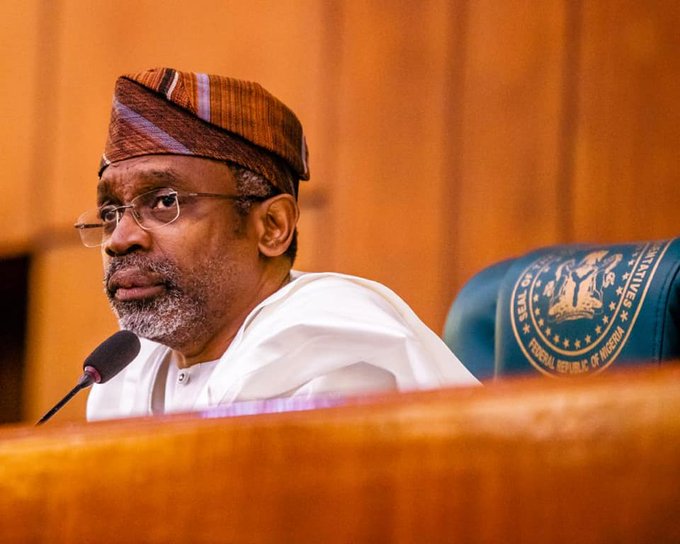
Recently, the Speaker of the House of Representatives, Femi Gbajabiamila stunned the nation with the appointment of 33 personal aides.
The appointments cover all manner of portfolios, including special advisers and personal assistants on internally displaced persons, gender and equality, political matters (one each from the six geopolitical zones of the country), special needs and equal opportunities, employment and job creation, members’ affairs, administration, special duties, inter-governmental affairs, youth matters, executive relations, budgetary and finance, oil and gas, Niger Delta, anti-corruption, former members’ affairs, and the list goes on.
Gbajabiamila’s appointments, however, melts to nothing when compared to Ben Ayade’s, the Cross River State governor, whose aides, inclusive of special advisers and personal assistants, in his first tenure, were said to be about 8,000.
The two examples captured the near bizarre in government, especially at federal and state levels, where president, governors and lawmakers appoint legion of aides.

Across the 36 states of the federation, governors hardly pay salaries of civil servants and entitlements of pensioners, just as they have huge debts hanging around their necks.
This is also as the Federal Government and organised labour are currently on each other’s throat over the yet-to-be-implemented new national minimum wage of N30,000 signed into effect in April by President Muhammadu Buhari.
According to findings, an average appointee as special adviser or personal assistant to political office holders earn salary equivalent to grade level 14 and 16 in the civil service, aside allowances.
While some Nigerians believe these appointments smack of insensitivity, as well as breeds corruption, others, however, think it is a way to create employment.
A chieftain of the ruling All Progressives Congress (APC) in Lagos State, Moshood Salvador, disagreed that the large numbers of personal assistants by top public office holders were unnecessary, noting that in most instances, they often carry out administrative duties.

Salvador, who was a former chairman of the People’s Democratic Party (PDP) in the state, further stressed that such appointments often create jobs, adding that their salaries and emolument is often provided for by the law.
According to him, “Most of this people you are talking about carry out the function of their bosses; they help in administrative convenience and help in carrying out several duties.
“If you are saying the people are doing one job, but they are doing different jobs, and here is a country where there is no job, it is also an opportunity to employ and empower people.
“When you select the disabled for a role, it is because he knows how it feels to relate with his contemporaries in the society, and it is not that what ten people are collecting that you are giving to one person,” Salvador said.
“The physical revenue mobilisation commission provides for the upkeep of staff of top public office holders, so people who raise eyebrows should know, if I collect the money and refuse to employ they would say I am corrupt.”
But former minister of special minister, Abimbola Ogunkelu, however, disagreed with him, noting that the current situation was worrisome. He stressed that such money could be used for governance and development of the country.
“This situation is becoming serious; you saw how much personal assistance the National Assembly leaders appointed. We must look seriously into the cost of governance in different level of government in the country.
“The money you use in employing large number of staff could have been used for governance and other people-centred purpose. It is a major national issue, which must be checked,” Ogunkelu said.
Chris Onyeka, a deputy general secretary of United Labour Congress (ULC), condemned the appointment of multiple aides, describing it as the “height of irresponsibility”.
“For too long in this country, we have complained that the cost of governance is too high and this relates to recurrent expenditure which is made basically of humongous salaries and allowances of political office holders.
“It would have been expected that a responsible government would cut down on cost of government, but unfortunately, what we see is increase in appointment of personal aides some of which are irrelevant,” said Onyeka.
Clifford Thomas, an Akwa Ibom-based human rights lawyer, described the development as unsustainable and a means of “settling cronies who had worked for the politician to be elected” which breeds corruption.
Thomas, who, however, agreed there is no law pegging the number of personal aides to be appointed at any given time, explained that appointing too many aides would breed discontentment from those who left out in the appointment spree.
According to him, by appointing too many personal aides, politicians might be looking for those who might be handy during the next elections to be used as errand boys for various activities. He believed it would be better for politicians to channel their resources to the improvement of infrastructure in the society that would drive economic development for all.
“It would be better to provide basic infrastructure that would help to build economic growth, they might be looking towards the next election and this might give room for crimes that have the backing of some politicians,’’ he said.
Patrick Albert, the chairman of Nigeria Union of Journalists (NUJ), Akwa Ibom State, said that the concern should be the ability of the politicians to pay “beyond what is statutorily provided for by the organ he belongs,” adding that since democracy is people-centred, a politician should be assessed by the impact he is able to create by effective representation and his empowerment programmes.
However, Franklyn Isong, a public affairs analyst and chairman of the Civil Liberties Ogransiation (CLO) in Akwa Ibom welcomed such appointments. According to Isong, such appointments help to reduce unemployment and poverty in the society, as those appointed are positioned to contribute their quota to the development of their respective communities.
“It will go a long way to help those who have been appointed to be gainfully employed. What is important is that youths are gainfully employed and the minimum wage is paid accordingly instead of the youth being involved in unscrupulous activities,’’ Isong said.
For Tony Abolo, an Edo State-based media consultant, multiple political aides arise from “faulty Nigerian constitution”.
Abolo advised that Nigeria should borrow a leaf from the British unwritten constitution where government actions are guided by common sense and prudence.
“I know that politicians will justify the appointment of these aides because it is not restricted by the constitution. Those that drafted the Nigeria constitution may not have put public expenditure into consideration.
“For example, in Edo State, you have commissioner for information and then again special adviser on information or media, senior special assistant on media, commissioner for works and again special adviser on public works. What duplication! Who is doing what? Most of them just sit down inside the offices doing nothing, and all the necessary allowances among others are paid to them.
“If we rationalise political appointments, we ought to know that we are wasting the funds meant for actual development and the actual decision making in government. We have said that bureaucracy is costing us too much in terms of recurrent expenditures, and for that kind of bloated bureaucracy at a time like this prudence is what is called for,” Abolo said.
Charles Chinekezi, chairman, Civil Liberties Organisation, Aba chapter, observed that appointment of ministers and commissioners was a constitutionally required necessity, as they are needed to help the president or governor in running the affairs of the country or state. But he frowned at legion of special advisers and personal aides.
However, Goodluck Ibem, president-general, Coalition of Igbo Youths, chided governors who dodge appointment of commissioners.
According to him, “The state is not the governor’s personal business, where he can do as he likes. He is duty-bound by law to appoint commissioners to oversee the various ministries in the state. “He cannot replace commissioners with special advisers or special assistants,” he said.
Uche Emeku-Udensi, national secretary, Easy Life Initiative for Rural Youths, argued that it was the responsibility of commissioners to explain government policies to those in the civil service, who are the technical staff in order to know the direction that the government is going, but expressed reservation over the appointment of multiple special advisers and personal aides.
“Our problem is when governors and other political officers go with so many aides, like special assistant on grassroots mobilisation, special advisers on sweeping of environment and all kinds of silly positions. These are the main problems, because these positions are where corruption shows up,” Emeku-Udensi said.
“It is absurd to hear that at this time of economic recession, the Speaker of the House of Representatives would have the temerity to be involved in this kind of economic wastage of our little resources on 33 personal aides,” Ibem added.
Advising Gbajabiamila, Chinekezi urged right-thinking Nigerians to discourage Gbajabiamila from taking so many aides, which according to him, is a waste. “I do not see a reason for that kind of waste,” he said.
He stated that the speaker’s action was an indication that Nigeria was yet to get responsive and responsible representatives and urged Nigerians to force their representatives to be responsible by holding them accountable.
Specifically, on Gbajabiamila, Emeku-Udensi said: “When you give some people power you’ll begin to understand the sensibilities of such persons. What does a speaker need 33 aides for? Is he the president of the country? Is he a state governor? He’s only a man representing his federal constituency. I understand that in any gathering of human beings, there must be a leader, so on his part he’s just a leader of other representatives.
“Having 33 aides is outrageous. I learnt that majority of the people he appointed as his aides were former members of the house. Are we recycling leadership? What exactly does he want?”
He described the development as a drain in the resources of the country, especially on the fact that government is running on a deficit budget.
From Kaduna, Moshood Abdulrauf, chairman, Northern Area Committee, Nigeria Council of Registered Insurance Broker, called for streamline of political appointees to avoid excessive spending.
He argued that the government at various levels can run its affairs smoothly without legion of political appointees.
Abdulrauf, who is also the chairman of Kaduna Chapter of NCIRB, noted that “permanent secretaries can assist in the running of affairs of government to avoid the extravagant spending on the political appointees, which according to him, to a large extent, has not helped in alleviating the suffering of the common man.
The insurance broker noted that political aides earned fat salary at the expense of the government while doing very little.
“We must understand that in most cases, permanent secretaries are the ones helping to formulate policies, because they understand how the ministries work as professionals who rose through the ranks in their respective fields”, he emphasised.
However, in his contrary opinion, a veteran journalist, Tajudeen Tijanni Ajibade said spending on political appointees is not a waste, if they are doing what is expected of them.
Although, he agreed that the size of constituted cabinets in most cases are waste of resources, saying that government must look into making it smaller.
“At the face of this economic crisis, we do not need an over bloated cabinet, because in most cases these appointments are usually used to compensate those who had contributed to the emergence of a particular government”, he said.
JOSHUA BASSEY and INIOBONG IWOK (Lagos), ANIEFIOK UDONQUAK (Uyo), GODFREY OFURUM (Aba), IDRIS MOMOH (Edo), and ABDULWAHEED ADUBI (Kaduna)