|
Getting your Trinity Audio player ready...
|
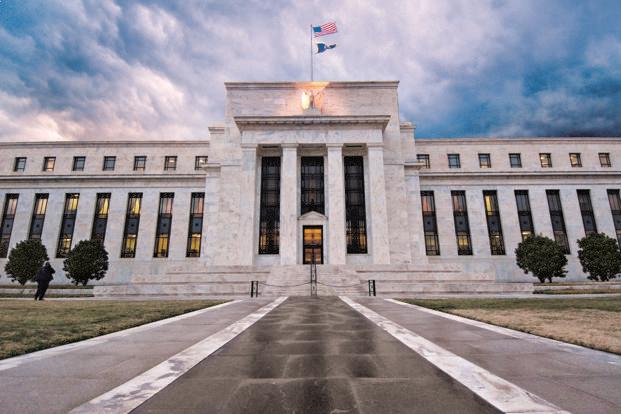
The US Federal Reserve last week lowered interest rates for the first time in 10 years to help stave off the possibility of an economic downturn, a move which analysts say holds opportunities for Nigeria.
Top on the list of benefits Nigeria stands to gain from the rates cut, according to the analysts, include capital importation in form of foreign portfolio investment (FPI) and cheap cost of borrowing for Federal Government and corporates that may want to go to the international market for bond issuance.
“Rate cut by systemically important central banks like the Fed simply means possibility of increased FPI flows into emerging markets,” said Ayorinde Akinloye, a consumer goods analyst at Lagos-based CSL Stockbrokers.
“Nigeria’s money market instruments remain a big attraction for foreign investors, thus Nigeria may see more inflows into that space,” Akinloye said.
He, however, does not expect such inflows into equities market considering foreign investors still maintain a risk-off approach to investing in Nigerian risk assets.
The Boards of Directors of the Federal Reserve Banks of Philadelphia voted 8-2 in favour of a small cut in the federal funds rate, and recommitted to their promise to “act as appropriate” to sustain the country’s longest economic expansion in history.
The Fed unanimously approved a 1/4 percentage point decrease in the primary credit rate to a range between 2 to 2.5 percent. This is 25 basis points lower than the primary credit rate of 3 percent voted on December 20, 2018. Fed Chairman Jerome Powell, however, left the door open as he signalled that the Fed was prepared to ease monetary policy further if necessary.
Lowering interest rates tends to reduce the value of a currency. If the US dollar reduces in value, then non-US importers like Nigeria will benefit because their goods will become relatively cheaper.
A depreciating dollar could also prompt a fresh outflow of capital from dollar-denominated bonds and instruments away to higher-yield but riskier investments in the emerging markets.
“A rate cut is good for FPI inflows into the country because with a rate cut, our currently low yield environment will have a wider spread which will attract FPIs. However, the magnitude of the rate cut is also important,” Yinka Ademuwagun, research analyst at United Capital plc, said.
Kalu Aja, CEO of AfriSwiss Capital Assets Management Limited, however, does not expect the rates cut to “automatically lead to a surge in FPI into Nigeria”.

A look at capital inflows into Nigeria after the US Fed Reserve cut its key lending rate in December 2008 showed that the total value of capital importation into the country rose 85 percent to $681 million in January 2009 from $367 million in the previous month, according to data obtained from the National Bureau of Statistics (NBS).
Thereafter, the US apex bank left the monetary policy rate unchanged at a record low of 0.25 percent for seven years until December 2015 when it raised the rate by 25 basis points to 0.50 percent.
Conversely, total value of capital importation dipped some 73 percent on a year-on-year basis to $710 million in the first quarter of 2016 from $2.67 billion in the comparative period of 2015. The decline was sustained by 61 percent to $1.04 billion in the second quarter; 34 percent to $1.82 billion in the third quarter; and 1 percent to $1.55 billion in the last quarter of the year.
Similarly, foreign portfolio investment to the country fell 70 percent in 2016 to $1.81 billion compared with $6 billion recorded a year earlier.
Despite Fed’s hawkish stance, capital importation into Nigeria improved in 2017 but waned when it raised rates at all its 4 meetings in 2018. This was evident in the value of foreign portfolio investment into equities, which dipped 35 percent to $2.36 billion from $3.63 billion, even as aggregate capital importation rose 37 percent to $16.81 billion.
When the Fed loosens policy for an extended period it tends to lower demand for traditional US-based safe haven assets, sending investors searching for return elsewhere. This often facilitates a windfall for emerging markets and causes central banks to mirror Fed measures to stabilise supply and demand.
The recent shift to a more dovish tone from the Fed has allowed African central banks to begin a cautious easing of their domestic monetary stances, with rate cuts so far this year in Nigeria, Kenya, Tanzania and Malawi. Ghana’s monetary policy committee recently voted to maintain its current policy rate of 16 percent
“Monetary policy in Africa has been held hostage to the Fed hiking cycle for the past 18 months, with African central banks maintaining nominally high domestic interest rates to protect their currencies against capital outflows, despite an improving inflation outlook,” Ipek de Vilder, European executive director at international brokerage network Auerbach Grayson, said.
Monetary Policy Committee (MPC) of the Central Bank of Nigeria (CBN) left the key lending rates at 13.5 percent, the Cash Reserve Requirement at 22.5 percent and liquidity ratio at 30 percent at the last meeting it held in July.
The committee said holding rates steady is in the best economic interest following its recent directive to banks on lending 60 percent of deposits to the real sector.
While Nigeria’s inflation figure fell to 11-month low of 11.22 percent in June, the figure, however, falls below the central bank’s target range of 6 percent and 9 percent.
A drop in US interest rate also means lower financing costs, and this can encourage borrowing and investing.
“We have already borrowed, we can refinance,” Aja told BusinessDay.

Data by the Debt Management Office analysed by BusinessDay revealed that as at March 31, 2019, Nigeria’s total debt stood at N24.95 trillion with 31.51 percent from external borrowings and 68.49 percent as domestic debt.
Recall also that Access Bank plc recently raised $300 million via a Eurobond from the international bond market. With a maturity date of October 2021 and at a coupon of 10.5 percent, the commercial bank became the first Nigerian bank to raise a bond from the international market in 2019.