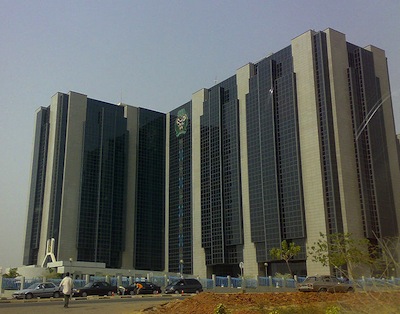
The sky did not fall after all for Nigeria, following the exclusion of its bonds from JPMorgan’s emerging markets index (GBI-EM) as the nations’ sovereign borrowing costs have fallen to a two-month low on excess liquidity engineered by the Central Bank of Nigeria (CBN).
Domestic investors, including banks, institutional investors and pension funds (mainly in long-dated bonds) have piled in to replace offshore funds who sold naira debt, helping to buck analyst’s expectations of a spike in yields following the ejection.
Average yields on Nigerian sovereign bonds slid to 12.86 percent on Nov. 5 from an almost seven-month high of 16.32 percent on Sept. 9, the day after the JPMorgan expulsion, according to data from Bloomberg.
“The fixed income market has experienced a significant rally on ample liquidity in recent weeks,” Samir Gadio, the head of Africa strategy at Standard Chartered Plc, said in response to BusinessDay questions.

“Should loose liquidity conditions persist and the CBN continue to unwind existing OMOs, it may be that fixed income rates remain low for now. But any partial back-up in T-bill yields or even moderate squeeze in liquidity conditions could reverse the downtrend at the long end of the curve.”
Yields across all maturities collapsed, the as CBN, led by Governor Godwin Emefiele eased liquidity by cutting banks cash reserve ratio (CRR) by 600 basis points to 25 percent at its last policy meeting.
The CBN has also pumped liquidity into the system by reducing the frequency of open market operations (OMO) in a bid to boost growth and lending in an economy battered by falling oil prices.
Growth in Africa’s-largest economy may be as low as 3.9 percent this year, the International Monetary Fund (IMF) said in its most recent update.
A drop in yields will be a relief to the Nigerian government, which has been borrowing more to finance its expenditure due to falling oil prices.

The 2015 Federal budget projects that the debt service expense will rise to N943 billion, or about 22 percent of the total.
Total monthly payout by the Federation Account Allocation Committee (FAAC) to the three tiers of government, in September fell to N390bn ($1.96bn) from N443bn in August.
The initial 2015 budget proposals of the FGN projected an average total monthly distribution of N575bn by the FAAC.
“We can explain the underperformance on the non-oil side in terms of growth. The proposals assumed GDP growth this year of 5.5% whereas our current estimate is 3.5%,” FBN Capital analysts led by Gregory Kronsten, said in a Nov. 3 note to investors.
The Federal Government on Wednesday raised N122.95 billion ($618 million) from Treasury Bills with yields lower than at previous auctions.
The result of the auction showed that the bank sold N45.17 billion worth of three-month paper at 5.82 percent, compared with 8.49 percent at the Oct. 21 auction, N23.43 billion worth of six-month debt at 7.98 percent, down from 10.15 percent previously, and N54.35 billion of one-year paper sold at 9.48 percent.
The drop in yields was reflective of trends in the secondary market, where returns have fallen to 3.61 percent, 7.22 percent and 8.20 percent for three-month, six-month and one-year debt each.
PATRICK ATUANYA