Cashew is a crop with high export potentials especially when processed.
Currently, Nigeria process less than 5 percent of its total cashew exported, causing an annual loss of N1.5 billion to the country.
According to Anga Sotonye, chief executive officer, Universal Quest Limited, the biggest opportunity in the cashew industry is processing and the industry is waiting to be tapped.
“Processing is where the money really is but we process very little for export. A ton of processed cashew as we speak is $12,000 while a ton of raw cashew is $1,200. You can see the difference is massive,” Anga said.

Also, export of cashew is now one big business, as Vietnam, world largest cashew exporter, is currently experiencing its worst drought in a century.
Cashew sells like cakes in the United States, India, Spain and many parts of Europe. Apart from helping to maintain a healthy heart and bones, cashew also helps in weight loss.
Cashew nuts are used in producing chemicals, paints, varnishes, insecticides and fungicides, electrical conductress, and several types of oil.
Cashew exporters in Nigeria made $250 million in 2015 and $300 million in 2016, according to Tola Faseru, president, National Cashew Association of Nigeria (NCAN), who disclosed this to journalists at the Annual Cashew Logistics meeting, held in Lagos recently.
Two good things about cashew are that its return on investment is as high as 55 percent and its payback time is just 12 months, say experts.

The cashew crop can be grown in the entire South-West, South-South and South-East region, with Enugu, Oyo, Anambra, Osun and Kogi having the largest production areas.
Nigeria’s cashew is usually harvested between February-June, though farmers stock the crop and export it all year round.
As a potential investor it is very important that a thorough research is carried out to have a clear understanding of the business, what it entails and the targeted market.
If you wish to process for the local or international market, then be ready to procure machines such as boiler, sheller or cracker, dryer, packaging and machine.
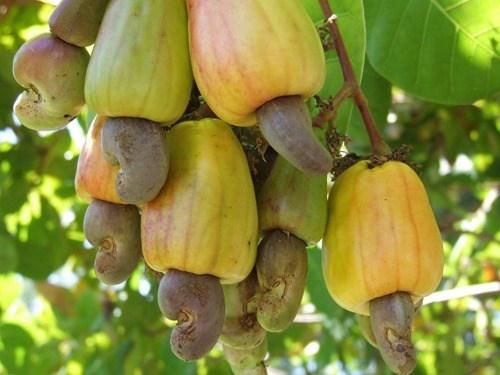
Cashew nut kernels are produced by shelling the raw cashew nuts, which grows at the end of the cashew apples using a sheller or cracker. An average hand sheller machine can shell 900 cashew nuts per hour.
Cashew nut kernels are primarily judged by their sizes, colour and moisture content. Ivory colour whole cashew kernels represent the highest quality grade while the broken kernels are seen as quality deterioration.
Josephine Okojie