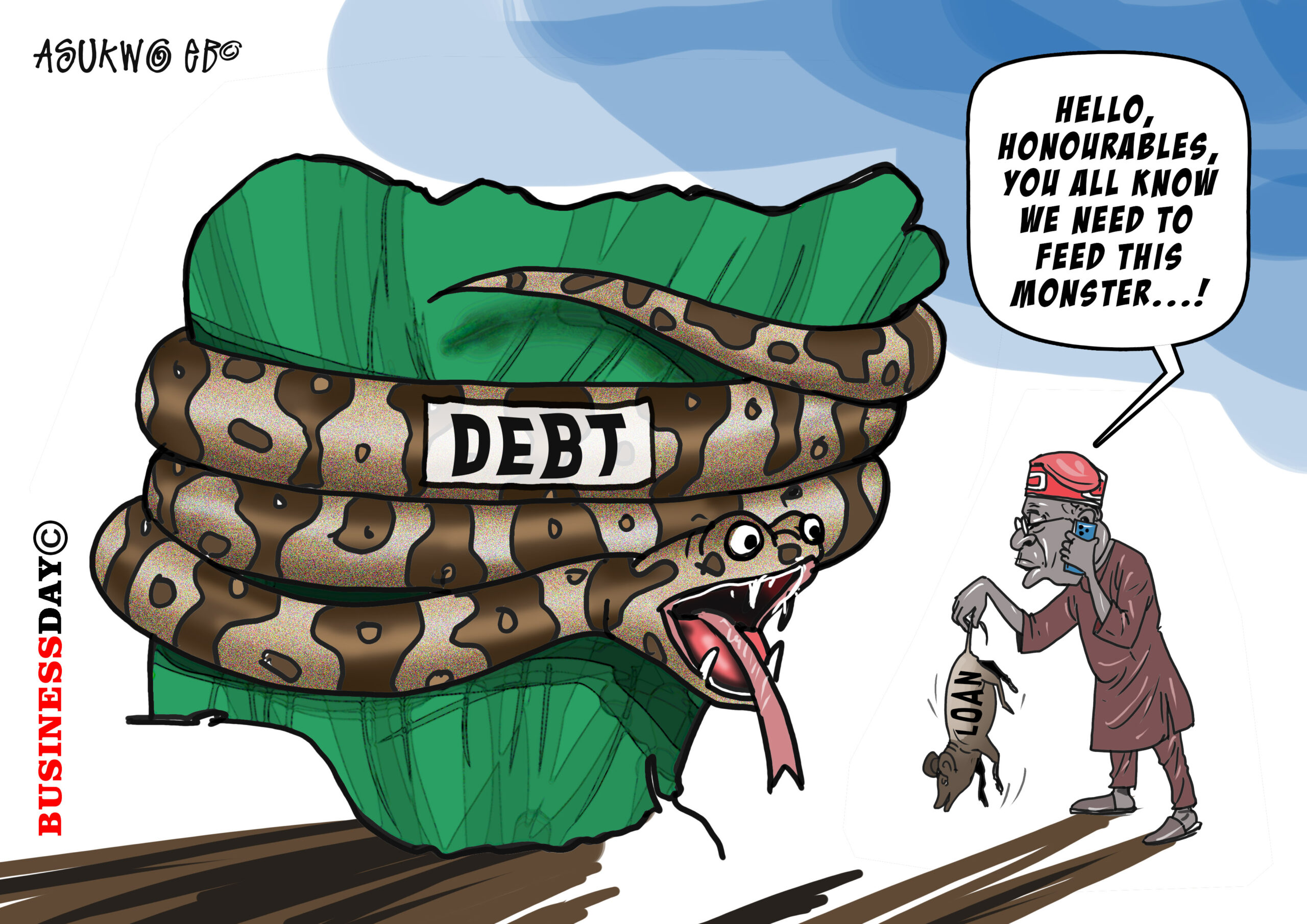
For much of its post-independence history, Nigeria has struggled to grow a robust middle class. Volatile oil revenues, persistent inflation, and a limited industrial base have stunted household purchasing power and deepened informality. But underneath these structural challenges lies a simpler truth: the Nigerian consumer has long been undercapitalised. Today, under the Tinubu administration, a bold shift is underway—one that seeks to build Nigeria’s consumer class through the deliberate deployment of credit and grants to everyday people.
At the heart of this push is a pivot in the development model—from state-led infrastructure spending alone to direct capital injection into citizens. The government’s cash-and-credit strategy, launched within the first 24 months of the administration, seeks to democratise access to finance and stimulate the kind of inclusive consumption that drives domestic demand and anchors economic diversification.
Read also: Eight times, China backed Nigeria’s digital leap with infrastructure loans
Consider the scale. Over ₦200 billion has been disbursed under the Presidential Loan and Grant Scheme, targeting nano-businesses, micro and small enterprises, and manufacturers. Unlike prior interventions that struggled with capture and inefficiency, this program has been explicitly structured to reach the “bottom pyramid” operators—traders, artisans, informal producers—who constitute over 60 percent of Nigeria’s working population.

Complementing this is the restructuring of the Nigeria Youth Investment Fund (NYIF), with a fresh ₦110 billion allocation aimed at youth-owned enterprises. A nation where over 70 percent of the population is under the age of 30 cannot grow meaningfully without putting financial tools in the hands of its youth. The NYIF is not merely a cash transfer—it is a bet on the country’s most abundant resource: human capital.
But consumption cannot thrive on business credit alone. Household finance has entered the equation. In late 2024, the government launched the National Consumer Credit Scheme—a long-overdue mechanism to allow working Nigerians access to installment-based purchases, especially for big-ticket items like appliances, solar systems, and mobility tools. The psychological and economic importance of credit cannot be overstated. It empowers citizens not only to spend but also to plan, to invest in productivity-enhancing assets, and to build a financial track record.
This initiative ties into broader financial inclusion reforms. Paired with digital ID, payment interoperability, and mobile-enabled credit scoring, Nigeria is building the institutional backbone for a functional consumer finance market. The intended destination? A society where a street vendor can access a ₦100,000 loan at single-digit interest through their mobile wallet—and repay it with daily micro-instalments tied to sales volume.
“In a country where less than 5 percent of the adult population has ever accessed formal credit, the true revolution lies not in the budget but in the bankability of its people.”
Then there is the education frontier. Over 300,000 Nigerians have so far benefited from the Students’ Loan Scheme, which provides zero-interest loans to tertiary students, payable after graduation and employment. This innovation, long demanded by advocates of equitable education financing, reduces dropout rates and allows young people to build skills without the immediate burden of tuition costs. It also signals a philosophical shift: that education is not charity but an investment in national productivity.

Read also: NELFUND disburses ₦59.8bn student loans to over 298,000 since portal launch
While these programmes are recent, the impact is already perceptible. MSMEs, long unable to grow beyond subsistence levels, are expanding their inventory and hiring modestly. Students from lower-income backgrounds are re-enrolling. Household consumption, battered by inflation and subsidy removals, is showing signs of resilience—albeit fragile and uneven.
This approach is economically sound. In countries with shallow credit markets, direct government financing to consumers can catalyse demand. It stimulates local value chains, from the woman selling food packs to the tailor purchasing a new machine. It also increases tax visibility. When informal operators become part of structured finance systems, the state eventually gains in revenue, compliance, and data.
Of course, there are risks. Poor targeting, leakages, and political interference have plagued similar programmes in the past. Loan recovery mechanisms, especially in a low-trust environment, remain a concern. The success of this model depends on digital delivery, credible monitoring, and robust grievance redressal systems. Transparency and performance dashboards must be the norm, not the exception.
To that end, the administration has leaned on digital platforms. Beneficiary verification, payment disbursement, and feedback collection are increasingly managed through mobile and biometric systems. The recent upgrade of the Citizens’ Delivery Tracker app is one example of how technology can strengthen trust in public service. Used well, it could become a governance revolution from the bottom up.
But the deeper challenge lies in the philosophical shift. For too long, Nigeria’s economic model focused narrowly on revenue—what the government collects and spends. Now, attention is turning toward what citizens earn, own, and owe. In a country where less than 5 percent of the adult population has ever accessed formal credit, the true revolution lies not in the budget but in the bankability of its people.
This strategy also represents a counter-cyclical buffer. In the face of high inflation, currency volatility, and global headwinds, building a resilient consumer base can provide internal ballast. Domestic demand cushions shocks, especially when export earnings falter. A well-capitalised populace is both a market and a stabiliser.
Read also: Manufacturers loans hit five-year high on naira devaluation
Critics argue that grants and credit alone cannot substitute for structural reform—and they’re right. Productivity, infrastructure, power, and rule of law still matter. But this is not an either/or equation. Access to capital, especially when well-targeted, can buy time and goodwill for longer-term reforms to take hold.
The broader lesson is that macroeconomics is not just about aggregates and percentages—it is about people. And when citizens have capital, credit, and confidence, they become not just consumers, but creators of economic value. The Tinubu administration’s cash-and-credit strategy may not solve all Nigeria’s challenges, but it represents a long-overdue correction: from extractive economics to inclusive empowerment.
Dr. Oluyemi Adeosun, Chief Economist, BusinessDay Media