|
Getting your Trinity Audio player ready...
|
The Federal Government which targets moving Nigeria to a sub-100 score in the 2020 World Bank Ease of Doing Business ranking, from its current 145 position, might do well to first tackle gridlock and inefficiency at the nation’s air and seaports.
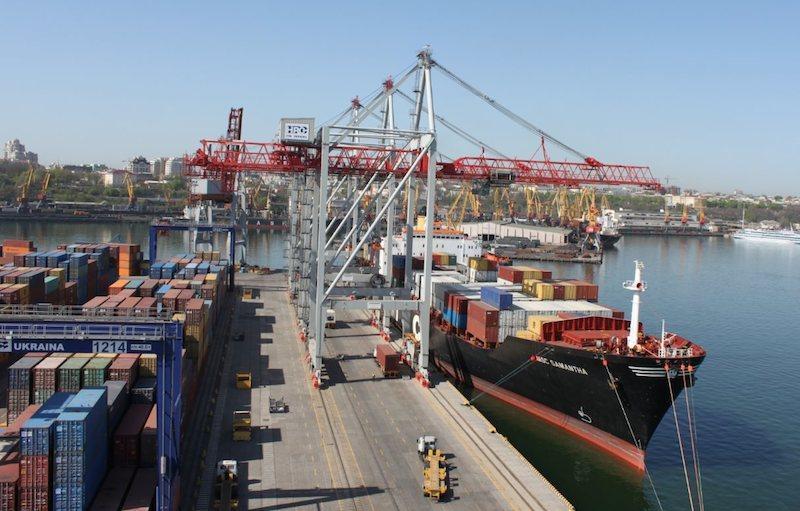
BusinessDay has learnt that the volume of uncleared cargo and goods at the nation’s main seaports and airports has increased astronomically following the recent server breakdown at Tin-Can Island and Apapa Ports, as well as two months embargo on clearing of imported phones at the airports.
The Nigeria Customs Service’s Direct Trade Input (DTI) system broke down last week in both Tin-Can Island and Apapa Ports, leaving importers and their agents stranded as they were not able to take delivery of their consignments when due, BusinessDay findings revealed.
Consequently, a Customs releasing officer, who had about 100 cleared containers to release in a day, was only able to release about 50 containers due to the interruption in the server for two to three hours per day.
At the end of the day, the remaining 50 were carried over into the next day, thereby creating a backlog of uncleared containers in the ports as the number of containers the same officer had to release the next day increased from 100 to 150, without a guarantee that everything would be released the next day.

The breakdown of the system compounded the woes of importers and exporters who currently deal with inadequate capacity, infrastructure, red tape and corruption at the ports.
Meanwhile, prices of phones and other mobile devices have gone up by 25.4 percent as dealers told BusinessDay that Customs had since February placed an embargo on clearing of phones at the airports.
BusinessDay market survey shows that a Samsung tab, which used to cost between N200,000 and N210,000, now costs between N250,000 and N265,000, representing 25.4 percent increase.
“Customs’ server has been down for some time now and it is delaying a lot of containers from being released. It has been fluctuating for a while now. The system is no longer stable as it used to be, but Customs assured us last week that it would be taken care of,” Tony Anakebe, managing director, Gold Link Investment Ltd, a Lagos-based clearing and forwarding company, told BusinessDay in a telephone interview.
According to him, importers have paid over N300 million as demurrage and storage charges caused by the delays from the server breakdown.
He said the problem lasted for over one week and varied from command to command, meaning that it has occurred in both Tin-Can Island and Apapa Ports at different times.
“Formerly, when Customs wants to release cleared containers through its online release procedure, it used to go freely but when the server is down, importers and agents would be stranded and just like when commercial bank’s server is down, the cargo owner would be asked to wait till the server comes up,” he explained.

Anakebe, however, said the development now compounds the officers’ workload and piles up demurrage and storage cost for the importers, who must pay the shipping company and terminal operator for not taking delivery of the consignments.
Uche Ejesieme, Customs public relations officer, Tin-Can Island Port Command (TCIP), confirmed to our correspondent that the server breakdown was a general Customs problem and not peculiar to Tin-Can Island Port alone.
“Actually, Customs had a problem late last week and it had to do with the breakdown of the server used by the Direct Trade Input (DTI). But the problem has been ratified because Webb Fontaine, the service provider, moved into action and the problem was ratified early morning on Monday,” Ejesieme said.
“Bearing in mind the importance of the server to cargo clearance at ports, the engineers of Webb Fontaine worked round-the-clock to ratify the issue. And as we speak, the system is up and running and no issue has been recorded again since on Monday,” he added.
DTI affords shipping companies, importers, exporters and Custom agents (the declarants) the opportunity to submit manifest and declare their goods electronically to Customs.
Funsho Adekunle, a phone dealer at Computer village, Ikeja, Lagos, told BusinessDay that phone dealers are forced to buy phones from other dealers at very expensive prices because their goods have been trapped at airports for months.
He also disclosed that the price of a Tecno Phantom 8, which used to cost between N120,000 and N125,000, soared by 14.3 percent to N140,000.
“The slow clearance of mobile devices by the Customs has lingered since February and if this continues, it may drive many small businesses out of the market,” Adekunle added.
A source at the Murtala Muhammed International Airport (MMIA) Customs command, who craved anonymity, told BusinessDay that the delay in clearing mobile devices at airports was due to recent migration from Automated System for Customs Data (ASYCUDA) to the Nigeria Integrated Customs Information System (NICIS II), which requires the importers or agents to provide Form M before their goods will be cleared.
The source said Customs stopped clearing of phones for a while but has resumed since three weeks back.
“This is the third week that we started clearing phones. The decision to stop the clearance of mobile devices was as a result of a circular we received from headquarters, demanding that all imported phones must show true value of the phones and receipts, to enable us give the appropriate duty,” the source said.
“It is not every phone that is imported that goes through the normal clearance process. Because of the issue of Form M, the invoice will be used to come up with a uniform value,” the source added.
“In a bid to cut corners, some importers started sending their goods through other airports and when we discovered that, Customs had to block all loopholes until the issues were resolved,” the source further disclosed.
A staff at Nigerian Aviation Handling Company plc (NAHCO Aviance), who does not want his name in print, said importers and agents have suffered great loss since the development despite several meetings the firm held with Customs in a bid to resolve the issue.
The source said the development has lingered for some months and has affected clearance of cargo at various airports, especially airports in Lagos, Abuja, Kano and Enugu.
AMAKA ANAGOR-EWUZIE & IFEOMA OKEKE