What concerns do you have about the collation process at the presidential and National Assembly elections?
We have concerns about the collation process because of the multi-layered collation mechanism. We know that the Electoral Act provides for the counting of ballot papers at polling units. And we know that that has been the practice since 1999. The Electoral Act also requires that after the polling units that the results be transmitted to the ward level to the local government area level and ultimately to the state level before being forwarded to Abuja. Our belief is that with the new technology that INEC has introduced into the electoral system, that multi-layered tier should be revisited and reviewed with the question of asking whether it is still appropriate in today’s age and whether it will not be more efficient and more of a confidence-building measure to have the polling units transmit their results once announced directly into the data base of INEC in Abuja. Because that will be one measure that will reinforce the confidence of Nigerians that the election results that they participated in at their polling units is actually the exact same result that has been transmitted to INEC in Abuja and that has been incorporated into the national results being announced by INEC. That is one area where a lot of work still needs to be done to reassure the Nigerian people that their voices count and what transpires in the polling units is ultimately what gets read at the national
Are you saying that the current state of the collation process is open to manipulation?
No, I cannot make that judgment because I cannot in a blanket fashion undermine every Nigerian that is working hard to make sure that this process is credible and that its integrity is respected. We cannot make a sweeping judgment call that says that everybody that has participated in the collation process is trying to undermine it. There are hardworking Nigerians who are committed to democratic governance in this country who are working day and night to see that even collation processes that may be multi-layered are still conducted in a way that maintains the integrity of voting and of the electoral process. And those Nigerians need to be commended and supported by both domestic and international observers.

Following the controversy that trailed the use of the card readers in some quarters, what ways can it be improved upon ahead of April 11 state elections?
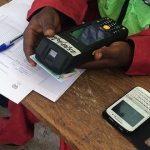
One of the ways to improve upon the card readers is to look at the different functions of the card readers. For example, on the election day we realised that the verification of the authenticity of the Permanent Voters’ Cards (PVCs) worked very well with the card readers. But it was only when it got to the authentication of the fingerprint that in some polling units there were issues.
So, one way of improving upon the system prior to the April 11 elections will be to look at the multiple functions of the card reader and determine whether some of those functions could be put on hold as long as the primary function which is the verification of the authenticity of the Permanent Voters’ Cards is maintained. We think that overall, the card reader has played constructive role, first in deterring individuals who in the past have tampered with the electoral process either by ballot stuffing; tampering with the election results. Now, we need to fine-tune it to make sure that the polling agents are very familiar with the usage of the card readers because this was the first time that card readers were being used at the national level and you cannot underestimate the fact that some of the workers placed with the responsibility of making these card readers function before the huge crowd that we saw on Election Day may not have been at their best in managing the card readers. And this is something that could be looked upon in the upcoming state elections.
Some have described as national embarrassment, the inability of the card reader to capture the President. Do you share this sentiment?
Well, I think the President was very generous about it. I was very impressed that he took it very calmly and he said he will be patient. I think that was a mark of Presidential leadership and the President should be commended for that because the remarks that he made at that time asking everybody to calm really calmed things down. Because a lot of voters were very patient to say if my President was patient enough to make sure that he figured out what was going on with the card reader and ultimately, the card reader worked for him, I too should be patient and wait for the card reader to work for me. That was an act of Presidential leadership and I think the President should be commended for that.

Concerns have been raised on the use of social media for transmission of results by individuals. How would you react to this?
Everybody knows that that is not the right thing to do. Everybody knows that the Electoral Act recognises that only INEC has the sole responsibility of announcing the official results. And I think that all of the hard work that has gone into the media and civil society organisations to make this process transparent and credible should not undermined by a few individuals who may start floating results in cyber space. It doesn’t help their cause, it doesn’t help anyone, it generates unnecessary tension and the Nigerian people have worked extremely hard. They have invested so much in this electoral process. We wouldn’t want anybody whether they are politicians or media journalists to undermine the confidence that Nigerians are trying to develop in the electoral process.