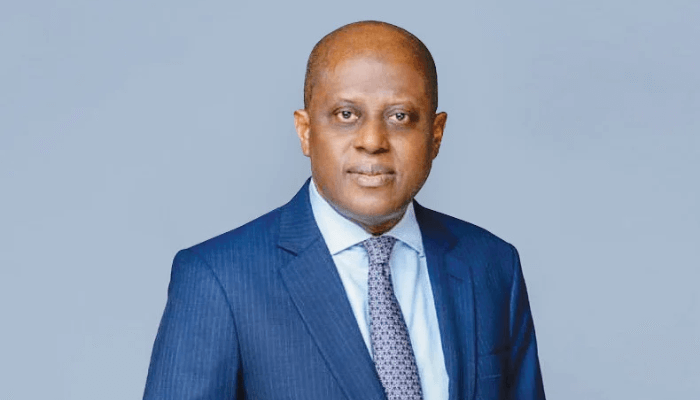
Olayemi Cardoso, governor, Central Bank of Nigeria (CBN) has said there is room for interest rates to fall as inflation moderates and capital becomes more efficiently deployed.
His comment at the Eurocham Nigeria C-Level forum in Lagos on saturday, offers a cautious signal that the bank’s tightening cycle may be nearing a turning point.
Cardoso said Nigeria is entering a phase where macroeconomic stability, banking sector reforms, and improving capital flows are beginning to restore investor confidence.
Read also: It keeps getting better for Ghana as inflation hits four-year low to signal another rate cut

“There is a substantial potential for interest rates to decrease in the future as inflation continues to decline and as markets become more efficient in allocating capital,” Cardoso said during a fireside chat with Andreas Voss, chief country representative of Deutsche Bank Nigeria.
“That is the environment in which stronger corporate lending and higher levels of investment will naturally follow.”
The CBN has raised its policy rate multiple times since 2023 in an aggressive bid to curb inflation and stabilise the naira.
While inflation remains high, it has begun to ease in recent months, partly due to CBN’s sustained monetary tightening and currency stabilisation efforts.
Cardoso said the CBN intends to “protect the stability that has been re-established in the financial system with the utmost zeal.”

“Our primary objective is to maintain that stability while simultaneously addressing inflation and ensuring that the financial system is sufficiently resilient to facilitate corporate lending and investment,” he was quoted to have stressed in a CBN statement released Sunday evening.
The forum, hosted by the European Business Chamber (Eurocham Nigeria), brought together executives and policymakers to discuss Nigeria’s investment outlook.
Cardoso pointed to the central bank’s ongoing recapitalisation exercise, which requires banks to significantly boost their capital bases, as a key part of strengthening the financial system and improving credit transmission.
He confirmed that the recapitalisation process is “making good progress” and is expected to result in larger, more shock-absorbent institutions.
The initiative is aimed at aligning Nigerian banks with the scale of financing required to support long-term investment and inclusive growth.
Cardoso also stressed the importance of increased coordination with fiscal authorities — including the ministry of finance, ministry of industry, and budget office — to ensure policy alignment and enhance reform execution.
He highlighted improved collaboration between monetary and fiscal policymakers as critical to sustaining macroeconomic gains.
On the future of financial inclusion and technology, Cardoso said the CBN continues to support fintech innovation as a way to extend access to financial services, reduce poverty, and broaden the base of the formal economy.
Read also: CBN’s aggressive liquidity mop-up eases inflation
Looking beyond Nigeria’s borders, Cardoso emphasised the country’s strategic positioning in a volatile global environment. “The urgency of addressing our own affairs is underscored by the ongoing geopolitical changes,” he said.
“Nigeria is a market that is both large and appealing in its own right, and it is also situated at the entrance to the broader continent and West Africa.”
In his opening remarks, Yann Gilbert, Eurocham President reaffirmed European investors’ commitment to Nigeria, describing the chamber as a platform for deepening business-government dialogue and unlocking investment opportunities.