|
Getting your Trinity Audio player ready...
|
…upbeat about positive inflation outlook
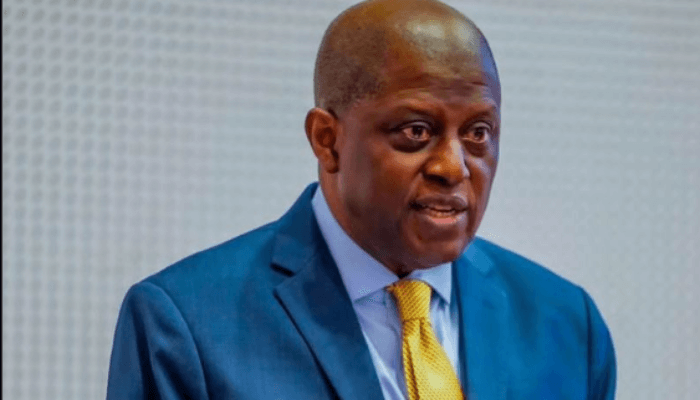
Confidence in the naira is growing among Nigerians, reflecting renewed optimism over the Central Bank of Nigeria’s ongoing reforms and improvements in macroeconomic stability, Olayemi Cardoso, CBN Governor said Tuesday.
He was speaking at a post-Monetary Policy Committee (MPC) press briefing in Abuja where he announced the decision of the Monetary Policy Committe (MPC) to hold all benchmark leding parameters steady for the third straight time, to allow to allow inflation cool further.
All the 12 MPC members voted to hold the MPR at 27.5%, maintain the asymmetric corridor at +500/-100 basis points, retain the Cash Reserve Ratio at 50% for deposit money banks and 16% for merchant banks, and keep the liquidity ratio at 30%.

Cardoso said the CBN’s policy actions—including a market-driven foreign exchange system and tighter monetary conditions—are beginning to deliver meaningful results. One of the clearest signals, he noted, is a growing willingness by Nigerians to use the local currency in transactions traditionally reserved for foreign currencies.
“Very importantly, Nigerians are having greater confidence in their own currency. I was quite struck in having a discussion with somebody just yesterday… the travel agent said, ‘Please, I know you normally give me my money in dollars, but I’m very happy to take it in Naira.’ Those are the things that are happening across the board,” he said.
Read also: Cardoso flags inflation risk on surging FAAC liquidity
The CBN governor emphasised that the narrowing spread between official and parallel exchange rates, as well as increased access to Naira-denominated payment instruments abroad, were structural changes—not temporary interventions. “A lot of what you see going on now is transformational. And they are here to stay. Some of the banks are now allowing you to use your Naira cards when you travel. Those things are here to stay. They are not a short-term measure,” he added.
Cardoso pointed to improved sentiment among global rating agencies and development partners, including the International Monetary Fund and Moody’s, which recently upgraded Nigeria’s outlook. He said such endorsements reinforce confidence among investors and reflect alignment around the country’s current policy trajectory. “Potential investors take a cue from the IMF and other institutions… The Nigerian authorities have taken bold transformative measures to properly reposition the macroeconomic fundamentals of the country.”

On inflation, the governor struck a cautiously optimistic tone. While acknowledging that the headline rate remains high, he said data trends suggest that monetary tightening is starting to work—though the bank’s ultimate goal remains single-digit inflation. “As a central bank, we recognise that our policy toolkit is working. Therefore, inflation is coming down. However, we also recognise that our goal is to ensure that we get to single-digit inflation.”
Cardoso noted that inflation pressures remain elevated partly due to years of excess liquidity—particularly from previous deficit monetization and various intervention programs. He reiterated the bank’s commitment to maintaining a tight monetary stance, even at short-term cost, in order to restore price stability and rebuild trust in the policy framework.
In addition to its monetary strategy, the CBN sees improved oil revenues as a supportive factor, the governor stated, citing the Nigerian National Petroleum Corporation which has met its OPEC quota for the first time this year, signaling a rebound in output and stronger fiscal buffers. H3 added that greater transparency around NNPC’s earnings and remittances to government accounts has also contributed to renewed optimism.
Cardoso also addressed structural inflation risks, especially as rising input costs have led to concerns about potential price hikes. He explained that many producers are absorbing these costs rather than passing them to consumers, a sign of competitive discipline that could help moderate inflation.
On broader macroeconomic resilience, the governor highlighted reforms aimed at diversifying Nigeria’s reserve base. He pointed to strong inflows from diaspora remittances and recent reforms such as the introduction of the non-resident Bank Verification Number (BVN), which allows Nigerians abroad to open and operate domestic bank accounts remotely.
Cardoso also expressed confidence in the strength of the banking sector ahead of the ongoing recapitalisation drive, noting that capital adequacy remains strong across most lenders, while non-performing loans remain within regulatory thresholds.
He said recent foreign investment into Nigerian banks signals international confidence in the system’s resilience and credibility.
Cardoso, however, emphasised the importance of transparency, consistency, and sustained collaboration between monetary and fiscal authorities. These, he said, would help entrench reforms and sustain confidence from both domestic stakeholders and the global investment community.