Canada has announced plans to formally recognise the State of Palestine this September, becoming the third G7 country in recent weeks after the United Kingdom and France to shift its foreign policy stance in response to the escalating humanitarian crisis in Gaza and the stalled Israeli-Palestinian peace process.
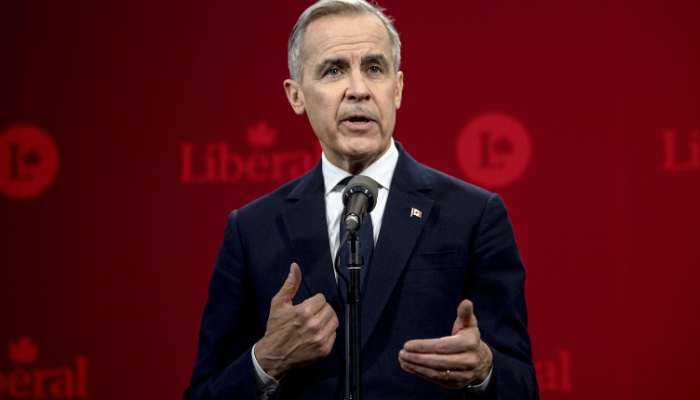
Prime Minister Mark Carney made the declaration on Wednesday, stating that Canada would extend recognition at the 80th session of the United Nations General Assembly, provided certain conditions are met, chief among them, democratic reform by the Palestinian Authority (PA) and a commitment to exclude Hamas from any future political process.
Read also: Canada’s LNG exports threaten Nigeria hold on Asian market
“The level of human suffering in Gaza is intolerable and rapidly deteriorating,” Carney said during a press briefing. “The prospect of a Palestinian state is being eroded before our eyes. Canada has long supported a two-state solution through negotiations, but this approach is no longer tenable.”

Mounting international momentum
Canada’s announcement follows similar declarations from London and Paris, signalling a growing Western willingness to break with decades of cautious diplomacy in favour of bolder recognition of Palestinian statehood. If all three G7 nations follow through, the United States would be the only permanent UN Security Council member opposing such recognition — a position that is increasingly isolating Washington on the world stage.
Read also:Canada offers fully-funded training in food industry for female immigrants
Carney’s shift came just one day after the UK warned it would recognise Palestine in September unless Israel demonstrated “clear progress” toward ending its military campaign in Gaza and curbing settlement expansion in the West Bank. France issued a similar ultimatum earlier this month.
But Carney was quick to clarify that Canada’s decision was not made in response to its allies. “Canada makes its own foreign policy decisions,” he said. “We act according to our values and our national interests.”
Recognition tied to reform — and rejection of hamas
Unlike some symbolic recognitions, Canada’s pledge comes with concrete stipulations. The Palestinian Authority must undertake meaningful reforms, including preparing for free and fair elections in 2026 — the first since 2006. Carney insisted that Hamas, which controls Gaza and is designated a terrorist group by Canada, “can play no role in the future of Palestine.”

“Preserving a two-state solution means standing with all people who choose peace over violence or terrorism,” the prime minister said, adding that the territory must be demilitarised.
Read also: Canada: Over 80,000 returned to their countries in 2024
This condition, however, has drawn criticism from some rights groups and commentators who argue that excluding Hamas — which has deep support in parts of Gaza — could undermine the legitimacy of any future democratic process.
Fierce backlash from Israel, muted support from Washington
Israel’s Foreign Ministry swiftly condemned the announcement, accusing Canada of rewarding terrorism. “This decision harms the efforts to achieve a ceasefire in Gaza and a framework for the release of hostages,” it said in a statement on X.
The Israeli military has waged a punishing assault on Gaza since the Hamas-led attack of 7 October 2023, which killed 1,200 people and saw over 250 others taken hostage. Since then, more than 60,000 Palestinians have reportedly been killed in Gaza, with large swaths of the territory reduced to rubble. The United Nations and multiple human rights groups have warned of starvation, mass displacement, and a looming humanitarian catastrophe.
Read also: France to recognise Palestinian State at UN, defying Israel and U.S. Opposition
The United States, Israel’s closest ally — also rejected Canada’s decision, echoing its opposition to the UK and France’s announcements. President Donald Trump said recognition of a Palestinian state would reward Hamas and has dismissed France’s Emmanuel Macron as irrelevant to the peace process.
Speaking after a meeting with British Prime Minister Keir Starmer, Trump said, “I don’t think they [Palestinians] should be rewarded. I’m not in that camp.”
Domestic and diplomatic pressure
Carney’s decision follows a groundswell of pressure from within Canada’s diplomatic corps. Nearly 200 former Canadian ambassadors and senior officials signed an open letter urging the government to take a stand, citing “the massive displacement, indiscriminate bombardment and starvation of Palestinian civilians in Gaza” as well as rising settler violence in the West Bank.
Read also: Nigerian female accountants in Canada can apply for this transition-to-employment training
However, Canada’s Conservative Party slammed the announcement, calling it irresponsible and tone-deaf in the wake of the October 7 Hamas attacks. “Recognising a Palestinian state in the aftermath of the October 7 terrorist atrocities sends the wrong message to the world,” the party said in a statement.
Despite the political backlash, Carney appears determined. In his view, Canada’s recognition of Palestinian statehood is a necessary step toward salvaging the possibility of a two-state solution — one that he believes is slipping further out of reach.
“The situation demands clarity and courage,” Carney concluded. “We must recognise those who seek peace and create conditions for a better future — for Palestinians, for Israelis, and for the region as a whole.”