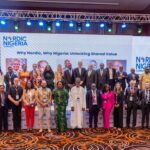
On Tuesday, 23rd September 2025, the Legal Business Unit of BusinessDay Media Ltd in partnership with the Impact Investors Foundation hosted a policy roundtable intervention series on “Reclaiming Capital: Policy Solutions for Fund Domiciliation in Nigeria” at Radisson Blu, Victoria island, Lagos.
COMMUNIQUÉ
Issued at the BusinessDay Policy Roundtable Intervention Series in partnership with Impact Investors Foundation (IIF) and Nigerian NABII.
Preamble

We, the participants at the BusinessDay Policy Roundtable Intervention Series on “Reclaiming Capital: Policy Solutions for Fund Domiciliation in Nigeria”, comprising regulators, fund managers, tax and legal experts, private sector leaders, professional service providers, and development partners, gathered to deliberate on the urgent challenge of capital flight and practical reforms required to strengthen Nigeria’s capacity to attract and retain investment funds within its borders.
The Forum recognised Nigeria’s vast human and natural capital base, alongside growing domestic savings and pension funds. Yet, a significant proportion of investable funds are structured and domiciled offshore, depriving the country of jobs, tax revenues, and opportunities to deepen its financial markets.
Key speakers and contributions
The policy series was turbocharged by the presence of Dr. Emomotimi Agama, PhD, the director-general of the Securities Exchange Commision (SEC) who highlighted sweeping reforms the regulator has been able to roll out under his watch, assuring stakeholders of continued dialogue and engagement to deepen the country’s financial market.
Other speakers/panelists include:

1. Dipo Okuribido, senior vice president, legal, at Veroid Capital Management
2. Azeezah Muse-Sadiq, partner, Banwo & Ighodalo
3. Babatunde Olaniyi, technical adviser, Presidential Fiscal Policy and Tax Reform Commitee
4. Akinbonola Akintola, head of investor relations and research at PenOp
5. Akinwande Pearse, technical advisor, GIZ Nigeria
6. Gwen Abiola-Oloke, CEO of Di Africa and member of the Collaborative of Fund Domiciliation in Africa who also doubled as the panel moderator.
Key issues observed
1. Capital flight and missed Opportunities: Offshore domiciliation continues to channel resources abroad, financing development elsewhere while Nigeria faces critical infrastructure and industrial deficits.
2. Tax environment: Historical challenges such as aggressive tax enforcement, ambiguity in laws, and administrative bottlenecks have eroded investor confidence. Though reforms—including the 2024 Withholding Tax Regulations through the newly enacted tax reforms set for January 1, 2026, reduced corporate tax rate (30% to 25%), higher MSME exemption thresholds, and priority-sector tax holidays—are positive, gaps remain in investor communication and predictability.
3. Regulatory fragmentation: Overlaps between regulators (e.g., SEC and PENCOM) and inconsistent rules on private equity, fund registration thresholds, and investment limits create uncertainty and increase compliance costs.
4. Governance and trust deficits: Weak dispute resolution, unclear interpretations of laws (such as Section 168 of the ISA), and sudden regulatory shifts discourage long-term capital commitment.
5. Global competitiveness: Nigeria lags peers such as Mauritius and South Africa in tax treaties, regulatory clarity, and operational stability, reducing attractiveness to international investors.
6. Retail capital and informal savings: Significant pools of retail funds remain unstructured, exposing citizens to Ponzi schemes while formal markets underperform in mobilising grassroots capital.
7. Diaspora funds: Despite $20+ billion in remittances annually, Nigeria has not built efficient vehicles to channel diaspora inflows into productive, domiciled investments.
8. Professional and legal ecosystem gaps: Constraints on fund managers (e.g., rigid fee caps), unclear no-objection vs. registration procedures, and inadequate legal certainty limit the growth of a strong domestic fund management industry.
Recommendations after deliberation
1. Enhance fiscal and tax competitiveness: Fully implement and publicise ongoing tax reforms to improve clarity and reduce unpredictability; operationalise advanced tax rulings to give investors certainty before committing capital.
2. Strengthen regulatory coordination: Establish mechanisms for harmonisation between SEC, PENCOM, CBN, and FIRS to eliminate duplication, resolve inconsistencies, and improve the ease of fund registration and compliance.
3. Deepen legal and dispute resolution frameworks: Expand specialised financial dispute resolution mechanisms and ensure clearer drafting of laws and rules to avoid ambiguity that erodes confidence.
4. Encourage domestic domiciliation: Introduce targeted incentives (tax credits, reduced capital gains on reinvested proceeds, FX guarantees) that make Nigeria more attractive than offshore jurisdictions.
5. Support retail capital mobilization: Formalise indigenous savings schemes (esusu/ajo) and expand financial literacy campaigns to build trust in formal investment channels.
6. Expand pension and institutional participation: Encourage pension funds and institutional investors to channel more capital into locally domiciled funds, supported by clearer risk and governance frameworks.
7. Leverage diaspora investment: Develop dedicated diaspora bonds, funds, and co-investment vehicles that give Nigerians abroad safe and transparent avenues to invest at home.
8. Rationalise incentives for priority sectors: Align tax incentives (10–15 year tax holidays) with sectors critical to national growth, ensuring incentives are transparent, accessible, and not arbitrarily withdrawn.
9. Professionalise the ecosystem: Review rigid fee caps and compliance burdens to allow fund managers to grow sustainably, while balancing investor protection with market competitiveness.
10. Launch a new capital Market Master Plan (2026–2036): Build on the expiring 2015–2025 plan, embedding fund domiciliation, digital innovation, regulatory harmony, and ecosystem development as central pillars.
Conclusion
The Forum concluded that reclaiming and domiciling Nigeria’s capital is a national priority requiring deliberate policy coherence, fiscal reforms, and trust-building between regulators and investors. With coordinated action, Nigeria can halt capital flight, unlock domestic and diaspora funds, deepen its financial markets, and emerge as a competitive African financial hub.
We affirm our collective commitment to continue dialogue and collaboration with regulators and policymakers to transform these recommendations into actionable reforms that will drive sustainable growth, create jobs, and strengthen Nigeria’s economic sovereignty.
Issued this 23rd day of September, 2025
At Radisson Blu, Victoria Island, Lagos.
Being a communique prepared by Wasiu Alli, head, Companies & Markets desk at BusinessDay Nigeria