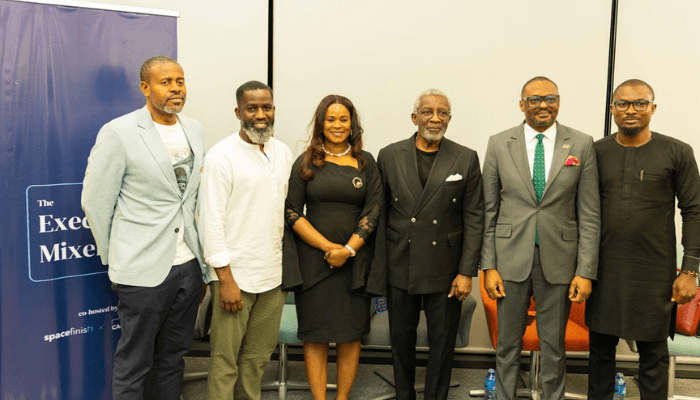
Spacefinish and Campus HQ, powered by Flutterwave, hosted an interactive mixer last week that brought together panellists from key sectors to exchange ideas, foster collaboration, and share strategies for navigating Nigeria’s volatile economic environment.
Oluchi Ajala, Managing Director at Spacefinish, set the tone for the evening, stating: “This mixer is about more than networking—it’s about collaboration. In uncertain times, thriving requires fresh thinking and bold action. We’re proud to create a platform where innovators can connect, share insights, and turn macroeconomic challenges into growth opportunities.”
Olufunmilayo Olaniyi, SVP, Business Development, Flutterwave, during the first panel titled: Emerging market playbooks – Navigating growth in challenging climates, shared insights on building value through partnerships. “We’ve not always had it figured out,” she said. “Some products didn’t scale, and we had to go back to the drawing board. What’s helped is staying close to our partners—especially in government—and aligning with their needs.”
She stressed that stakeholder alignment has been critical, particularly for product development across both public and private sectors. “It’s not just about having the right product; it’s also about knowing what policies may shift—and how those changes can affect you overnight.”

Austin Okpagu, Country Director, VertoFX, spoke candidly about the impact of market volatility. “Even traditional or tech-driven ways of managing foreign exchange risk are not fully reliable right now,” he said. shared an example involving a treasurer at a multinational firm who lost 40% of procurement funds due to rapid naira depreciation.
To reduce risk, Okpagu recommended that businesses adopt multi-currency strategies. “It’s no longer safe to keep everything in naira or even in dollars. With technology, businesses can hold funds in different currencies on a single platform and pay suppliers directly in local currencies without converting to USD,” he explained.
The second panel, Building capabilities for capital investment and operational agility, featured Jude Chiemeka, CEO of the Nigerian Exchange Group. He reflected on the sweeping impact of recent reforms, noting: “Most businesses went through a tsunami due to currency devaluations and inflation. Yet, these reforms have made Nigeria more attractive to international investors. Foreign participation in our market moved from 4% before the elections to 50% today.
He urged business leaders to adopt flexibility. “Do your scenario planning, but also prepare to adapt. The Ukraine and Gaza conflicts still affect our markets. Inflation may be easing, but volatility is not over.”
He advocated for strong governance, encouraging companies to list on the Exchange. “Institutional investors now prioritise companies with solid governance. Being on the premium board gives you more liquidity and access to capital.”

Similarly, Kazeem Oladepo, COO of IHS Towers, advised: “Build a team that constantly monitors policies, stakeholder movements, and regulatory shifts.” He added, “When policies change, immediately assess the impact across all markets.”
He emphasised that building internal alignment helps companies respond more effectively. “Don’t wait for policies to be signed into law before reacting. Simulate impacts early, prepare multiple response plans, and ensure flexibility is embedded across the organisation.”
The event rounded up with a fireside chat on: Turning economic disruption into business opportunity, where Folusho Phillips, founder of Phillips Consulting, spoke on institutional building and the future of Africa’s economic advantage.
Phillips urged businesses to invest in the right people. “Recruit character before talent. You can teach the job, but the wrong behaviour can destroy the team,” he said.
He also stressed the importance of documenting systems and procedures. “If your team walked out on Monday, what would remain? Manuals, training guides, and embedded culture are what make an organisation sustainable.”
When asked where he’d place his biggest bet, he pointed to Africa’s human capital. “We have failed to benefit from our people. Health and education are where the next wave of opportunity lies.”
He noted that households are spending more on education and healthcare than ever before. “With the withdrawal of aid, especially in healthcare, Nigeria must take full ownership of these sectors. That opens a new frontier for innovation and investment.”
In closing, Remi Dada, CEO of Spacefinish, reminded attendees of the purpose behind the event. “We’re not just about office spaces. We want to support how people work and grow,” he said.