|
Getting your Trinity Audio player ready...
|
When we talk about infrastructure in Nigeria, we think of roads, bridges, power. But there’s another kind of infrastructure shaping people’s lives just as profoundly — financial infrastructure. The systems that help someone save securely, borrow fairly, access insurance, or recover from a setback.
Without it, economic participation becomes a gamble, and progress remains fragile.
Too often, conversations about personal finance start with individual choices. Save more. Budget wisely. Plan ahead. But choices mean little without access. And access doesn’t happen without infrastructure. The reality for many Nigerians is that the basic tools needed to engage meaningfully with the financial system like affordable credit, transparent pricing, accessible insurance, are either absent, untrusted, or out of reach. We are, in effect, asking people to build futures without scaffolding.
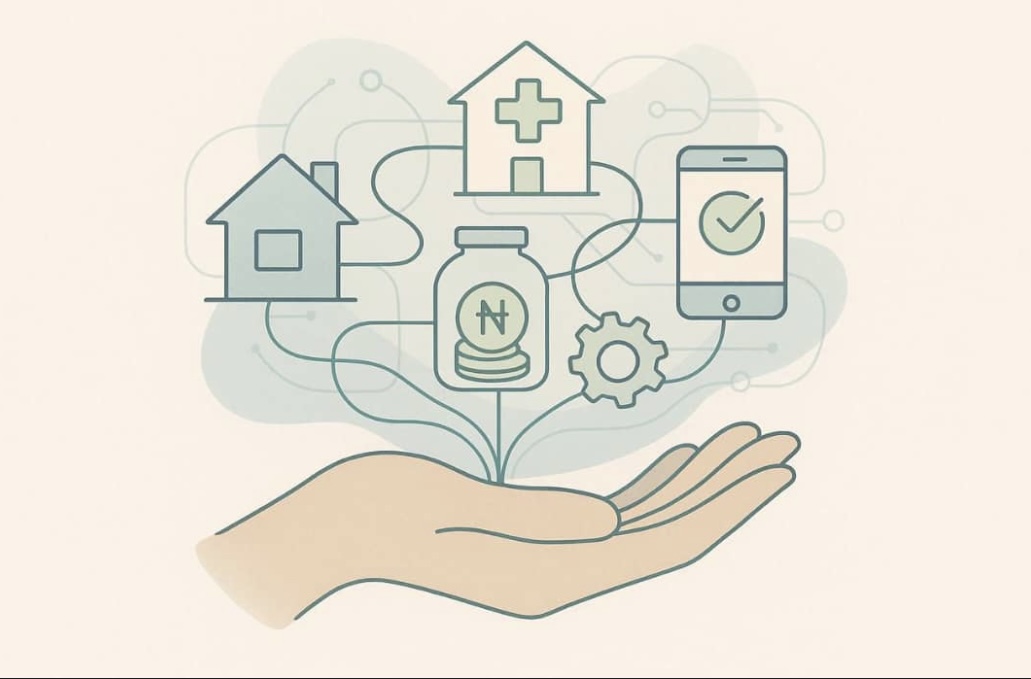
That’s why we need to treat financial systems as essential care infrastructure, just like healthcare or education.

Because financial shocks, left unbuffered, cascade into every aspect of life: school fees unpaid, medical treatment delayed, businesses stalled before they begin. Financial care means giving people the ability to withstand volatility, plan with dignity, and recover without losing everything.
In recent years, the private sector especially fintech and telco players have stepped up to fill important gaps. Digital wallets, alternative credit scoring, embedded savings tools, agent banking, have all helped broaden access. But even with these innovations, much of the country remains disconnected from meaningful financial participation.
What’s still missing is a broader investment in long-term, inclusive infrastructure.
Systems that don’t just scale quickly but serve deeply. That includes interoperable payment rails, stronger consumer protection frameworks, low-cost insurance that works in rural communities, and transparent pricing models that reward good behavior instead of punishing trust.
It also includes redesigning how we think about who financial services are for. Not just salary earners or smartphone users but informal workers, caregivers, small traders, and others who operate at the edges of formal systems but form the backbone of our economy.
This is not just a matter of technology, it’s a matter of design, trust, and intent. When financial services are built with real lives in mind, not just profit margins, they become something more than transactional. They become stabilizing, empowering, even generational.
In a country as dynamic and entrepreneurial as Nigeria, the hunger to grow is already there. People are not waiting to be rescued.

But they do need better tools, not just to hustle, but to build. Not just to survive, but to thrive.
The future of inclusive growth in Nigeria won’t be built on theory, it will be built on rails that work. And the more we invest in real, reliable financial infrastructure, the more we unlock the full potential of individuals, communities, and entire markets.
Aishat Okunuga is a finance and healthcare professional with cross-sector experience spanning capital markets, investment strategy, and clinical practice. She is passionate about building inclusive financial systems and currently works at the intersection of trading, analytics, and market infrastructure.