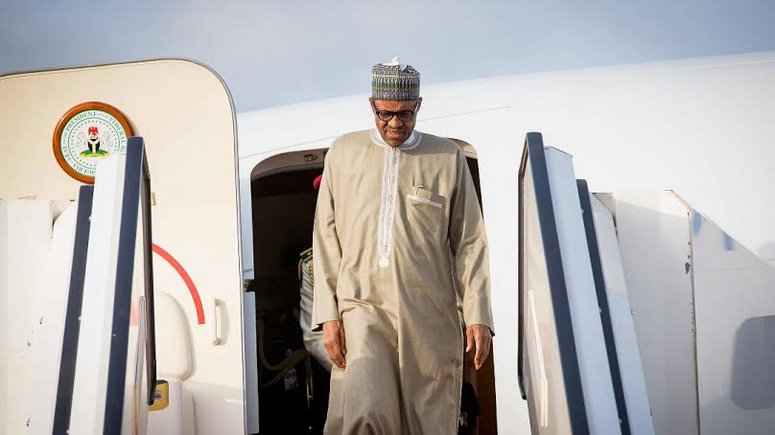
In May 2015, Colin Freeman, the chief foreign correspondent the London Telegraph newspaper wrote a piece entitled “Nigeria’s Buhari: from military dictator to ‘converted democrat’”. Freeman recalled General Muhammadu Buhari’s hardman habits as a military dictator between 1983 and 1985 but noted Buhari’s speech in February 2015 at London’s Chatham House in which he presented himself as a changed person. In that famous speech, Buhari said: “I cannot change the past, but I can change the present and the future,” adding: “So, before you is a former military ruler and a converted democrat who is ready to operate under democratic norms”. Freeman posited: “In the eyes of many Nigerians, General Buhari is just the kind of politician that the country should have moved on from years ago” but added that “many Nigerians were willing to give him a second chance.”
Of course, Nigerians gave Buhari – a brutal military dictator – a second chance in 2015, having rejected him in three previous elections, in part, because of the prevailing circumstances in the country at the time, but also because he promised to be a changed man. Surely, by describing himself as a “converted democrat” and later dropping the use of his military rank once elected president, Buhari sent a powerful signal of his intent to renounce his old hardman habits and embrace genuine democratic values or, as he put it, “operate under democratic norms”!
In May 2015, after Buhari was sworn in as president, the presidency issued a statement saying that Buhari should no longer be referred to as Major General, while his vice president, Yemi Osinbajo, should continue to be addressed as Professor! I remember writing in this column, wondering why Buhari was ashamed to be addressed as Major General while Osinbajo was proud to be called Professor. After all, I said, General Dwight Eisenhower, 34th president of the US, and General Charles de Gaulle, a post-war president of France, to whom Buhari was compared by his supporters, used their military ranks as presidents.
But, in truth, there were key differences between Buhari and the two famous generals. Unlike Eisenhower and de Gaulle, who never overthrew a democratically elected government in their respective countries or brutalised their own people, Buhari toppled the elected government of President Shehu Shagari in 1983 and ran a very draconian regime that jailed journalists, closed newspapers and executed people for minor drug offences. So, it was understandable why Buhari didn’t want to use his military rank as president. To be called Major General Buhari in office, despite his record as a brutal military dictator, would have tarnished the sacredness of the elected office of president!

Everyone should have seen this coming. It was indeed a mistake to have taken at face value Buhari’s promise to operate under democratic norms, which include respect for the rule of law, judicial independence and free speech. After all, as the saying goes, a leopard never changes its spots.
Yet, as it turned out, calling himself a “converted democrat” and dropping the use of his military rank as president was a triumph of symbolism over substance. It was merely presentational and nothing more, because he returned to his hardman habits in office. During this year’s general election, I wrote a column entitled “Buhari: The deception of a converted democrat (BusinessDay, February 4, 2019) in response to Buhari’s authoritarian actions that threatened the integrity of the polls.
Recently, President Buhari’s continued disregard for the rule of law has provoked similar reactions across the country. In an editorial entitled Mr President, this is not 1985 (BusinessDay, December 13, 2019), this newspaper catalogued the abuses under the Buhari administration and noted that “Since coming to power in 2015, President Buhari has walked back on virtually all the promises he made to Nigerians and even the international community.” The Punch newspaper went further by declaring that it would henceforth prefix President Buhari’s name with his military rank of Major-General and refer to his administration as a regime. In an editorial entitled “Buhari’s lawlessness: Our stand” (Punch, December 11, 2019), the newspaper said it would refer to the president and his government in those militaristic and pejorative terms “until they purge themselves of their insufferable contempt for the rule of law.”
Of course, everyone should have seen this coming. It was indeed a mistake to have taken at face value Buhari’s promise to operate under democratic norms, which include respect for the rule of law, judicial independence and free speech. After all, as the saying goes, a leopard never changes its spots. Or, as the American writer Gary Pauben put it, “You can take the man out of the woods, but you can’t take the woods out of the man”. The Times newspaper in London once said that dictators who become “democrats” tend to “eat out democracy from within”, adding that they “operate according to their own rules”.
Truth is, Buhari fits the above characterisation. He is running Nigeria today as a civilian president almost the way he ran it as a military dictator. On the economy, it’s the return of the old Buharinomics: rabid protectionism. Indeed, as the Financial Times said of the recent border closure, “the blockade echoes one that Mr Buhari instituted as military dictator in the 1980s”. On the political front, Buhari’s refusal to countenance any political reform, let alone restructuring, is redolent of his intolerance of political dialogue during his military regime. And, of course, his harsh treatments of journalists, critics and the judiciary today are similar to the ways he treated them as a military dictator, when he curtailed the powers of the courts and arbitrarily jailed journalists and closed newspaper houses!
So, then, it’s deja vu all over again: we’ve all been here before! The difference, however, is that the current dispensation is supposed to be a democracy, a military regime. And, thus, Buhari is expected to respect democratic norms, which include legality and the rule of law, freedom of speech, the right to peaceful agitation, etc. The 19th century political philosopher Alexis de Tocqueville famously said that “The discourse of crisis is the native language of any genuine democracy”. But General Buhari does not believe in dialogue. His reflex response to any form of agitation is to use military force. He once ordered the military to “fight and destroy relentlessly” those agitating for self-determination. Centuries ago, the great Roman philosopher Cicero warned us to “beware the leader who sets aside the rule of law claiming the need for security”. But that’s exactly what Buhari is doing, by subordinating the rule of law to national security and the national interest, as he defines them.

This year alone, there have been 61 cases of attacks on journalists, with some charged with treason for criticising the government and advocating peaceful change or, as the activist and former presidential candidate Omoyele Sowore called it, “revolution”. Recently, over 100 security personnel invaded the Federal High Court in Abuja to forcefully re-arrest Sowore, despite being granted a bail by the court. According to Amnesty International, President Buhari has disobeyed over 40 court orders in five years.
Let’s face it, although General Buhari said he was a “converted democrat” and vowed to “operate under democratic norms, the truth is that he did not really make that transition “from a military hardman to a converted democrat”, as the Telegraph writer suggested. If Buhari was ever a converted democrat, his authoritarian recidivism shows that the conversion was superficial.
Truth is, Nigerians gave Buhari a second chance partly because he promised to renounce his past authoritarian habits and embrace democratic norms. Sadly, he has broken that promise. But Nigerians must hold his feet to the fire and not relent until he keeps the vow and starts respecting the rule of law!