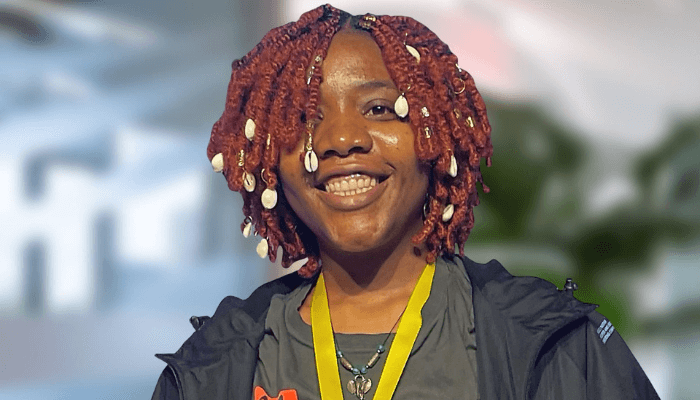
For many, the term “women in tech” immediately brings to mind female software engineers, data scientists, or cybersecurity experts. While these roles are crucial, the tech industry is built on a vast ecosystem that extends beyond coding. Women in operations, administration, tech support, and other non-engineering roles play an equally vital role in ensuring that the industry functions smoothly.
During a BusinessDay interview, Ifunanya Okolie, people support lead at Deimos shared her journey into the tech industry as one of the many women proving that tech careers go beyond just coding.
She said starting as a software engineering intern with a foundation in HTML, CSS, and JavaScript, she soon realised that her passion lay elsewhere. With a desire to start earning early and a keen interest in operations, she transitioned into administrative and people support roles—a move that turned out to be instrumental in shaping her career.
“I have long since realised that tech isn’t just about engineering; there’s an entire ecosystem of roles that make innovation possible,” Okolie said. “What inspires me the most is knowing that my work is part of that foundation.”

Women in Tech Support: The backbone of innovation
For many women like Okolie, tech support roles require a blend of technical knowledge, strategic thinking, and strong interpersonal skills. However, these roles often lack visibility compared to engineering positions, leading to misconceptions that they are less critical.
“Women in tech support roles often struggle with visibility and recognition. Unlike engineers, whose contributions are reflected in products or code, operational and administrative work happens behind the scenes,” Okolie explained. “The reality is that tech support requires a deep understanding of systems, processes, and problem-solving—skills just as critical to a company’s success as software development.”
At Deimos, Okolie has been instrumental in streamlining operations, optimising onboarding processes, and ensuring smooth workflows for a rapidly growing, globally distributed workforce. From Nigeria and South Africa to the UK, Kenya, Ghana, UAE, Egypt, and Cameroon, Deimos has expanded its footprint significantly, and Okolie’s role has evolved in tandem.
Through initiatives like structured onboarding guides, Slack integration for real-time support, and the introduction of appreciation channels, she has helped foster a collaborative and inclusive culture.

Challenges and opportunities for women in non-engineering roles
Despite the progress made in African tech spaces, Okolie believes there is still work to be done to create a truly inclusive environment for women in non-engineering roles.
“Many conversations around diversity in tech focus on increasing the number of female engineers, which is important, but non-engineering roles don’t always receive the same visibility, investment, or career growth opportunities,” she pointed out. “If companies don’t extend the same recognition and support to non-engineering careers, it can reinforce the idea that only engineering is a meaningful path in tech.”
She advocates for structured leadership pathways for women in tech operations, finance, HR, and other vital roles. Elevating these roles to decision-making positions can create a more balanced and equitable workplace.
As AI and automation advance, there is growing concern about the future of administrative and support roles. However, Okolie sees these technological advancements as opportunities rather than threats.
“While automation will handle many repetitive tasks, it won’t replace the need for strategic operations and human-centered problem-solving,” she stated. “The future of tech support will require skills in process automation, project management, and data analysis, alongside soft skills like negotiation, cross-team collaboration, and adaptability.”
Advice for Women Looking to Enter Tech
For young women aspiring to build careers in tech but hesitant about engineering, Okolie offers words of encouragement:
“Be you. Do you. Never stop believing in yourself, and never stop learning. Tech is bigger than coding—your role is just as much a part of it as a software engineer’s.”
She emphasises the importance of developing transferable skills, staying curious about emerging technologies, and owning one’s narrative. “Brag about all of it. Own your space. Tell your story. Because if you don’t tell it, who will?”