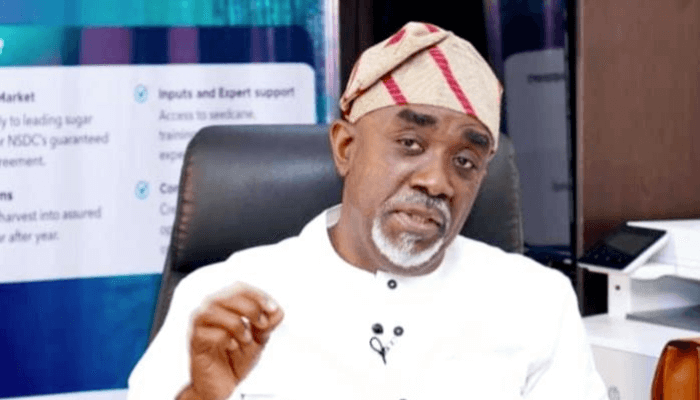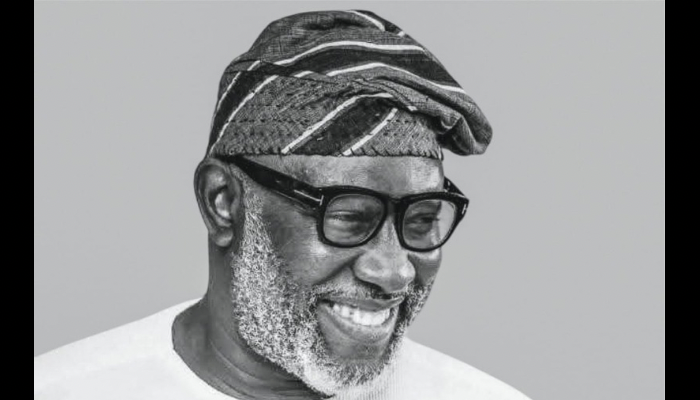
In a historic move that highlights the deepening relationship between Botswana and Nigeria, Ade Adefeko was appointed as the first-ever Honorary Consul of Botswana in Nigeria in 2020. As a seasoned commercial diplomat and polyglot, Adefeko brings a wealth of expertise to the role, poised to drive economic cooperation, facilitate trade, and foster people-to-people exchanges between the two nations. In this in-depth interview, Adefeko shares his invaluable insights on promoting bilateral trade. He speaks to Botswana’s ongoing economic diversification efforts, highlighting opportunities for collaboration with Nigeria in key sectors such as agriculture, technology, and creative industries. With his unique vantage point as a bridge between two nations, Adefeko offers a compelling vision for a stronger, more prosperous Africa, where economic cooperation and strategic partnerships pave the way for sustainable growth and development.
What’s the primary function of your office as Honorary Consul of Botswana?
As the Honorary Consul of Botswana in Lagos, my role is to promote bilateral trade and facilitate people-to-people engagements by actively introducing potential business partners, hosting sector-specific events, and ultimately, facilitating trade and investment flow. We operate as a commercial bridge, focusing squarely on the private sector.
How does the role of Honorary Consul differ from that of the High Commission in Abuja?

A Honorary Consul role is deliberately distinct from the High Commission in Abuja, which handles all formal diplomatic, political, and governmental aspects of the relationship—matters of state, security protocols, and policy negotiation.
How does your office’s focus on economic development and business facilitation complement the High Commission’s diplomatic efforts in Abuja?
By having the High Commission manage the formal diplomatic core in the capital, our Lagos office is free to focus intensively on the economic mandate, serving as a dynamic, hands-on liaison for the West African business hub. This specialization allows Botswana to engage Nigeria’s commercial engine directly, bypassing some of the typical diplomatic layers to accelerate market entry and B2B connections. Our value lies in execution and ground-level facilitation.
What specific initiatives or programs is your office implementing to facilitate trade and investment between Botswana and Nigeria, particularly in Lagos?
Lagos is the undisputed commercial capital of West Africa. Botswana recognizes that while political relations are established in Abuja, true economic growth and diversification—the lifeblood of our future—must be forged here, where the industries, the capital, and the entrepreneurial energy reside. Our mandate is to cut through bureaucratic red tape where possible, de-risk potential partnerships for our domestic investors, and ensure that Nigerian entrepreneurs who are interested in Botswana find a direct, commercial pathway rather than solely a diplomatic one.

How do you measure the success of the office’s efforts in promoting trade between Botswana and Nigeria, particularly in Lagos?
It’s about being pragmatic: trade thrives in Lagos; diplomacy is centered in Abuja. The office is positioned to ensure Botswana gets a significant share of that trade, offering a dedicated resource for business facilitation that Abuja cannot practically provide amidst its formal state duties.
What historical factors contributed to Botswana’s economic success?
Botswana’s economic narrative is truly unique in Africa. Following independence in 1966, the nation’s economy was fundamentally built on strong exports of diamonds and beef. The discovery and subsequent highly-managed extraction of diamond wealth provided the country with a profound advantage. When we look at that history, it reveals the strategic foresight of our early leadership. Botswana successfully used its diamond wealth to fund public services and extensive infrastructure projects. This disciplined investment transformed the nation from one of the world’s poorest countries in the 1960s into a stable, upper-middle-income nation today—a testament to resource governance.
The earlier discussion about promoting bilateral trade between Nigeria and Botswana leads me to ask: What current challenges drive Botswana’s efforts to diversify trade relationships Nigeria?
The principal challenge Botswana now faces is a weakening global diamond market. While the industry remains robust, the need for economic resilience is paramount. This market volatility creates an urgent, strategic mandate for the nation to diversify its economy, moving beyond a reliance on mineral resources, and reposition its economic partnerships. Botswana is now actively seeking to build new sectors in tourism, finance, logistics, and agriculture. Nigeria, with its immense market size, energy, and capital, is a natural and high-priority partner in this diversification strategy. We are moving from a single-pillar economy to one supported by multiple, resilient sectors.
How do you see Botswana’s livestock industry collaborating with Nigeria, particularly in terms of technology and expertise sharing?
Botswana is home to an impressive 5 million heads of cattle. This figure dwarfs the country’s human population. This large livestock population is the backbone of Botswana’s agricultural sector and supports its status as a significant beef producer on the African continent, with a strong international reputation for quality. While diamond revenue funds the country’s infrastructure, the cattle industry has long sustained vast portions of our rural economy. Now, we are looking at opportunities with Nigeria not just for trade in finished goods, but in agricultural technology and expertise transfer, leveraging that enormous livestock asset.
Read also: Nigeria’s agric needs private investment to drive food security – Adefeko
How do you navigate the differences in operational pace and business culture between Botswana and Nigeria to ensure successful partnerships?
The contrast in operational pace is perhaps our most consistent point of management. Botswana is a relatively insular country with a deliberate, measured pace. Botswana’s national character values precision, long-term stability, and cautious planning. This measured approach, while excellent for governance and stability, can sometimes clash with Nigeria’s characteristically fast-paced nature and entrepreneurial approach to execution.
What strategies do you employ to ensure effective communication and collaboration between Botswana’s measured approach and Nigeria’s fast-paced business environment?
Well, as you know, Nigerian business operates at speed, valuing immediate traction and quick pivots. Bridging this gap requires constant management, transparency, and educating both sides on the other’s operational culture. We strive to ensure that our measured speed is not interpreted as lack of interest, and Nigeria’s dynamism is not perceived as instability.
You mention that progress has been moderated. What two significant factors have moderated the progress of trade between Nigeria and Botswana?
Beyond the general economic shifts, two practical factors have significantly moderated the pace of engagement. The first is Botswana’s inherent national characteristic: its deliberate national pace, which can naturally slow down the time required for formalizing large-scale agreements. The second, and more tactical, is its strategic visa processes. While vital for the country’s security and governance, these processes can sometimes slow down the ease of travel and commercial engagement, making it harder for Nigerian businesses to conduct quick exploratory visits.
Can you tell us about the leadership behind Botswana’s relationship with Nigeria, specifically Her Excellency Madam Philda Kereng, High Commissioner of Botswana to Nigeria and her key areas of focus for collaboration?
Her Excellency, Madam Philda Kereng’s leadership has been instrumental in setting a clear, modern agenda for the relationship. Leveraging her professional background as a former Minister of Tourism, she has demonstrated a keen and intentional interest in fostering partnerships that are forward-looking and people-centered. Specifically, her identified areas of collaboration center on youth development and the creative economy.
She sees Nigeria’s dynamic film, music, and technology sectors, powered by its youth population, as a key blueprint for Botswana’s diversification. This focus moves beyond traditional resource extraction to knowledge-based, high-value-add industries, creating opportunities for joint ventures in areas like filmmaking, digital services, and cultural exchange.
Your appointment as Honorary Consul of Botswana to Lagos was formalized in 2020. How did the COVID-19 pandemic affect your work as Honorary Consul?
The pandemic delivered a significant setback to the initial momentum we had built. The COVID-19 pandemic severely limited in-person progress in 2020, freezing official visits and physical trade missions. This was a substantial hurdle for a role fundamentally based on face-to-face introductions.
How did your office adapt to the challenges it presented?
The office adapted swiftly by moving its core work entirely to digital platforms. We began utilizing virtual conferencing and digital tools to host B2B meetings, conduct sector presentations, and maintain engagement with key stakeholders in both nations. Crucially, this method of digital engagement was so effective that it has been sustained ever since, demonstrating a valuable long-term shift in how we approach relationship-building, making us more efficient and resilient to future travel disruptions.