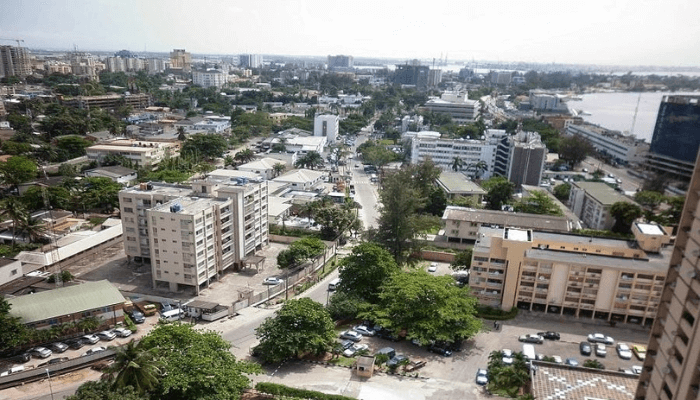
Nigeria’s cities are growing taller and faster, but farms are shrinking. As we build more houses and malls, we risk losing the land that grows the food we all depend on.
The real estate sector has entered an era of rapid growth, contributing 5.20 percent to national GDP in 2024, overtaking the oil and gas sector’s 4.53 percent.
Driven by urbanisation rates exceeding 4.3 percent annually, among the highest globally, and projections of an urban population surpassing 400 million by 2050, real estate is now a pillar of Nigeria’s economic diversification.
Cities like Lagos, Abuja, and Port Harcourt are transforming fast, powered by both domestic and foreign investments. As Figure 1 shows, real estate’s share of GDP has steadily risen from 2020 to 2024, while oil and gas have declined.

Yet behind this success story lies a growing threat. The real estate boom is swallowing up farmland at an alarming rate. In the past five years, more than 15 percent of peri-urban farmland around major cities has been converted into residential and commercial developments.
Smallholder farmers, who produce about 80 percent of Nigeria’s food, are under economic pressure to sell off their ancestral lands.
As a result, Nigeria’s food import bill has surged to $11 billion annually, exposing the economy to rising global supply chain risks. Figure 2 shows how rising farmland loss correlates with the increasing food import bill.
This loss is not just an agricultural issue; it’s a threat to food security, rural livelihoods, and national stability. Without immediate action, Nigeria risks building sprawling cities surrounded by hollowed-out rural communities where food scarcity and poverty could become permanent features.
Other countries offer lessons. Canada and Germany have created “greenbelt” zones that protect farmland around cities, limiting urban sprawl. Nigeria urgently needs similar land-use reforms to safeguard key agricultural areas before they disappear forever.

Beyond protecting land, Nigeria must also realign its economic incentives. The U.S. Conservation Reserve Program pays farmers to preserve land instead of selling it.
A Nigerian version, perhaps an Agricultural Land Protection Fund, could offer tax breaks and subsidies to farmers who keep cultivating. This would help stabilise rural economies while supporting food production.
However, land protection alone isn’t enough. Rural areas must be made more attractive through investments in rural electrification, irrigation, mechanised farming, and digital agriculture.
The Netherlands, despite being small, has become the world’s second-largest agricultural exporter by leveraging precision farming technology, a model Nigeria should study closely.
Urban development must also change. Following Singapore’s example, Nigeria should prioritise vertical, high-density housing instead of spreading outwards.
This would save farmland while still accommodating growing urban populations. Figure 3 illustrates the potential benefits of greenbelt policies on farmland preservation.
Building codes should mandate minimum density for new developments, and developers could be required to contribute a portion of profits to an Agricultural Resilience Fund, helping to balance urban growth with rural support. In places like Australia and Japan, similar systems have helped fund local infrastructure and environmental conservation.
Monitoring land use is key to enforcement. Brazil’s PRODES satellite monitoring programme has successfully tracked and reduced Amazon deforestation. Nigeria must invest in a national digital land registry and satellite-based systems to detect illegal land conversion and strengthen zoning laws.
The benefits of acting now would be profound. Nigeria would sustain its real estate-driven growth while protecting its food sovereignty, boosting rural economies, and strengthening resilience against climate and market shocks.
Investor confidence would grow as the country shows it can manage urbanisation without sacrificing food security or the environment.
Nigeria stands at a crossroads. The real estate boom promises modernisation and prosperity. But without bold, integrated policies that protect farms and rural livelihoods, the gains could be fragile and short-lived.
By learning from global examples and developing home-grown solutions, Nigeria can build cities that thrive without starving its farms.
Olajide Dahunsi; Lecturer / Sustainability Advocate