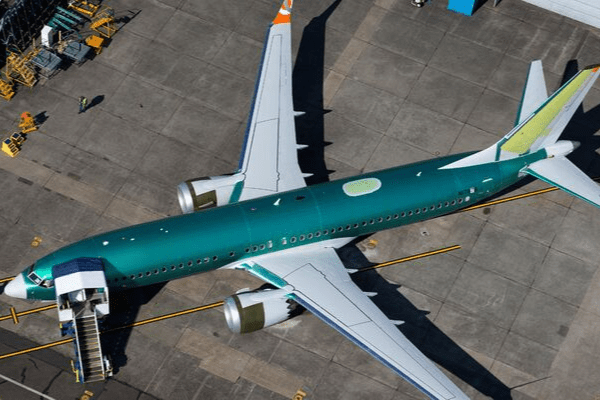
A senior Boeing engineer filed an internal ethics complaint this year saying that during the development of the 737 Max jet the company had rejected a safety system to minimise costs, equipment that he felt could have reduced risks that contributed to two fatal crashes.
Read Also: Again Boeing 737 Max aircraft experiences engine problem after take-off
Boeing has provided the complaint, which was reviewed by The New York Times, to the Department of Justice as part of a criminal investigation into the design of the Max, according to a person with knowledge of the inquiry who requested anonymity given the ongoing legal matter.
Federal investigators have questioned at least one former Boeing employee about the allegations, said another person with knowledge of the discussions who similarly requested anonymity.

It is unclear what, if any, assessment investigators have made of the complaint.
The complaint, filed after the two crashes, builds on concerns about Boeing’s corporate culture, as the company tries to repair its reputation and get the planes flying again.
Many current and former Boeing employees have privately discussed problems with the design and decision-making process on the 737 Max, outlining episodes when managers dismissed engineers’ recommendations or prioritised profits. The engineer who filed the ethics concerns this year, Curtis Ewbank, went a step further, lodging a formal complaint and calling out the chief executive for publicly misrepresenting the safety of the plane.
During the development of the 737 Max, Ewbank worked on the cockpit systems that pilots use to monitor and control the airplane. In his complaint to Boeing, he said that managers were urged to study a backup system for calculating the plane’s airspeed. The system, known as synthetic airspeed, draws on several data sources to measure how fast a plane is flying.
Such equipment, Ewbank said, could detect when the angle-of-attack sensors, which measure the plane’s position in the sky, were malfunctioning and prevent other systems from relying on that faulty information. A version of the system is used on Boeing’s 787 Dreamliner, a new model of plane.

Ewbank did not respond to requests for comment. Peter Carr, a spokesman for the Department of Justice, declined to comment on the complaint.
In both crashes of the Max, an angle-of-attack sensor is believed to have failed, sending bad data to automated software designed to help prevent stalls. That software, known as MCAS, then activated erroneously, sending the planes into irrecoverable nose dives.