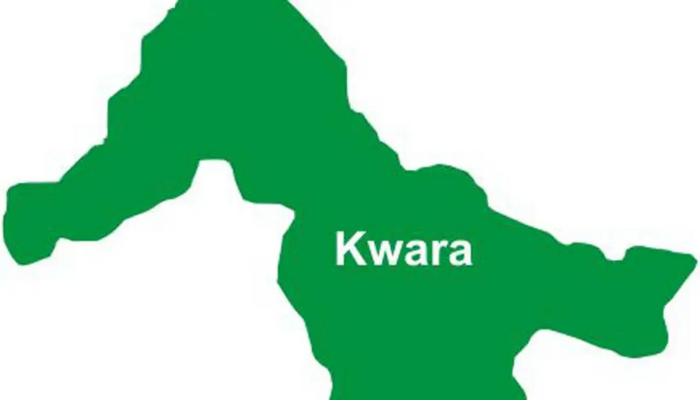
The defection, on Monday, of Abba Yusuf, governor of Kano State, may set off a chain of unintended consequences. Political practitioners in the state and other interest groups must tread cautiously to avoid plunging the state into a conflagration.
The rhetoric by the African Democratic Congress (ADC) in coalition that its overarching objective was to oust President Bola Tinubu from power sounds like a misplaced priority akin to the Janjaweed philosophy of the All Progressives Congress (APC) in 2014. Correction must be taken.
The controversy arising over Vice President Kashim Shettima’s fate in 2027 is unnecessary and distracting. If anything, interests must die for Nigeria to live!
Yusuf’s defection and likely unintended consequences
The other day, after so many permutations in the media space, Governor Abba Yusuf of Kano State eventually decamped to the APC from the New Nigeria Peoples Party (NNPP).

President Bola Tinubu’s target in Kano is not Governor Yusuf but Rabiu Kwankwaso.
What has simply happened with the defection of Yusuf is akin to an Igbo proverb that says, “Instead of my cow completely running away, let me cut the tail.” What the APC has decided to have in Kano for now is “Kwankwaso’s tail”.
Kano State in the Northwest is very important in political calculations in the country. The people of the state are politically aware, hence the huge number of votes that the state usually records during general elections.
The state has 44 local government areas, with an estimated population of sixteen million, two hundred and fifty-three thousand, five hundred and forty-nine (16,253,549) people. Its huge number of LGAs is more than four to five states put together, especially the Southeastern states.
Some observers say that even though Governor Yusuf has joined the APC, he is not sure Kano will fall into his lap in 2027.

They believe that he has not yet built a strong political following that can rival the Kwankwasiyya Movement, an organic group of supporters developed and nurtured over the years by Kwankwaso.
That was the platform on which Yusuf won the governorship election in 2023. That movement is still vibrant and alive. It was that movement that President Tinubu wanted to co-opt into his team, not necessarily Yusuf.
Tinubu had severally reached out to Kwankwaso, trying to woo him to the APC.
Read also: Governor Yusuf Rejoins APC, says move will end Kano’s political isolation
Despite the fact that the NNPP was embroiled in a leadership crisis before the 2023 general election, the party still won in Kano because of the political sagacity and astuteness of Kwankwaso.
In the 2023 presidential election, results declared by the Independent National Electoral Commission (INEC) in Kano showed that the APC got 513,846 (31.50 percent); the Labour Party 30,089 (1.84 percent); the NNPP 953,179 (58.42 percent); the People’s Democratic Party 118,444 (7.26 percent); and others 15,900 (0.97 percent).
If, for instance, Kwankwaso had been in the APC in 2023, the NNPP votes of 953,179 would have added to that of the APC – 513,846. The APC could have easily secured 1,467,025 (one million, four hundred and sixty-seven thousand and twenty-five) votes.
Yusuf’s defection may have also brought to the front burner other issues that have been lying low in the state.
For instance, Abdullahi Ganduje, a former governor of Kano and the immediate past national chairman of the APC, has some cases in court over allegations of corruption. Yusuf had been in an attrition war with Ganduje, and he was the one insisting on Ganduje’s prosecution.
In a dramatic twist and ironic change of events, it was Ganduje who drove the defection project of Yusuf. He was the one who raised Yusuf’s hands, proclaiming him as the leader of the APC in Kano!
Ganduje is unarguably the biggest beneficiary of Yusuf’s defection. Ganduje held a number of meetings to woo Yusuf to the APC. Now that the governor has moved, it means that all the legal battles against him over alleged corruption will be dropped.
Another issue is that of the two Emirs in the state. Until the governor defected, Muhammadu Sanusi II was recognised by the Yusuf administration, while Abuja and other political factions recognised the deposed Emir Aminu Ado Bayero.
As of mid-2024, Kano State was experiencing a leadership crisis with two individuals claiming to be the Emir of Kano, creating a split in traditional authority.
Muhammadu Sanusi II was reinstated as the 16th emir by the state government, while deposed Emir Aminu Ado Bayero continues to lay claim to the throne.
Following his reinstatement in May 2024 by Governor Yusuf, Sanusi occupies the main Gidan Rumfa Palace, backed by the then NNPP government, while Aminu Ado Bayero, who was dethroned in 2020 and returned in 2024, operates from the Nasarawa Palace.
The question is, how is Governor Yusuf going to handle this hot potato? If he is pressured to return and recognise Ado Bayero as the Emir, it could spark a conflagration in the state.
How Yusuf and Abuja manage the issue will determine how peaceful Kano will be as the country marches toward 2027.
Read also: ADC risks implosion if Atiku clinshes 2027 ticket, Baba Ahmed warns
ADC and Janjaweed philosophy
In 2014, when the All Progressives Congress (APC) was plotting to take over power from the then People’s Democratic Party (PDP), their main preoccupation was to take away President Goodluck Jonathan from the Villa.
Olisa Metuh, who was the PDP national publicity secretary at the time, described the APC as a Janjaweed party promoting Janjaweed philosophy.
The then APC publicity machinery, under Lai Mohammed, made some promises, even to the point of saying that the naira would be at par with the US dollar.
But because the party did not see beyond power capture as its objective, when Muhammadu Buhari mounted the saddle as the president in 2015, Nigeria practically died! A proof that there was no plan on the ground beyond sacking Jonathan was the inability of the government to constitute a cabinet until after six months, when a lot of things had already gone bad.
Before Jonathan was removed, there were massive protests by those who felt he was not leading well. The APC seems to have continued in search of the best way to serve the Nigerian people well because of the faulty philosophy it had at the outset.
Over 10 years after the removal of Jonathan and sacking of the PDP, Nigeria is still in the woods and groping in the dark, desperately seeking a way out of her economic, social and political quagmire.
Today, we are hearing a similar song about the need to remove President Bola Ahmed Tinubu for the sake of it. The orchestra leaders are the arrowheads in the new coalition called the African Democratic Congress (ADC).
Today, the ADC has made the removal of Tinubu its cardinal objective, not to better the lot of Nigerians. They may have that at heart, but they are not communicating it enough. If the motivation for seeking power is just to sack a sitting president and his party, it then means that the future is not rosy for the country and its people.
Many Nigerians are saying today that the ADC must quickly begin to communicate its programmes to the Nigerian people and stop verbalising the “push Tinubu out of power” philosophy.
This philosophy does not strike a match. Nigerians would not like to be fooled again. For them, it is “Once beaten, twice shy.”
The uncertainty over Shettima
Last Thursday, the North-Central All Progressives Congress (APC) Forum warned against dropping Kashim Shettima, vice president, as the running mate of President Bola Ahmed Tinubu in 2027.
The Forum said that replacing Shettima would be disastrous for the party and could jeopardise President Tinubu’s re-election bid.
The sign of a standoff on Shettima’s matter started in Gombe State in June last year, at a high-level meeting of the APC in the North-East.
Key party leaders had endorsed President Tinubu for a second term while deliberately omitting Shettima, who is a prominent son of the region.
That Gombe episode has ignited a welter of controversy over Shettima’s fate in 2027. But beyond the drama over the Vice President, the truth remains that the political temperature in the country at the moment does not support a Muslim-Muslim ticket.
In 2022, when the decision was taken, it shook the country to its very foundation.
Now, with the global attention on religious affairs in Nigeria, it would amount to a ‘hara-kiri’ for the APC to contemplate a Muslim-Muslim ticket for 2027.
Individuals and groups that are saying “Shettima or no APC” should sheath their swords and allow reason to prevail.