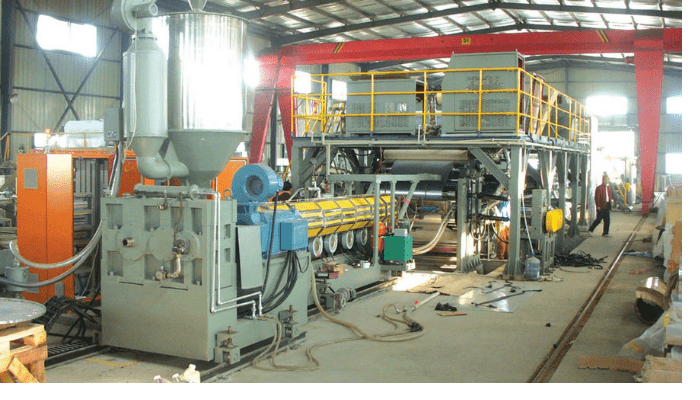
The Republic of Benin is pitching sweeping tax exemptions and fast-track company setup to Nigerian manufacturers seeking to cut costs and access regional markets.
At the Benin-Nigeria Business Forum in Lagos on Wednesday, Eric Akoute, CEO of Benin’s Agency for the Promotion of Investments and Exports (APiEx), said the country has deliberately stripped away most of the fiscal and administrative costs that typically deter investors in the region.
The Investment Code
Under the country’s ‘Investment Code,’ designed in 2020 to attract foreign investment in key sectors, all new investments are exempt from Corporate Income Tax (CIT), Value Added Tax (VAT) and customs duties, regardless of size.

“In Benin, when you invest, there are no customs duties, and there is no VAT on your investment. It is free of taxes,” Akoute said.
Companies operating under the code can receive five to 17 years of corporate tax holidays, while firms in special economic zones (SEZs) may qualify for 12 to 17 years of relief. Authorities said the aim is to allow firms to recover capital and scale production before facing the full tax burden.
The code specifically targets key sectors for economic development, offering tailored incentives in agribusiness, textiles and manufacturing, renewable energy, logistics and ICT, and tourism that facilitate infrastructure projects related to hotels, sports, and health.
The incentives are paired with speed. Companies can be incorporated within five hours through a single government platform without a resident permit, local partner or local management, according to APiEx.
He said Nigerian manufacturers can relocate part of their production chain, import inputs tax-free, and either export outside the region or supply the Economic Community of West African States (ECOWAS) using certificates of origin, a structure that reduces costs while keeping access to Nigeria’s consumer base.
Investors could repatriate profits with “no limitations” on dividends and supplier payments. Repatriation of funds for loan servicing is permitted, though limited to the maturity period of the loan and the transfer of funds after asset sale is “limited to the revenue generated from the disposal.”

When they employ skilled workers, they get “employer’s tax exemptions.” Meanwhile, their foreign employees, under a minimum wage regime of 52,000 CFA Francs (XOF) (⁓N132,000), are permitted to transfer 80 percent of their salary back home.
As an additional incentive, the government grants spouses and children of investors under its code five-year resident permits. “ECOWAS people are considered Beninese people,” Akoute said.
Read also: Nigerian manufacturers face new threat from proposed sugar tax, says CPPE
Glo-Djigbé (Resting place)
The Glo-Djigbé Industrial Zone (GDIZ) near Cotonou is central to Benin’s pitch. Power costs are lower than in much of the region, “$0.10 per Kilowatt,” representatives said, noting that the zone offers faster market access.
“From there, investors can serve Benin, Nigeria and other Francophone West African markets.”
Labour policy is also folded into the incentive framework. Akouche said training centres embedded within the zones are used to develop skills tailored to investors’ needs, particularly in textiles and light manufacturing.
According to the investment agency, the country is seeking more than 30 new factories to process the country’s cotton. It said it is willing to co-finance workforce training where skills gaps exist.
Benin is banking on an impressive international report card to boost its case. Akouche presented Benin’s World Bank rankings, which place the country first in West Africa for ease of doing business and among the top five in Africa.
Among the ECOWAS community, Benin ranks first for some indicators such as international trade, business location, utility and financial services, taxation, and remains top two in business entry and dispute resolution, according to the World Bank report.
In 2024, Benin’s GDP grew over seven percent to surpass IMF forecasts, driven largely by investments in infrastructure, agro-processing, and the expansion of the Glo-Djigbé Industrial Zone (GDIZ), which also saw exports rise 34 percent.
Not all gold
However savoury, some groups have raised concerns. A 2025 Investment Climate Statements by the US Department of State flagged that Benin does not have a formal investment screening mechanism for inbound foreign investment.
“The Investment Code does not mandate prior approval for foreign investments,” it said. It identifies that this is solved, in part, by the High Council for Investments which serves as an advisory body to the government on large-scale investments, providing recommendations, but cannot exercise veto power.
Concerns about “judicial independence” were also raised. The agency said that while the judiciary has the authority to review administrative decisions and regulations to ensure they comply with the law and the constitution, critics have highlighted a lack of transparency, susceptibility to corruption, and political interference as issues that “undermine public trust in the judicial system and can affect the fair and impartial administration of justice.”
In December 2025, Benin faced a brief coup scare after a group of soldiers claimed to have ousted Patrice Talon, the Beninese president, prompting security interventions that included the deployment of Nigerian fighter jets on the orders of President Bola Tinubu.
Yet, Nigeria says its doors are open. Leye Kuplouyi, chairman of the Lagos Chamber of Commerce and Industry (LCCI), at the forum framed the pitch as a regional collaboration rather than competition. “Everything in Benin is what Nigeria requires and vice versa,” he said.
Benin officials confirmed that “hundreds of Nigerian-owned companies” already formally operate in the country.