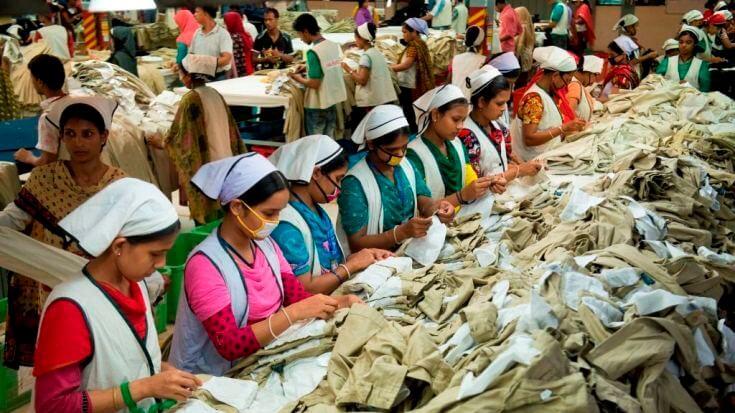
Bangladesh, a South Asian country of over 160 million people, has moved from an underdeveloped third world country to the world’s largest pharmaceutical base and the second-largest garment exporter globally, after China.
Bangladesh’s garment industry is valued at $33 billion and the country is food-sufficient. The largest jute grower in the world, the country also produces 90 percent of the pharmaceutical products it consumes, locally.
From using carts as a means of transportation, Bangladesh now builds ships and has less than 3 percent dependence on foreign aid with an average gross domestic product (GDP) growth rate of 6 percent per annum since 2005.
Interestingly, 300 Bangladeshi business visas are granted to Nigerians monthly, said Shameem Ahsan, Bangladeshi High Commissioner to Nigeria, during an official visit to The Brook, BusinessDay’s headquarters in Apapa.

“There is enormous potential for collaboration between Nigeria and Bangladesh in terms of trade and commerce, especially. Trade between the two countries was a paltry $15 million last year. Some Nigerian military personnel have also been trained in Bangladesh,” Ahsan said.
This has not always been the case for the South Asian country. After the 1971 war of independence, 11 years after Nigeria’s, Bangladesh had the highest rural population density in the entire world, and an annual population growth rate between 2.5 and 3 percent, chronic malnutrition for perhaps the majority of the people, and the dislocation of between 8 million and 10 million people who had fled to India and returned to independent Bangladesh by 1972.
The new nation had few experienced entrepreneurs, managers, administrators, engineers, or technicians. There were critical shortages of essential food grains and other staples because of wartime disruptions. External markets for jute had been lost because of the instability of supply and the increasing popularity of synthetic substitutes.
Foreign exchange resources were minuscule, and the banking and monetary system was unreliable. Although Bangladesh had a large workforce, the vast reserves of undertrained and underpaid workers were largely illiterate, unskilled, and underemployed. Commercially exploitable industrial resources, except for natural gas, were lacking. Inflation, especially for essential consumer goods, ran between 300 and 400 percent.
The war of independence had crippled the transportation system. Hundreds of road and railroad bridges had been destroyed or damaged, and rolling stock was inadequate and in poor repair. The new country was still recovering from a severe cyclone that hit the area in 1970 and caused 250,000 deaths.

In the 1970s, three out of four Bangladeshis lived in poverty and the country was considered a test case for development. Rapid population growth, frequent natural disasters, and low economic growth throughout the 1980s suggested that a large number of households would remain trapped in chronic poverty.
Defying this outlook, Bangladesh began experiencing more sustained economic growth since the 1990s, which was accompanied by impressive poverty reduction.
Today, the country has put its act together. Female enrolment in schools outnumber male and the economy grew by 7.86 percent last year. Bangladesh has in place a disaster preparedness programme to curb the effects of cyclones. The garment industry employs 5 million workers who are mostly women. This is a model Nigeria can understudy.
STEPHEN ONYEKWELU