|
Getting your Trinity Audio player ready...
|
Private equity groups are taking on too much debt in the competition to win deals, heightening the risk of a crash in the sector, according to one of the most senior buyout executives.
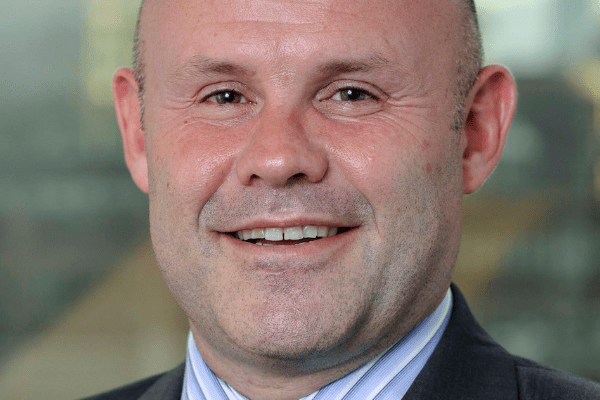
Jonathan Lavine, co-managing partner at global giant Bain Capital, made the warning as fears rise that slowing growth across corporate America could end the dealmaking boom.
He said that “increasingly aggressive” projected benefits from mergers and acquisitions were masking the real scale of leveraged borrowing.
The warning comes as private equity groups are paying record high prices, with investors, flush with cash, pouring in large amounts of money to their funds.

This may have created a bubble, which Mr Lavine and others say may burst in the event of an economic downturn.
Speaking to the Financial Times, Mr Lavine said that some rivals’ practice of adjusting future revenue growth of companies when calculating synergies between deal partners was akin to adjusting one’s height to fit a narrative.
He said: “I’m 5ft 8in, but I change the scale and make myself 6ft 2in on a pro forma basis. I’m not actually 6ft 2in on a pro forma basis, but I can make adjustments like standing on a box, maybe trying to stretch.”
The executive said that people were increasingly using complex jargon to exaggerate assumptions of cost savings for companies, leading to soaring debt levels based on overinflated projections.
He said: “It is ordinary to give a company credit when you’re lending for some piece of those financial projections. It used to be about 10 per cent of any transaction.

“The really ugly ones have been as high as 30 and some have been even higher than that.”
If assumptions are not fulfilled, he said, suddenly a company is many more times levered. “If you start seeing people not generating cash flow and not deleveraging, particularly in their first two years, I’d start worrying,” he added.
Others have separately expressed their concerns over the levels of riskier debt in companies.
Investment bank Cantor Fitzgerald has warned that a third of US investment grade market leverage ratios are deemed high risk as concerns grow over deteriorating credit quality.
The buyout executive also said that a “self-fulfilling” recession could easily follow a slowdown in revenues.
“Even in the absence of a recession, if growth slows down a lot, people will treat it like a recession and it could have some of the self-fulfilling negative effects that an actual recession does have,” he said.
“My concern is that there will be a flattening that people will treat as a recession and then we have to understand the reality of it and it becomes self-fulfilling?”